Thursday, June 30, 2022

Provence Roses


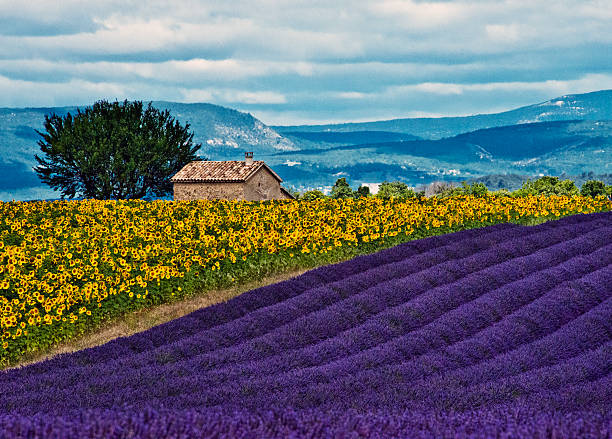
lavender meets sunflowers south of france - provence lavender stock pictures, royalty-free photos & images
Sunflowers and lavender

Could it be that the combination of Provence olive oil, garlic and rose wine is what encouraged someone to think up the phrase,"a pair made in Heaven?"  

Maybe. But there are many other French regions with local foods that taste best with local wines, such as red Burgundy with game birds or Sauternes with Roquefort cheese. 

Provence is a region in southeast France, sprawling along the Mediterranean Sea, close to the Italian frontier. In this warm sunny climate, light meals, based on seafood and fresh produce, are a given.

Chic tourists admit that there is something magical about seaside towns like St-Tropez and the countryside with its vast fields of blue-purple lavender.  

Serious wine lovers, who also may be wine tourists, find magic in the vinous treasures of Cote de Provence and the more inland smaller region of Coteaux d'Aix en Provence. There is something about the simple Provence cuisine, of these two places, that goes perfectly with dry, fruity pink wines.

Provence Grapes 

For years, Carignan (Carignane) was the backbone of the industry, but the new generation of winemakers favor Grenache, Cinsaut, Syrah and Mourvedre, for pink and red wine.  Many wine drinkers think Provence roses mean light orange-pink color, fragrant aroma and refreshing fruit of Grenache. 

Winemakers are an observant lot and they see what's working and selling in the all-important international market.  Provence wineries, especially those with coastal vineyards know that growing conditions on Corsica are very similar and that the Vermentino grapes does well there, so why not Provence?  Today, Vermentino, Semillon and the humble Ugni Blanc are responsible for Provence whites. 

Provence Winemaking

The essence of pink wines is freshness, achieved by cold fermentation and no contact with wood.  Traditionally, A common way to achieve freshness is to ferment in stainless steel tanks with a refrigerant jacket.  The process is slow and the cold temperatures maintain fruit freshness and varietal character. 

Alternatively, a red winemaking technique known as saignee (French for "bled") produces a rose wine by "bleeding" a small amount of free-run juice from a red variety such as Syrah.  Saignee is used almost exclusively with red grapes. 

Provence Wines   

Nearly all of the production in Cote de Provence and Coteaux d'Aix en Provence is devoted to making pink wine, usually from Grenache and Cinsaut, an ideal match with local fish and shellfish, seasoned with garlic and fresh herbs and sauteed in olive oil.  Here's what to look for from these two varieties:
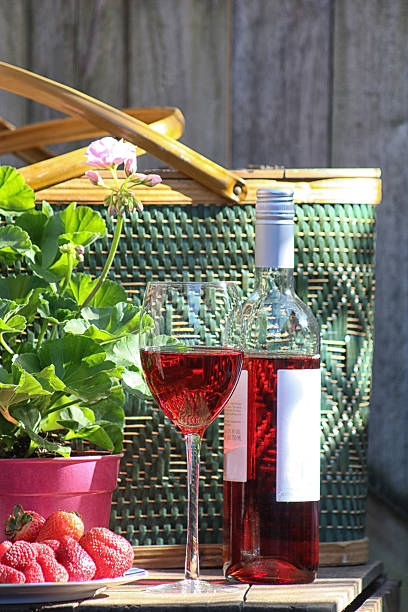
                                   Rose Wine on Wood Table Wine glass and bottle with a picnic basket. In the foreground a plate of strawberries and raspberries. provence rose wine stock pictures, royalty-free photos & images

Grenache is known in Spain as Garnacha and it is likely that Spain is the grape's original home.  The distinguishing feature of Grenache rose is strawberries, sometimes with a hint of ginger and honey.  I especially GGrenache rose with vegetarian dishes.

Cinsaut is rarely bottled as a varietal, as most of it is used in blends. More cherry fruit than strawberries, Cinsaut goes with Grenache, giving the blend perfume and a pleasing suppleness.

About 15% of the Provence production is now in red wine, mostly from Grenache, Syrah and Mourvedre.  These popular red grapes are grown along the French Riviera, from Provence in the east to Roussillon in the west and the border with Spain.  

With summer finally here, stores will be stocked with light, fresh and fruity Provence roses, much of it made by large cooperatives, priced from $14 to $22. 

Here are a half dozen names to look for: Domaine la Colombe, Peyrassol, Les Maitres Vignerons, Chateau les Mesclances, Chateau Miraval, Commanderie de la Bargemone.  Factoid: Ch. Miraval is where Pink Floyd recorded "The Wall" in 1979.


Next blog: Spanish Light Reds

Leave a comment or write me at boydvino707@gmail.com 

Thursday, June 23, 2022

Australia Series: South Australia

The series "My Life in Wine," ended with Episode 30, on May 27, 2022.  MLIW was a brief glimpse at the years I spent writing about wine, roughly from the late 1960s to the early 2000s, not including this on going blog.

Starting with this survey of South Australia, I'll post a series of profiles every three weeks.  The remainder of the Australia Series will include the wine regions of Victoria, New South Wales, Western Australia and others. In the future, look for series on Germany, Chile, France, and other countries. 


"May all your trails be crooked, winding, lonesome, dangerous, leading to the most amazing view...where something strange and more beautiful and more full of wonder than your deepest dreams awaits you." -- Edward Abbey, American author and environmental activist

South Australia 

I would like to think that Abbey was musing of Australia when he wrote those words about traveling and discovering new vistas and experiences.  Australia is all those things - crooked, winding, lonesome, dangerous, strange, beautiful and full of wonder. 

Australia is one nation within a continent, composed of the mainland and Tasmania, about the size of the lower 48 U.S. states.  Australia's more temperate coastal areas are where most of the people live and wine grapes grow.  The interior is mostly a barren desert. 

There are six states, two territories (Northern Territory and Australian Capital Territory).  Western Australia is the largest state and Tasmania the smallest. Except for Northern Territory, all states and the ACT produce wine.

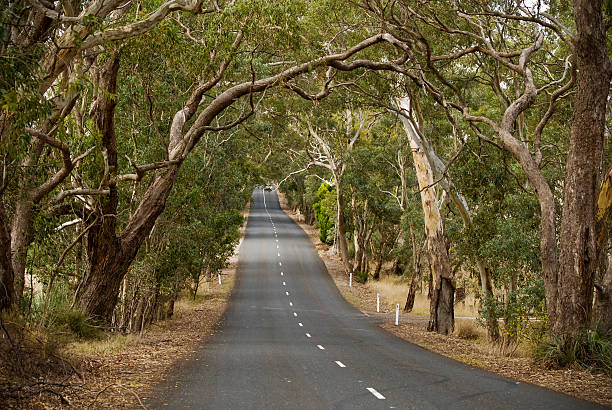
Road trip through the Gum Trees Gum Trees (Eucalyptus) line both sides of this road in the Barossa Valley. Barossa Valley stock pictures, royalty-free photos & images
The gum tree lined road to South Australia

     South Australia (SA) is the third largest state, located in the central part of the southern coastline, roughly where Texas is located in the United States. SA is sparsely populated with a Mediterranean climate, ideal for wheat and wine. 

Main Grapes/Wines: Cabernet Sauvignon, Chardonnay, Riesling, Semillon, Shiraz

Main Sub-Regions: Adelaide Hills, Barossa Valley, Claire Valley, Coonawarra, Eden Valley, McLaren Vale, Padthaway, Wrattonbully.  All are gathered in the far south of SA, drawing marine infuence from the Southern Ocean. 

Barossa Valley, often called the "Napa Valley of Australia," is the premier wine region of SA and perhaps of all Australia, noted for its Cabernet Sauvignon and Shiraz (Syrah).   The name is pronounced (Ba-ross-ah)...Wineries: Penfolds, St. Hallett, Grant Burge, Rockford, Peter Lehmann, Hill-Smith Estate.

McLaren Vale, located south of Adelaide, may be considered the second most important wine area, although the same argument can be made for Claire and Coonawarra...Wineries: d'Arenberg, Hardy's Chateau Reynella, Geoff Merrill, Wirra Wirra, Andrew Garrett.

Claire Valley, a gently rolling enclave near Adelaide, produces noteworthy Riesling and Cabernet Sauvignon.  Steely Claire Riesling is dry, crisp and fresh, with traces of tropical fruit. The Cabernets are full-bodied and dense with concentrated flavors...Wineries: Jim Barry, Jeff Grosset, Knappstein Wines, Leasingham.

Coonawarra is, arguably, Australia's great red wine region.  The famed terra rossa soils of the region, give Cabernet Sauvignion and Shiraz their depth,  concentrated berry flavors and firm tannins...Wineries: Wynns, Penley Estate, Katnook and Rouge Homme.

Adelaide Hills sub-region, as the name implies, is close to Adelaide, the capital and largest city in South Australia. White wine, mainly Chardonnay and Sauvignon Blanc are stand outs.  Adelaide Hills Pinot Noir is on a par with Pinots of Victoria and Tasmania...Wineries: Petaluma, Smith and Shaw, Lenswood, Geoff Weaver.

Padthaway, like Coonawarra, is large vineyard region, on the Limestone Coast, south of Adelaide.  Gentle slopes are planted mainly to Chardonnay, Shiraz and Cabernet Sauvignon.  Wineries: Lindemans, Hardy's, Orlando.

Eden Valley is known for its excellent Riesling, but this hilly country also is reknowned for Henschke's Hill of Grace  and Mount Edelstone Shiraz. Parts of Eden Valley are cooler than the Barossa.  Wineries: Henschke, Pewsey Vale Heggies, Hill-Smith Estate.

Wrattonbully, located north of Coonawarra, is one of the newer wine areas in SA.  Drawing its strength from limestone-based soil, Wrattonbully is good red wine country.  Wineries: Hollick, Pepper Tree, Yalumba, Terre a Terre. 

South Australia hits the mark for Australian wine, in variety and quality, with big hitters like Barossa Shiraz, Coonawarra Cabernet Sauvignon and Eden Valley and Clare Riesling.  Try one or all today.


Next blog: Provence Roses

Leave a commment or write me at boydvino707@gmail.com


Thursday, June 16, 2022

A Collection of Italian Whites

At one time, the history of Italian wine making recorded white wine as being far different than it is today.  The wines of antiquity, written about in the 1st century BC by Pliny the Elder, were so dark from oxidation that they resembled red wine more than white. 

In Natural History, Pliny described Opimian, a popular white wine of the time, as "reduced to a kind of bitter honey but still recognizably wine."   Opimian was not the only early Italian white wine.  Falernian and Surrentinum were also popular, although the Emperor Tiberius said the latter was merely "high quality vinegar."

Major changes in the Italian appetite for white wine developed over the centuries.  Even so, interest in red wine began to dominate, spurred on by the popularity of grapes like Sangiovese, Barbera and Primitivo and the international interest in Cabernet Sauvignon, Merlot and Pinot Noir.

A major change took place in 1861 with the unification of Italy.  Vineyard planting took off as the economy boomed and white wines mounted a comeback. Today, there is hardly a corner of Italy where you won't find at least one white wine. 

There are about 1,000 grapevines recorded in Italy, with maybe half spread out in the 20 regions, from Lombardy to Calabria, plus Sicily and Sardinia.  What follows, then, is a list, in alphabetical order, of 12 white grapes that have been responsible for elevating Italian white wines to where they are today in the international market.  

Cortese
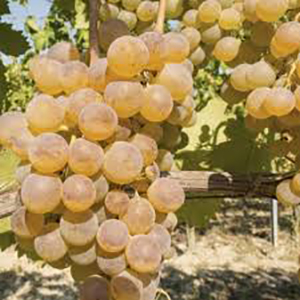
Fully ripe Cortese grapes

Cortese is a popular white grape grown in southeast Piedmont, known mostly for  Gavi (or Cortese de Gavi).  Aromatic with bright acidity and a hint of mineral, Cortese is a white standout in a region known mainly for red wines.

Falanghina is common in the area around Naples. This aromatic white grape is  featured in the wine of Campania.  Best on its own, without oak, Falanghina is a fragrant white that may have been the base for Falerian, perhaps the best known wine of the Roman era.

Garganega is included on this list because of it's important role in Soave.  Planted widely in Veneto, Garganega may make up to 100% in Soave and does best in the Classico zone where it ripens to show lemon and almond flavors.  Garganega is also grown in Friuli. Umbria and Australia.

Greco: There are at least four varieties grown in Italy called Greco, with the best known one called Greco di Tufo, for the town of Tufo in Campania, which in turn gets its name from tufa, the volanic soil of the area.  Greco owes its heritage to the Greeks and the culture they spread throughout southern Italy.  Greco di Tufo is a potent full-bodied white, however the Greco grape is not the same as Greco Bianco, native to Calabria.

Grechetto, along with Trebbiano Toscano and Verdello, makes up the Umbrian white wine classic Orvieto and is used in the wines of Torgiano. Todi, an Umbrian hillside town, near the touristy Assisi, gives its name to Grechetto di Todi, another name for the ancient Pignoletto grape, widely grown in Umbria.

Aside:  Having trouble keeping up with Italian grape names?  Here's more confusion.  Besides Pignoletto, there are at least three other varieties that start with "pig": Pignatello, a red Sicilian grape; Pignola Valtellinese, a red Grape from Valtellina that may be related to Nebbiolo; Pignolo, a red variety from Friuli. 

Grillo is an important variety in Sicily and was once valued as a base wine for Marsala, the island's noted fortified wine.  Today, Grillo is popular as a stylized full-bodied dry white wine.

Malvasia, the name, has various variations.  Malvasia is used to identify at least 20 different grapes, grown through the length and breadth of Italy. For that reason, I have included Malvasia in my list of important Italian white grapes and the associated wines. 

The Italian dessert wine, Malvasia delle Lipari, is named for an island off the north coast of Sicily.  Malvasia is also used in Orvieto, blended with Trebbiano.  And Madeira Malmsey, one of the world's distinguished dessert wines, is derived from Malvasia.  Originally, Malmsey was made from Malvasia, but today the name just identifies a style.

Moscato Bianco is the Italian name for Muscat, of which, like Malvasia, there are many subvarieties, cultivated throughout Italy.  The best known is Moscato di Canelli, the grape of Asti Spumante sparkling wine, produced in Piedmont.  Another noted Moscato is Moscato di Pantelleria, a small island between Sicily and Tunesia.

Pinot Grigio probably owes its popularity to name recognition more than wine quality.  In the early part of the 21st century, the worldwide wine buying public decided to adopt the name Pinot Grigio over Pinot Gris, the grape's French name.  Made today mostly in Veneto, Pinot Grigio is mainly a neutral white wine.  Of more interest is Oregon Pinot Gris.

Riesling is a grape of different names in northern Italy.  In Alto Adige it is called Riesling while in Friuli the name changes to Riesling Renano.  Italian Riesling has a delicacy and fruitiness not seen in other Italian white wines. Riesling Italico, a grape often confused with Riesling Renano, is not the true Riesling of Germany, but nevertheless produces crisp aromatic wines.

White wine, Vitis, vinifera, Trebbiano Toscano, White wine, Vitis, vinifera, Trebbiano Toscano, trebbiano grape stock pictures, royalty-free photos & images
Trebbiano cluster

Trebbiano holds the title for being one of the most widely planted white wine grapes in Italy. There are at least six different Trebbiano grapes and dozens of other grapes that incorporate Trebbiano as part of the name, such as Trebbiano di Soave.  However, Trebbiano Toscano is the best known and most widely planted throughout Italy, with the exception of the colder north.   Trebbiano Toscano is so popular that it is a part of Soave, Orvieto, Verdicchio and Frascati among other wines.  Trebbiano is known as Ugni Blanc in France.

Vermentino, the name rolls off the tongue...vair-men-tee-no! Fresh, crisp and fruity, Vermentino produces the DOC Cinqueterre wine of Liguria, as well as the pale and crisp Sardinian white.  A little Vermentino is grown in other Mediterranean locations such as Corsica and Malta.

It is estimated that Italy has about 2 million acres of wine grapes, with many hundreds of indigenous varieties, up and down the length of the country, and the islands. Take your pick, but make your next white wine and Italian white.

Next blog: Australia Series: South Australia 

Leave a comment or write me at boydvino707@gmail.com


Thursday, June 9, 2022

Little Wine Tales

Wine has been associated with human evolution for centuries. So, it figures that there are numerous tales, big and small, true and not, connected with the wines enjoyed by the people who made them. 

Historical records show that nobles and clergy, tradesmen and travelers all have a story to tell about their individual adventures with wine. What follows are a few of these tales that stretch reality a tad while retaining a small element of truth. 

Why most of the tales are about Italian wines is beyond my knowing.  Perhaps it's because the rich history of Italy -- Greeks, Etruscans, Romans -- left an indelible mark on this wine saturated country.   

Est! Est!! Est!!! --  This fanciful tale tells how a certain Italian white wine supposedly got its name.  In the 12th century, a German bishop and his entourage were traveling to Rome and his eminence required his servant to go ahead to find the village with the best wine. Mark "Est!" (Latin for "it is") on the door of every tavern where you find the wine to be especially good, directed the bishop. When the servant got to Montefiascone, he wrote "Est! Est!! Est!!!" on all the tavern doors.  The bishop agreed that the wine was excellent and decided to stay in Montefiascone. Est! Est!! Est!!! is still made today from Trebbiano and Malvasia.

"Those Bette Davis eyes are saying, no white wine for me!"

Bette Disagrees -- Bette Davis, opinionated American film actress, probably never sipped Est! Est!! Est!!!, but she regrettably shared a white wine with someone and then breathlessly offered this advice: "Never, never trust anyone who ask for white wine.  It means they're phonies."

Vines of Antiquity -- Chardonnay and Cabernet Sauvignon may be popular today but in the 1st Century AD, the wines fashionable Romans enjoyed, were likely a trio of whites: Falernian, Caecuban and Massic.  A curious wine note from the past claims that Falernian was so "strong" that it could be set alight! The contempory version of Falernian is made from Falanghina.  Caecuban was described by Pliny the Elder as "sinewy" and "packing a punch."  And while Massic was well known in the Roman era, little is known today about the wine. 

Castelli Romani -- Like so many things revolving around Italian wine, the vino of Lazio (Latium in English) requires some explanation, so bear with me.  Lazio is a large central Italy region, home to the capital city of Rome.  Lazio is also the site of a group of wines, known as Castelli Romani, of which Frascati is the best known.  

Frascati  takes its name from a town east of Rome and gets its subtle Muscat note from a traditional blend of Muscat of Alexandria and Schiava, known in Lazio as Malvasia del Lazio.  Since the 1960s, up to 30% Trebbiano has been allowed in the blend.  

The female cochineal

Waiter, there's an insect in my wine! -- Female cochineal insects feed on cactus and are valued for their deep red color, used as dye.  The bodies are liquefied to yield a food grade dye, used in food production and, it is rumored, to have been used at one time to make a rose wine by tinting a white wine with cochineal dye. 

Flog that wine! -- Long ago, when wine was imported from Europe to England in bulk, bottling in local cellars was a common practice.  A device was used to ram the cork home in a bottle, called a "Boot and Flogger."  Supposedly, the operator used his boot to slam a lever striking the cork, but later improvements used leverage to force the cork into the bottle. 

The man who (didn't) invent Champagne -- A vigorous telling of the discovery of Champagne supposedly has the Benedictine monk Dom Perignon, exclaiming "Come quickly, I'm drinking stars!" Fact is, refermentation occurs naturally in thje spring, without the help of man or monk. Ironically, Father Pierre Perignon's experimenting with blending was thwarted by this natural process.  Eventually, the style became popular, taking the name of the region.

Fun anecdotes about wine and the people that make it are only one possible scenario.  The real truth about wine is in the drinking.


Next blog: A Collection of Italian Whites

Leave a comment or write me at boydvino707@gmail.com

Thursday, June 2, 2022

Sparkling Cava

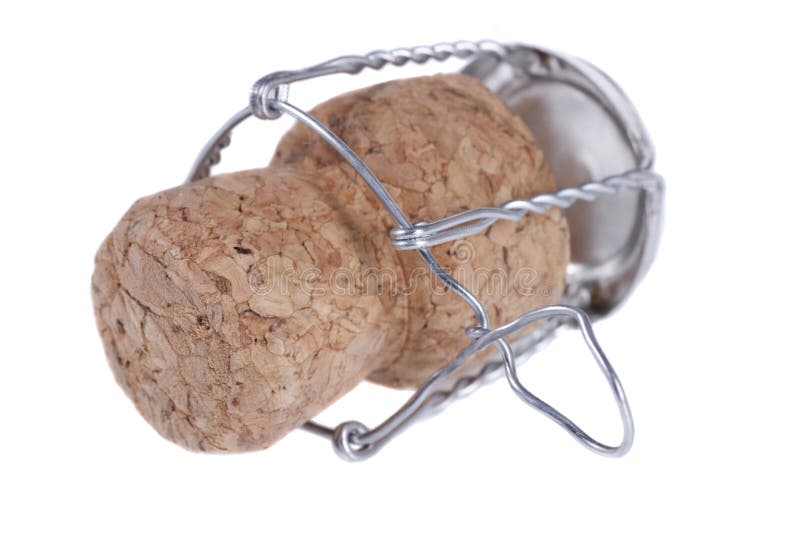
                                      Sparkling wine cork. A sparkling wine cork opened in celebration on a white background stock photo

Champagne is the benchmark for all wines that sparkle.  Anyone with a fondness for Champagne, and they are legion, knows that Methode Champenoise, the French term for the traditional method of making sparkling wine, is considered the most quality oriented way to add bubbles to wine.

There are other methods of getting bubbles into wine, such as Charmat, a process whereby the second fermentation that produces the bubbles, is done in a pressurized tank rather than a bottle.  No longer popular but still used is the transfer method, a sort of hybrid method that employs both a tank and a bottle.

Wineries that are making quality sparkling wines opt for using the classic method, over any other method. The nod is an homage to the Champenois and a way to trade on a prestige term.  

Even before Dorothy Parker said, "Three be the things I shall never attain: envy, content and sufficient champagne," makers of sparkling wine, like the Spanish, had re-worked the word Champagne, much to the displeasure of the Champenois

For years, the Spanish used the term "Champana" to identify their sparkling wines, mainly those made in the region of Catalonia.  The French said the term was misleading and too close to Champagne and eventually the Spanish agreed. 

In 1970, the Spanish adopted the use of the term Cava for all wines made using the traditional method.  Contrary to popular belief, Cava is not an acronym. Cava  means "cellar" in Catalan.  

Aside: Despite the continuing objections by the French over the use of the protected term "Champagne," some countries, most notably the United States, continue to apply the term to their sparkling wines.  Ultimately, an agreement was worked out grandfathering those wineries using the word Champagne so long as it was connected with a local appellation, such as "Napa Champagne."   

Nearly a century earlier, Jose Raventos made the first bottle of Spanish sparkling wine using the traditional method in the cellars of Codorniu in the Catalan town of San Sadurni d'Anoia, not far from Barcelona.  

Cava is not a low-cost alternative to Champagne since they are two different sparkling wines, made under different economic environments. By law, the makeup of Champagne is limited to three grapes: Chardonnay, Pinot Noir and Pinot Meunier.  Cava, however, is based on three indigenous grapes: Macabeo (also known as Viura), Xarello and Parellada. 

Other permitted varieties include Chardonnay, Pinot Noir, Garnacha (Grenache) and Monastrell.  The first two, commonly called "international" varieties, are reserved mainly for high-end blends and prestige cuves. 

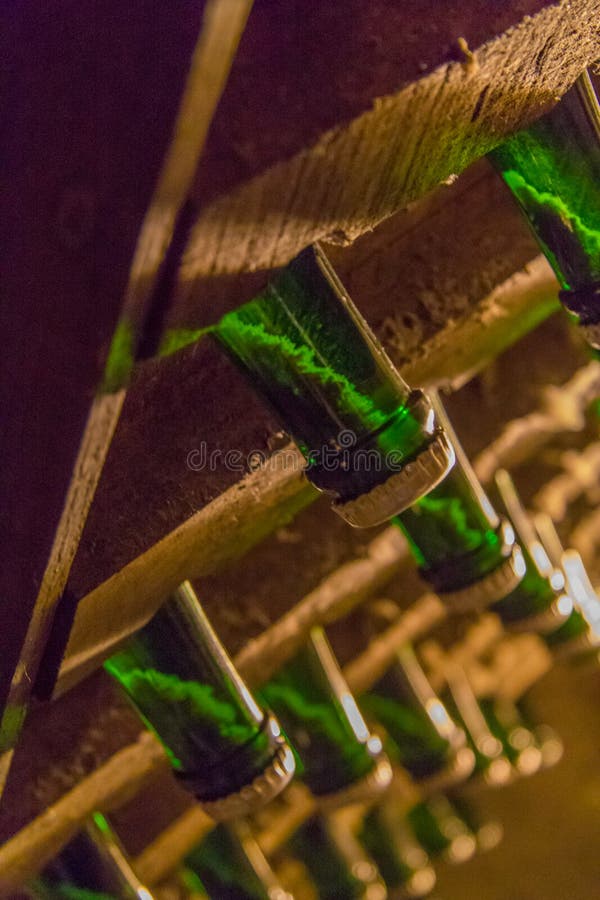
Sediment in champagne bottle. Close up view of the sediment settling in the neck of champagne bottles in racks stock photography
Riddling rack showing crown caps

Another difference between Champagne and Cava, is the development in Catalonia in the 1970s of the gyropalette, a large metal box holding dozens of inverted bottles that are riddled en masse rather than hand-riddled bottle by bottle.

The gyropalettes I saw in the cellars of Codoniu were constructed like a top - a large box on a point - that was moved manually side-to-side, keeping the sediment in the bottles suspended. This labor-intensive method of riddling was eventually replaced by a computer controlled mechanical riddler, commonly in use today in Catalonia and Champagne. 

Riddling collects the sediment on the bottom of the crown cap (similar to those on soft drink bottles) where it is frozen by plunging the necks of the bottles into a freezing solution. The icy plug is then removed by a stage known as disgorgement or deguelle in Spanish and degorgement in French.  

For the final stage in the Cava process, the bottles are topped with a small amount of wine and sugar, known as the dosage, stoppered with the mushroom cork, held in place by the wire muzzle, covered by the hood and then labeled. 

Depending on the level of mechanization in a cellar, it takes between 200 and 300 steps to finish a bottle of Cava. 

There is a little on-going controversy surrounding the official DO (appellation control) for Catalonia.  Awarded in 1986, the DO for Cava is losing some of the smaller Cava producers, mainly over the organizations inability or hide-bound attitude about change.  Cava's storied Raventos family has been one of the major producers to leave the DO to start their own label. 

With summer just a few weeks away, now is the time to stock up on Cava from these producers: Codorniu, Recacedo, Vivanco, Toca, Conca del Rio Noia (Raventos), Roger Goulart, Alta Alella, Freixenet.


Next blog:  Little Wine Tales

Leave a comment or write me at boydvino707@gmail.com

Thursday, May 26, 2022

My Life in Wine Episode 30

Episode 29 took a nostalgic look at three events that helped shape my knowledge and understanding of wine.  With the help of a kindly French waiter, and some Beaujolais, I found a new beverage to enjoy with food besides beer.  And, despite my attraction to Burgundy and Pinot Noir, I discovered the pleasures of aged Bordeaux and Cabernet Sauvignon.  Lastly, at a mountain restaurant in northern Italy, I was introduced to the depth and diversity of Italian wine.

In this final episode of "My Life in Wine," two events come to mind that include bookends enclosing the many years of learning and appreciation.  The "Then" was a tasting of eye-opening wines that set a personal course of wine discovery for the future and the "Now" was the gratifying experience that comes from teaching about tasting and evaluating wine and seeing first the smile, then a nod of the head and finally, the moment when it clicks.

Then

In the 1970s, wine awareness in Colorado was just beginning to take shape.  There was a store in downtown Denver where you could buy California wine for less than it sold for in California.  Colorado boasted of one winery then in an old warehouse along the Platte River.  Vineyards were struggling with winter kill on the Western Slope and a wine tasting group was taking shape known as "The Grape Nuts."

Recognizing the growing interest in wine by its readers, the Rocky Mountain News hired me to write a weekly wine column.  Jack Daniels (not that Jack Daniels), worked for a local wine distributor then and was the founder of The Grape Nuts. Jack saw my column and invited me to one of the group's tastings. 

It was Daniels' turn to supply the wine the night I attended. He selected six red Burgundies from the famous Dr. Barolet Collection.  Dr. Arthur Barolet was an early 20th century physician from Burgundy with a passion for making and collecting wine.  His vast collection, which dated back to the early 1920s, included such wines as 1935 Clos Vougeot, 1937 Vosne Romanee and 1923 Hospice de Beaune Cuvee Fonguerand. 


Dr. Barolet enjoyed making his own wine and some of them were part of his  collection when he died.  He also liked to refresh aging wines with a little brandy, a practice that was not uncommon in those days. The brandy lifted the wine's tiring flavors and gave it a little more life.

The Barolet Burgundies we had that night in Denver are lost in my memory, but the tasting is not.  Even after 40 years and a lot traveling, the wines were inviting and balanced.  Although one or two were quickly passing old age, most of them  were still showing deep textured black cherry and ripe plum, soft tannins, good acidity and length.  No doubt, the longevity of these wines was helped by the brandy.

I came away from that tasting with a lasting appreciation for mature wines and the need to age certain red wines.  Barolet wines pop up at auctions or through private sales, now and then.  By now, though, they are curiosities and buyers should beware. 

Now 

Near the end of my active wine writing career in northern California, a friend suggested I teach about wine.  He mentioned my name and background to the head of a wine studies program at the local junior college and at the start of the next semester, I was in the classroom where I stayed for 13 years.

My first class was in 2003 and I was surprised at the demand for wine knowledge. Students came from a range of backgrounds and ages, including a few underage teenagers who tried to game the system and one man who told me in confidence that he was a recovering alcoholic eager to learn about wine and that he would just smell the wines during our class tastings.

The evening classes consisted of a lecture and a tasting of relevant wines. It was during the tastings when the bond between teacher and student had its highest value, especially when students were prompted to describe what they were smelling and tasting.

Even the vaguest description was discussed, as we explored the wines together. True to his word, the recovering alcoholic smelled all of the wines, adding some relevant and helpful observations.

 If someone thought they detected mint, I would explain the difference between peppermint and eucalyptus, a component often confused with mint.  Or, we would examine the subtle differences between lemon zest, the white pith and the juice.

To illustrate the difficulty of describing a wine in terms that others will understand, I would ask the class to describe the smell and taste of a banana or licorice.  Everyone knew what a banana smelled and tasted like, from personal experience, but they could only come up with, "Um...banana!"


Seeing the look on a student's face as they finally were able to put a name to what they were smelling and tasting, was the gratifying understanding of the teaching moment.

The satisfaction of being able to pass along my knowledge of wine was, for me, a fit way to end "My Life in Wine."  But I hope you will continue to enjoy "Gerald D Boyd on Wine" and will tell your friends.


Next blog: Sparkling Cava

Leave a comment of write me at boydvino707@gmail.com


Thursday, May 19, 2022

Cabernet Franc

Here's a fun fact: Cabernet Franc, the grape variety that gives class to Bordeaux blends, is a parent of Cabernet Sauvignon.


It's true.  Cabernet Sauvignon and Sauvignon Blanc are proud of their progeny's success. For a long time, Cab Franc, a cultivar that some believe is the "true" Bordeaux red grape, was part of the classic Bordeaux blend, preferred by a number of chateaux.  While that's still the case, Cab Franc has branched out as a varietal red outside France.

A little history.  Tracing the ancestry of a grape can be frustrating, often ending in a dead end. Cabernet Franc likely got its start in France, somewhere between the Loire Valley and Provence. Some studies, however, contend that Cab Franc may have Spanish ancestry. 

What is certain is sometime in the 18th century, Cardinal Richelieu directed an abbot named Breton to plant Cab Franc vines at an Abbey in Bourgueil, Loire Valley. This ecclesiastical directive survives today as Breton is the Loire name for Cabernet Franc.

And there are other synonyms: Cab Franc is known as Bouchet in the Bordeaux right bank Libourne vineyards of St. Emilion and Pomerol.  In Italy, Cab Franc is often known simply as Cabernet.   

Bordeaux Franc: In Bordeaux, Cabernet Franc is the anchor grape, in the right bank regions of St. Emilion and Pomerol.  Merlot is the major grape in the Libourne, with Cab Franc playing a supporting role.  

Cooler weather in the Libournais is ideal for growing Cab Franc, but it is too cold for Cabernet Sauvignon, which does better in the Medoc, across the Gironde estuary.  Although the distances are not that great between the Medoc and Libournais vineyards, the differences in the climate and soils are enough.

The central Loire Valley region of Touraine is where Cab Franc does best as a varietal wine.  Chinon and Bourgueil are both 90% Cab Franc with Cabernet Sauvignon making up the remaining 10% of the blend.

This high percentage of Cab Franc gives Chinon and Bourgueil wines a concentrated berry aroma and flavors reminiscent of raspberry and some say pencil shavings.  Bourgueil is the more structured of the two, with deeper flavors and the possibility of aging. 

While a Bordeaux blend containing Cab Franc is a good candidate for aging, the structure and character of mid-weight Touraine Cab Francs is near term drinking. The point of Chinon and Bourgueil is drink now. This approach has earned Chinon the honorific of being called "The Frenchman's wine."

Bourgueil wines worth the search include Domaine les Pins, Joel Taluau, Yannick Amirault.  Chinon Cab Francs: Pierre & Bertrand Couly, Angelliaume, Charles Joquet. 

California and Washington Franc:  Interest in California and Washington state Cab Franc is growing, as a varietal and as part of a Bordeaux blend.  Acreage of Cab Franc is making a slow but steady climb in California, with more consumers looking for alternatives to Cabernet Sauvignon. Cab Franc is most at home in the Napa Valley, but where ever you find Cab Sauv and Merlot, it's likely that Cab Franc will also be there.

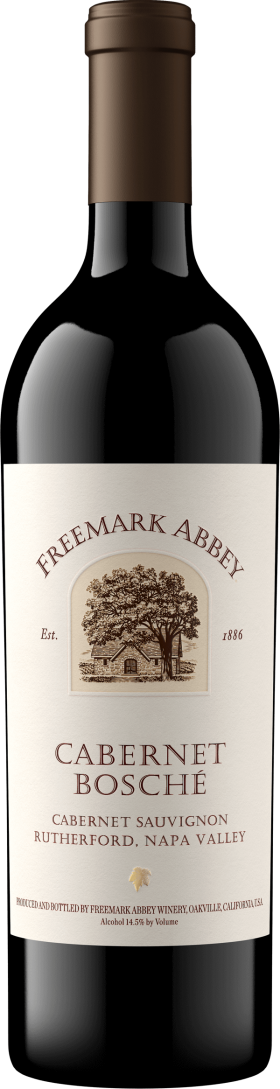
Bosché Cabernet Sauvignon Bottle Shot

 Aside: Fans of Freemark Abbey, in the Napa Valley, may recall Freemark's red wine called Cabernet Bosche.  The name may cause some buyers to confuse the wine for Cab Franc.  The Abbey Cabernet Bosche is Cabernet Sauvignon from John Bosche's vineyard, next to BV 1, which along with BV 2 are the vineyards for the iconic Beaulieu Vineyard Georges de Latour Private Reserve.  The 2018 Cabernet Bosche sells for $175.

Washington has taken to Cab Franc in a big way.  Paul Gregutt, in his 2010 book, "Washington Wines & Wineries," list 32 Washington wineries that either bottle Cab Franc as a varietal or use it in a red blend.

Columbia winery made the first Washington Cab Franc in 1991, but it would be a few years before the varietal took offCab Franc has a tendency to be herbal and that can be a problem in Washington's cooler climate.

The major stylistic difference between California and Washington Cab Franc is fruit intensity.  Warmer growing conditions generally mean fruitier wines with more lush intensity.  Cooler growing conditions temper the lushness and often mean controlling the variety's herbal tendency.  Of course site-specific planting can help mitigate this problem.

California Cabernet Francs include Lang & Reed, Chappellet, Lieu Dit and Keenan. Look for these Washington Cab Francs: Chateau Ste. Michelle, Owen Roe, Willow Crest.

There are many choice today for red wines with Cabernet character.  The nice thing about Cabernet Franc is its adaptability as a blending component and as a varietal. 


Next blog: My Life in Wine Episode 30

Leave a comment or write me at boydvino707@gmail.com

Thursday, May 12, 2022

Jurancon & Jura

Things are popping on the wine front.  More high-end restaurants are coming on line with an informed understanding that high quality creative food shows best when paired with carefully selected wines.  

After so many years of wine being secondary to food, its now time for the two to share a place of equal importance.

Credit wine-savvy restaurateurs and knowledgeable sommeliers for creating wine lists that operate outside the Chardonnay/Cabernet box and for featuring wines from unknown places such as the Jurancon and Jura.  

While sounding similar, these two mostly unknown French wine regions offer a variety of white wines that challenge the standard offerings.  Indigenous grapes, with unusual names, are transformed into wines that are surely outside the box: Courbu, Poulsard, Arrufiac, Petit Manseng, Gros Manseng, Trousseau and Savagnin.

Jurancon

Along the foothills of the western Pyrenees is a string of individualistic wines, like Madiran, Cotes de St-Mont, Irouleguy (Basque) and Jurancon.  Madiran, a deep tannic red made from the Tannat grape, had its day a few years ago, while St-Mont and Irouleguy never made an impact in the U.S. market.

The beauty of  Jurancon

Better known, although not always easy to find, are the dry and sweet Jurancon wines, made mostly from the Petit Manseng, with a little Gros Manseng.  Jurancon sec is a dry, crisp white packed with spice and aromatic fruits.  

Sweet Jurancon, made from the Basque grape, Petit Manseng, is one of a variety of sweet French wines that are unique in their own right, but share some similarities.  For example, the PM grape is resistant to various molds, while Semillon, the core grape of Sauternes thrives on the botrytis mold; Petit Manseng does equally well at various levels of sweetness, but year after year, Sauternes is about the same sweetness; Jurancon often is slightly green-hued; Sauternes is a bright medium gold.

Outside France, Petit Manseng is popular in Uruguay, brought there, along with the red variety Tannat, by Basque settlers.  Experimental amounts are also to be found in California, New Zealand, Italy and Australia.

Expect to pay between $15-$20 for Jurancon blanc, such as Domaine Bordenane and Domaine Cauhape.

Jura

Jura is a small eastern French wine region with a wide variety of wines, made mainly from five grapes: Chardonnay, Pinot Noir, Poulsard, Trousseau and Savagnin.  The first two are the classic grapes of neighboring Burgundy and came to the Jura centuries ago.

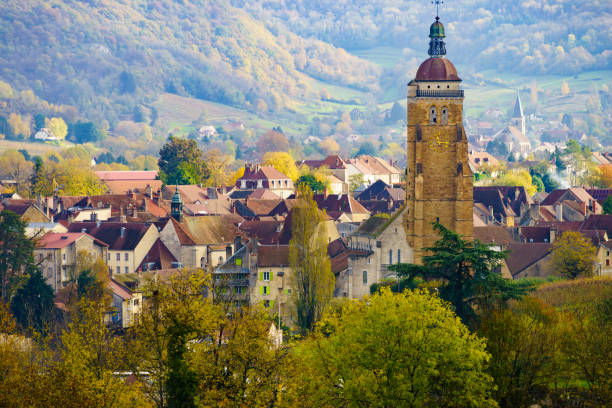
Arbois town in France Arbois town in heart of the Jura wine region of eastern France. Place to visit, tourist attraction. jura france stock pictures, royalty-free photos & images
Village of Arbois, Jura

There is an interesting lineage story, at least to grape researchers, connecting Trousseau and Savagnin, that's unique to the Jura.  DNA profiling has revealed a connection between Trousseau and the Portuguese grape Bastardo, sometimes used in Dao red wine. Further, Trousseau is likely a sibling of both Chenin Blanc, Gewurztraminer and Sauvignon Blanc and somewhere down the line, it is related to Savagnin.

Savagnin is a very old grape, native to the region around Jura.  Savagnin has some similar characteristics to Gewurztraminer and Sauvignon Blanc.  Curiously, Savagnin is related to both grapes, although the flavors of SB and GT are quite different.

White wine made mainly from Trousseau is powerful, with a forward spicy perfume.  Savagnin flavors are very similar to Trousseau. With both Trousseau and Savagnin, the emphasis is on perfumed.

Jura has two main sub-appellations: Arbois and Cote du Jura, both of which make red, white, pink and sparkling wines. About two-thirds is white wine.

Jura and Cote du Jura whites are priced from $20-$30, for Chardonnay and Savagnin blends or a different take on French Chardonnay. Look for Domaine de l'Aigle and Domaines des Carlines.

Part of the enjoyment of wine is the search and discovery of something new.  Jurancon and Jura are not supermarket wines, but should be available from your local wine merchant. 


Next blog: Cabernet Franc

Leave a comment or write to me at boydvino707@gmail.com

Thursday, May 5, 2022

My Life in Wine Episode 29

In Episode 28, I recalled the rigors, as a rookie wine judge, of tasting  California Sherry early in the morning, under the watchful eye of a seasoned judge and panel leader.  And I revisited an evening in Hawaii when I was asked the dreaded question, "What is this wine?"

These three episodes of "My Life in Wine," plus two or three more in Episode 30, will be the last of MLIW.  The plan, for episodes 29 and 30,  is to ramble through the 50-plus years I have been writing about wine, starting here with some thoughts on the evolving nature of certain wines that caught my attention.  

Beaujolais villages

Borgogne Rouge: When the wine bug first bit hard, injecting me with a kind of drug that has had a strong hold on me over the years, my epiphany wine, tasted at a train station restaurant in Chaumont, France, was likely Beaujolais.  I was stunned by the flavor and complexity of this newly discovered drink, so much so, that I didn't write it down.  

Thinking back, I suppose it could have been a red Burgundy, since we were just up the road from Dijon, the gateway to the great pleasures of Cote d'Nuit red wine, but the wise old waiter who recommended the wine we had that evening knew better than to initiate a neophyte with a more complex (not to mention, more expensive) wine, when Beaujolais would do nicely.   

Beaujolais is south of Burgundy and while the two wines are distinctively different (terroir, grapes, styles), there is a certain sameness that places Beaujolais rouge as a gateway, a preamble, a transition, to red Burgundy. 

What I learned over the years is that regular Beaujolais, and the more complex cru wines, is a richly textured quaff-able drink, layered with ripe Gamay flavors, while even the lightest Burgundy from the Cote de Beaune, is more complex and   habit forming.  

I didn't know it at the time, but Burgundy would become my favorite, go-to red wine, even though I eventually spent more time writing about Bordeaux. 

Bordeaux Pleasures:  Burgundy's complexity and depth is derived only from Pinot Noir, while Bordeaux is a blend of five grapes that, over time, were carefully selected for their compatibility with each other, even though the growth characteristics are different.

Cabernet Sauvignon, the main component of the blend, doesn't stand alone in Bordeaux, but benefits from a blended association with Merlot, Cabernet Franc, Malbec and Petit Verdot.  In practice today, the first three are the main components of most modern Bordeaux blends, while Malbec and Petit Verdot are used sparingly.

When I began writing about wine in the late 1960s, a popular phrase was "Bordeaux is the king of wine, Burgundy the queen."  Political correctness was not a topic in those days, so the comparison was more subtly explained by saying that Cabernet Sauvignon was leaner and more muscular and Pinot Noir was softer and fuller in body. 

Anyway, as a fledgling writer, I followed the trend and began writing more about Bordeaux blends and the emerging California varietal Cabernet Sauvignons, even though I was being seduced more by red Burgundy and the few Oregon and California Pinot Noirs I could find. 

Young Cabernet's rough tannins and leaner fruit are harder to like than the softer tannins and forward fruit of youthful Burgundy and Pinot Noir.  But the harder tannic nature of Cabernet went cross ways when I tasted my first aged Bordeaux.  

I have to admit, though, that as impressed as I am with the seamless blend and complexity of aged Bordeaux, Burgundy is still my fav red wine.  

Today, an appreciation for the differences between Burgundy and Bordeaux, adds to my ongoing enjoyment of red wine and by extension, other red wines like the variety of Italian vino.                          

Lombardy vineyards

Viva Italiano! In the early 1950s, while stationed in southern Germany, a friend and I headed south on leave in my 1950 Chevy Bel-Air, bound for Italy. Wine discoveries were not high on the agenda, but we did have a serendipitous meal at a mountain  hotel restaurant that left me with a desire to know more about wine.

The Chevy was struggling at the higher altitude, so we stopped at a small hotel to give the car a rest and have a meal. It was late afternoon and the dining room was bustling with an anniversary celebration.  When it was apparent that we were Americans, the boisterous celebrants invited us to join the party. 

Fortunately, my Italian-American friend spoke a little Italian, so we got the gist of what was happening.  The short version of a long story is that we enjoyed a full meal, with copious amounts of local wine and there was no charge

Ever since, I've tried to work out what the wine might have been.  The most likely route had us in the mountainous part of Lombardy, since we drove out of the mountains and stopped at a General Motors garage in Milan (I was amazed to find GM in Italy) to fix my ailing car.  So, the wine might have been Barbera or Pinot Noir from Oltrepo Pavese, or possibly a Valtellina Nebibolo. 

Whatever, it was a new red wine for me and another experience in the pleasures of good food and wine. 


Next blog: Jurancon and Jura

Leave a comment or write me at boydvino707@gmail.com
 

Thursday, April 28, 2022

This and that...

Like most wine writers, I read a lot and scan web sites and blogs to learn what's happening in the expanding wine world, while trying to stay current on a fast-changing wine industry.

I can say, without exaggeration, that there's a lot of nonsense and useless information about wine circulating around, but there's also items I think help wine drinkers be better informed. 

This blog then contains seven items, both useful and useless, gathered from various sources over the past few weeks.  

Ridiculous Wine Prices:  Wine pricing may be the third rail of wine marketing, but the potential danger hasn't stopped some wineries from charging shocking prices for their wine...and foolish wine drinkers from buying the wines.

Readers with a wine budget and those who get nervous reading large dollar amounts, should skip to the next item.  For those who find high wine prices outrageous and titillating, check this out. 

Not long ago, Krug Vintage Champagne was one of the top expensive bottles of bubbly; today Krug, at $500, is a bargain luxury Champagne.  Compare the price of Krug, though, to these Champagnes: Jacques Selosse Millesime, $2,500 and Salon Cuvee S Blanc de Blanc, $1,400.


Then there's Burgundy, a coveted wine that has always meant big bucks.  Today,  2019 Romanee Conti, a consistently good and highly coveted red Burgundy, will set you back $4,800 a bottle!  

Since the first release of Napa Valley so-called "Cult Cabernets," prices have been astronomical.  Colgin Cellars now sells for a modest $600, but the wine to make your wallet scream is the Screaming Eagle Sauvignon Blanc, listed at $1,200.

All of the above prices were gathered recently from online sites. Since prices vary, the above prices have been rounded down.  Up or down, maybe I have been away from the main stream too long, or someone is pulling my cork.

CAVA Goes Organic: Effective with the 2021 vintage, all vineyards supplying grapes for CAVA sparkling wines, must be organic. The new tiers will be: Cava de Guarda, aged a minimum of nine months; Cava de Garda Superieur, aged more than 18 months; Cava de Paraje Calificado, single vineyard source, aged 36 months. Cava's new move is in response to the success of Italy's Prosecco.  The move by the popular Spanish bubbly strives for "climatological and geological excellence."

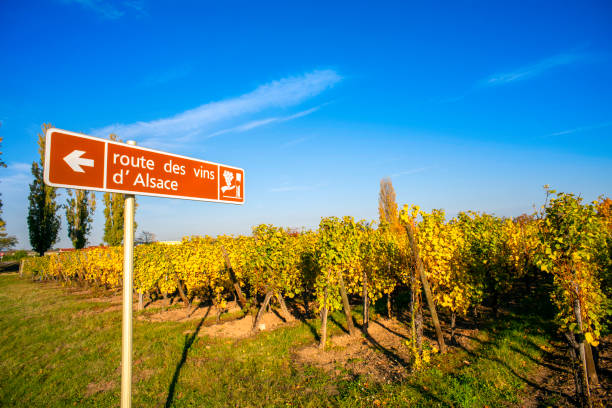
Alsace Sweetness Scale:  Also beginning with the 2021 vintage, the Association of Alsace Winegrowers, has agreed to the application of a sweetness scale, that will appear on the back label of all Alsace wines belonging to the association.  For sec (dry) wines, sweetness will not be more than .4% residual sugars; demi-sec (medium dry) will be between .4% RS and 1.2% RS; moelleux (mellow) 1.2% to 4.5% and doux (sweet) over 4.5% RS.  The new sweetness scale will bring Alsace wines in compliance with EU regulations.  Cremant d'Alsace sparkling wines already use the scale.   

                          wine route sign in alsace - alsace wine stock pictures, royalty-free photos & images

South Africa's Wine Problem:  Climate change, a roller coaster economy and a stubborn pandemic are challenging wineries and growers in many parts of the world, but no more so than in South Africa. 

Covid and local laws have placed restrictions on international travel for members of the South African wine community; the industry is just emerging from the third year of a crippling drought; sanctions on trade have meant vast quantities of wine and limited storage for the coming harvest. 

Huge quantities of bulk wine are being processed by large wineries but small wineries are suffering, causing them to sell the excess to the fruit juice industry or abandon a large percentage of this year's harvest.  The final insult: South Africa's President Ramaphosa has placed a prohibition on the sale of alcohol for the third year in a row. 

The good news is that South Africa got substantial rainfall in 2020 and the economy is beginning to open up.  So look for more South African wines at your local wine store.

Aside: For a different take on life in South Africa, after the freedom of Nelson Mandela, read "The Promise," by Damon Galgut.  The book is the winner of the 2021 Booker Prize.

The Future of Capsules: To capsule or not to capsule is an argument that is raging right now in wine circles.  Well, maybe not raging, but it is stirring up enough interest to qualify as a controversy. 

A capsule is the cylindrical piece that goes over the top of the cork and bottle; also known as the foil.

Pro capsule people, mainly traditional wineries and winemakers who like the way a capsule dresses up the package, want to keep it.  Anti capsule folks object to the additional cost, the environmental impact and the fact that there is no longer a need for capsules as most wine storage areas today are not cold, damp breeding grounds for mold and dirt. 

Poop to Wine:  Organic and biodynamic grape growers use animal dung to fertilize their vines, but who would have thought that dinosaur droppings may be the key to unlocking the secret of terroir. 

 Dinosaur, Reptile, Prehistoric, Raptor

Palentologists at a dig in the Cognac region of France have discovered a razor-thin layer of dino poop on the top of Jurassic rock.  Scientists suggest that vine tap roots may be drawing nutrients from this "herbivore excrement." Similar findings have been discovered in New Zealand's Hawke's Bay and the Burgundy region of France.

Buy Wine Get a Snake:  Actress Elizabeth Banks takes the prize for absolute nonsense. Banks, part owner of Archer Roose Wine, a company trying to sell "luxury" canned wine, made a promotional video saying that if you buy 100,000 cases of ARW canned wine, you get a live snake!  

Yes, you read that right. But not to worry. Banks followed that jaw-dropping bit of nonsense with a second video saying that the offer is against the law. By the way, 100,000 cases of Archer Roose wine would set you back $10 million.  


Next blog: My Life in Wine Episode 29

Leave a comment or write me at boydvino707@gmail.com


Thursday, April 21, 2022

The Appeal of Chilean Red Wine

If you're a serious red wine drinker (and who isn't?), and you've been ignoring Chilean red wine, it's time to rethink your wine-buying strategy.

Some of Chile's most exciting red wine comes from a central band of prime vineyard land, between the Andes mountains and the Pacific Ocean.  The most important grapes are Cabernet Sauvignon, Merlot and Syrah.

Long & slender Chile on the left

Chile, a long slender country along South America's west coast, is a mere 217 miles at its widest point.  The wine magic takes place in a broad central plain,  from a few miles north of Santiago to just south of Talca.  Within this area are seven major wine regions: Aconcagua, Casablanca, San Antonio, Maipo, Rapel, Curico and Maule.

Maipo, the northern most major red wine region, stands out for its top reds.   Unlike Argentina's inland Mendoza Valley, where cool growing conditions are achieved by planting at higher elevations, Maipo, which is just across the Andes from Mendoza, benefits from cool breezes off the Pacific Ocean. 

Chile exports a lot of wine to the United States, so a trip to the local wine shop can be bewildering at best.  Here's a brief region-by-region guide of what to look for when you're looking for Chilean red wines.  

These appellations, from north to south, appear on the front labels, with Casablanca, Maipo, Rapel and Curico being the most common. 

Aconcagua: The interior of Aconcagua is hot and dry, but there are places where red wine grapes grow nicely. Errazuriz, one of Chile's major wineries, farms grapes for its iconic Maximiano Cabernet Sauvignon in Aconcagua. At $20, the 2019 "Max" is possibly one of the best Cabernet values from Chile. 

Maximiano vineyard

Casablanca: First planted in the 1980s, Casablanca and San Antonio, are cool temperate coastal regions, known for Pinot Noir, but more so for Sauvignon Blanc and Chardonnay.

San Antonio: Moderating ocean breezes and morning fog are ideal conditions for Pinot Noir and Chardonnay, used for Chile's burgeoning sparkling wine business, especially from such producers as Valdivieso and Tabali.

Maipo: Not far from Santiago, this small inland region is famous for Cabernet Sauvignon and Merlot.  Some of Chile's best Chardonnay comes from Maipo.  Of note is the region's Carmenere

Rapel: Cachapoal and Colchagua are Rapel's two major sub regions that run east to west, meaning that growing conditions vary from cool coastal areas to warmer inland ones closer to the mountains.  Cabernet Sauvignon thrives in the inland vineyards, as do Merlot and Syrah.  Interest has been building in recent years for Pinot Noir from coastal vineyards.  Promising conditions in Rapel has attracted investment by the French, including Casa Lapostolle and Los Vascos.

Curico: Smaller than Rapel, but no less important, Curico attracted the Spanish vintner Torres to establish vineyards and a winery there in 1979.  Curico is best known for Cabernet Sauvignon and Merlot.

Maule: Although there are other vineyard regions further south, Maule, for now, is the southern limit for quality grapes, although there is considerable  experimentation in Maule and even further south in Bio Bio.  Carignan is more widely planted in Maule than Cabernet Sauvignon.  

The price range for Chilean Cabernet Sauvignon varies, but the following dozen wines are $12 to $50, most in the low $20's: San Pedas Cachapoal, Toro de Piedra Colchagua, Perez Crus Maipo, Miguel Torres Curico, Undurraga Maipo, Tabal Taluid Maipo, Tarrapaca Maipo, Vina Aquitania Maipo, Arbuleda Aconcagua, Concha y Toro Maipo, Valdiviso Central Valley.

Chilean red wines are solid values in a market that seems to be getting richer by the month.  Cabernet Sauvignon was featured here, but Chile is a good source  for reliable Merlot and Syrah. 


Next blog: This and that...

Leave a comment or write me at boydvino707@gmail.com
Thursday, April 14, 2022

My Life in Wine Episode 28

In Episode 27, my life in wine participated in the arm-busting job of raising a wine barrel, attended a session with the inimitable Bernard Hine analyzing the merits of new spirit destined (or not) to be Cognac and  spent an afternoon in Australia's Hunter Valley learning that a little advance knowledge is always helpful when tasting Hunter Semillon. 

The following episodes look back at two occasions in my life in wine when confidence in my wine knowledge and tasting ability were tested under high pressure.  


Sherry in the Morning.  In 1978, while living in Colorado and writing about wine for the Rocky Mountain News, I got a call from Nathan Chroman, then chairman of the Los Angeles County Fair Wine Competition, held at the Pomona fairgrounds. 

Chroman invited me to be a judge at the three-day competition.  As a new wine writer hoping to bolster my reputation on the national stage, while having the opportunity to taste hundreds of wines, I readily accepted. 

Bright and early the first day, all of the judges and support staff gathered for the chairman's greeting, instructions and panel assignments.  The late David Lake MW and I were the new judges that year. Probably because he was a Master of Wine, David was assigned to the Cabernet Sauvignon panel. Lake went on to make a name for himself as winemaker at Columbia Winery in Washington state.

Because I was an unknown from Colorado, Chroman sent me to the panel tasked with evaluating California brandy and Sherry.  The other three panelists were Phil Posson, an expert on fortified wines specializing in Sherry, another distiller of wine spirits whose name I forget and Daryl Corti, a Sacramento wine merchant with an encyclopedic memory who enjoyed putting new judges to the test.

The first morning, at 7:30 am, sharp, I was at my judging booth, ready to put my limited knowledge of California wine spirits to the test!  Our first assignment was 30 California Sherries, divided into three flights of 10 wines.  I stared at the daunting lineup, then dutifully tasted my way through the wine, made my notes and assigned awards, then joined the other judges at the conference table.  

Only by applying learned tasting techniques and remembering to taste past the higher alcohol, was I able to keep pace with my fellow panelists, defending my opinions and awards, especially under Corti's withering cross examination on why I eliminated one wine and gave a gold medal to another wine. 

Corti's panel went on to judge other wines and I became more at ease with my new assignments.  My performance as a rookie judge apparently impressed both Corti and Chroman enough to invite me back the following nine years.  


Chateau Y on Maui.  For most people working in the wine business or writing about wine, there are two dreaded encounters with the curious, usually when least expected: You get asked, "What's your favorite wine?"; and someone hands you a glass of wine and asks you to identify it.  

I stopped counting the number of times I have been asked the first question, but there was one memorable evening when I was confronted with the second challenge.

During the Kapalua Bay Wine Symposium, held at the Kapalua hotel on Maui, my wife, Janet and I and a few friends dined at the hotel's specialty restaurant.

As the meal came to an end, Eric Hansen, Kapalua's late wine director and sommelier, came to the table and asked me to participate in a challenge.  Eric and I were friends, so I agreed not knowing what he had in mind. 

Eric presented a bottle of wine sealed in a brown paper bag, cork removed and poured a glass for me.  "Can you guess what the wine is, he asked with a conspiratorial grin?"

While he was pouring the wine, I had a quick peak at the bottle still in the bag, then I took a good long sniff, followed by a few sips.  Placing the glass on the table and pausing for effect, I said, "Chateau Y, from Chateau d'Yquem."

My table mates looked at Eric, who stammered, "That's right, how did you guess so fast?" 

I didn't divulge my secret that evening, but my guess was based partly on observation and knowledge and partly on luck.  Eric had removed the branded cork so that I didn't see the producer, but he forgot to completely hide the bottle, allowing me to see that it was clear and not green glass.  And, even though the bag partially hid the bottle shape, I could see it was a Bordeaux bottle. 

The medium gold color of the wine narrowed the possibilities further, plus the first sniff said honeyed fruity Semillon, which was confirmed by my first sip of the wine.

So, clear glass Bordeaux bottle, characteristic Semillon aroma with a mineral note and a medium gold color.  Could be a Bordeaux blanc, but the wine was too dark and the smell and taste too rich, for Sauvignon Blanc with a touch of Semillon, so my guess was a dry Sauternes and the only widely available one at the time was Chateau Y, from Ch. d'Yquem, perhaps the best known Sauternes.

A final note on Sauternes.  Years before the Maui dinner, I had the good fortune to taste a Ch. d'Yquem from the 1920s at a wine auction in Denver.  Local press and wine writers were given 30 minutes to taste select wines before the auction began. 

After tasting a few old Burgundies, which I don't remember, I headed directly to the Yquem.  I was in luck, as a small amount of medium-dark gold wine remained in the large-bowl glass.  

The bouquet of this 50-year-old wine was incredible!  Deep, rich, honeyed exotic spice, pineapple upside down cake, ripe apricots and more.  A tiny sip was textured and complex with a long lingering finish.  

I returned to the Yquem a few times and though the glass was long empty, the wine's bouquet was still strong and inviting.

Next Blog: The Appeal of Chilean Red Wines

Leave a comment of write me at boydvino707@gmail.com