Thursday, February 24, 2022

My Life in Wine Episode 26

Episode 25 (Feb 4) was all about the joys and disappointments of wine travel, such as rounding a corner in a Barcelona neighborhood and finding a fill-it-yourself wine shop or watching a young couple in a restaurant outside Florence, rely more on a magazine's wine ratings than the recommendations of a local sommelier.  
 Wine Glass Bottle

Winery visits can be instructive or boring.  But the inquisitive visitor seeking information not part of the tour spiel, should beware.  Most winery tour guides have a script and when asked a question not on that script usually sidestep the question and continue with the prepared tour.

As a writer, I always entered a winery hoping to learn something new and most times I did.  But there have been disappointments, such as the obligatory viewing of the bottling line. 

Bottling lines are usually Italian-made and expensive, like a precision Italian sports car. During a visit to a winery, the tour would always veer off  as the owner or winemaker would proudly say, "We want to show you our bottling line." Always  gleaming and beautiful, like the sports car, but one bottling line (well, maybe two) would hold you for a long time.

As a rule, wine writers and people in the wine trade, have an advantage when it comes to winery tours (we can say no to viewing the bottling line).  Winemakers, gregarious or not, are hoping to get a retailer to carry their wine and a wine writer to say something nice about the wines.  So, winemakers put their grumpy face away, smile and try to answer questions in non-technical language.

Okay, grumpy may be an unfair generalization, but after talking with hundreds of winemakers around the world, my experience is they are either extroverts who enjoy explaining things to people, or loners who don't relate well to people and are unhappy at being interrupted from the business of making wine to answer questions.

Then there's this: Winemakers often look at the visitor experience as being like an artist showing his contemporary work to someone only to have them quip, "I could do that!"

I've been at tastings in winery cellars when some self important visitor, who apparently was trying to impress anyone within earshot, made such a pronouncement.  The winemaker would usually resist commenting, but from the grim look on his or her face, they wanted to shout, "Really, well step up here and give it a try." 

Unless a winemaker intentionally pours a wine that is flawed to test a visitor, they already know the wine is sound and, in most cases, like what they made, so they don't want someone telling them what they already know about the wine. They are looking for honest opinions, good or bad. 


Many years ago, I had an appointment to interview Barney Fetzer, a retired lumber executive and father of 11 children, who started one of Mendocino's best known wineries.  After visiting the winery in Redwood Valley, Fetzer invited me and my wife and youngest son to a tasting and dinner at his oldest son John's house in the valley. 

Before we sat down to eat, Barney and John poured a few Fetzer Mendocino Zinfandels.  I expected Barney to ask me, the wine writer, for my opinion, but in stead, he turned to my son Sean, who was then 11 years old, handed him a glass with a little wine and asked, "What do you think, Sean?" 

After looking at me for permission, Sean (now a Washington state winemaker) took a small sip, thought about it for a moment and then said, "It tastes like peanut butter."

Barney and John both laughed and I started to say something, but Barney said, "That's very good, Sean."  Adding, "I have my kids taste our wines all the time.  They have an unbiased opinion, not influenced by prior knowledge and experience." 

Many years later, while living in Colorado and writing about wine for the Rocky Mountain News, Janet and I were invited to dinner at the home of Mel and Janie Masters; he then the sales director for Jordan Winery, she a chef.

The Masters were a talented couple, born and raised in England, who somehow settled in Denver.  We were among other guests of the Masters, including a flamboyant French friend who worked in fashion design and changed outfits between each course.   

Mel had plenty of wine on the table and between courses, he poured a Chardonnay and asked for opinions from his guests.  But, before anyone could reply, Mel summoned his young son, Charlie to the table, gave him a glass with a little wine and said, "Tell us about the wine, Charlie." 

Leaning his one arm on his father's knee and swirling the wine in the glass with his other, Charlie proceeded to describe the wine's bouquet and flavor.  Both father and son beamed as Janie brought the fish course to the table.

The point of this rambling stroll down memory lane is to offer a reminder that wine always seems to taste better in the place where it was made and with good food and company.


Next blog: A Different Sauvignon Blanc

Leave a comment or email me at boydvino707@gmail.com


Thursday, February 17, 2022

An Argentine Resurrection


In Argentina's Mendoza Valley, at the foot of the Andes mountains, a resurrection in the vineyard has been taking place, breathing new life into a grape that was slowly losing favor. 

Malbec in France

For years in France, Malbec struggled to be a part of the Bordeaux blend.  Known by the Bordelaise as Cot, the Malbec grape played a minor role in Bordeaux to Cabernet Sauvignon, Merlot and Cabernet Franc. 

While it was losing ground in Bordeaux, Malbec held on as the principal grape of the famous "black wines" of Cahors, an ancient region about 120 miles southeast of Bordeaux. In Cahors, Malbec was called Auxerrois, until the grape's success in Argentina, then growers and wineries in Cahors changed the name to Malbec.

In 1851, a Frenchman exiled from his homeland, came to Argentina and began importing grapevines, including Malbec, from France.  The timing was crucial for the Argentine wine industry, since the vines left France before the phylloxera scourge, first noticed about ten years later, destroyed many of the vineyards.

Malbec bounced back and became a favored grape by some Bordeaux chateaux until 1956, when a severe frost damaged many of the vineyards.  But Malbec never recovered and the grape's  soft juicy fruit and deep color where replaced by Merlot, a grape more likely to survive poor fruit set (The French call it coulure) and rot, than Malbec.   

Fact is, Malbec never accounted for more than 15% of a Bordeaux blend and growers were not planting more Malbec vines.  That didn't deter wineries in the southwest regions from preferring Malbec's plummy richness as a blending component.  And in Cahors, where a Malbec must contain 70% of that grape.

Malbec in Argentina

The evolution of Malbec from France to Argentina is an impressive story.  But it wasn't by chance.  In 1852, French immigrants from Bordeaux brought vine cuttings with them to Argentina and planted the first Malbec in the Mendoza Valley. 

A snowy Andes backdrop to Mendoza Vineyards

Mendoza growers and winemakers like Cabernet Sauvignon for its structure and age ability, but the variety they chose as a prime blending partner is Malbec and not Merlot as it is in France.  In fact, Malbec, which accounts for about 18% of the total wine grape plantings, is Argentina's most popular grape today.

Aside: Before the middle of the 20th century, Argentine (and Chilean) growers sold their grapes on weight.  On my first visit to Argentina and Chile, I was told by Miguel Torres, the Spanish scion who had established a winery near Curico, Chile in 1978, that the most resistance he encountered when he first set up shop in Chile, was from old growers who wanted to flood the vineyards before harvest to get the weight of the grapes up.  The vines sucked up the water, plumping the grapes and jacking up grape cluster weight, while the growers grew richer. 

These four wine regions are the most important in Argentina for their size and scope of wines produced:

Mendoza, in the far west of the country, against the eastern Andes, is the largest and most important wine region in Argentina. The sub regions of San Rafael, Lujan de Cuyo, Valle de Uco and Maipu, are prime locations for Argentina's best reds such as Malbec.

San Juan is the second largest region and while it is not known for Malbec, I mention it here because Syrah and Bonarda do well in this region.  More to the north and hotter than Mendoza, San Juan is known for table grapes and raisins.

Salta is the most important wine region in the northwest.  Many of Salta's best vineyards are at high altitudes. Colome Altura vineyard, owned by Donald Hess, of the Hess Collection in the Napa Valley, is at 10,000 feet.  Red varieties like Malbec and Bonarda do well at these altitudes.

Rio Negra, in the south, is a cooler region, better known for pears and apples.  A lighter version of Malbec is produced from Rio Negra grapes.  Also popular are Pinot Noir, Merlot and Cabernet Franc, as well as fragrant whites like Torrontes and Riesling. 

Aside: Regular readers of this blog are aware of my interest in wine grape names, especially the many synonyms for the same grape. For example, Torrontes is known by three names in Argentina: Torrontes Riojano, Torrontes Sanjuanino, Torrontes Mendocino. Not only are the names different, but so too are the grapes, although all three produce an aromatic, Muscat-like wine.  In Spain, Torrontes has four different names and is known by a variety of names in Portugal.

There have been big changes in the culture of Argentine wine making as well.  Old timers didn't talk much about how they made wine amongst themselves.  But today's young guns taste, evaluate and comment on each others wines, improving the breed and appealing more to the international taste for fine wine. 

And young winemakers are often trained abroad, usually in France or California, and they travel extensively, observing how grapes are grown and wine is made in other regions.  Its all being part of the international wine community. 

Catena Zapata

Argentine Malbecs are priced between $19 and $40, with a few special bottles hovering around $100.  Here are a few Argentine wineries representative of their regions: Trapache (Mendoza), Zuccardi (Mendoza), Catena Zapata (Mendoza), Wapina (Rio Negro), Bodegas Bianchi (San Raphael), Colome (Salta), Salentein (Vallle de Uco), Susana Balbo (Valle de Uco).

Argentine Malbec shares some of the characteristics with its French cousin, but is probably more like Bordeaux Malbec than the bigger more rustic wines of Cahors. 


Next blog: My Life in Wine Episode 26

Leave a comment of email me at boydvino707@gmail.com


Thursday, February 10, 2022

Washington's Promising Reds


There was a time when New York state was second, behind California, in U.S. wine production.  But then Washington state vaulted up the list, to unseat New York and claim second place. 

It was an impressive accomplishment by a wine industry that for years was over shadowed by apples, hops and mint and seemed more satisfied growing hybrids than vinifera grapes.  

Washington's first grapes were planted in 1825 and for the next 112 years growth was slow.  By 1937, there were 42 wineries in the state. Today, that number has soared to more than 1,000 wineries and more than 80 varieties.

 Aside:  In the 1930s, the native variety Concord, was the most planted grape in Washington.  It was reported that Welch's, known for its juices and jellies, made from Concord, had more Concord acreage in Washington than it did in the east. 

As of 2021, the numbers show Washington contributing 5% of the total U.S. wine production, while California still claims first place with an impressive 84% of the total.  According to a recent survey, the total world production in 2021 was 800 million gallons, with California ranking fourth behind Italy, France and Spain.

Although the difference in production between California and Washington is likely  insurmountable, Washington wines continue to impress critics and consumers for their unique style and character. Especially promising is the Washington take on such classic reds as Cabernet Sauvignon and Merlot.                                  

                                     Washington Vineyards


The majority of Washington wine grapes is grown in the Columbia Valley, in the eastern part of the state, where the environment is arid to semi-arid, with warm to hot days and cool nights. Natural rainfall, lower than most other wine regions, is limited by a rain shadow created by the Cascade and Olympic mountain ranges. This consistent weather phenomenon means Washington vineyards are mostly irrigated. 

The most widely planted of Washington's 80 varieties are Cabernet Sauvignon, Chardonnay, Malbec, Merlot, Pinot Gris, Riesling, Sauvignon Blanc and Syrah. And there are small plantings of Sangiovese, Cabernet Franc and Pinot Noir among others.

Varieties like Sangiovese and Pinot Noir do best in select microclimate pockets, where growing conditions are more suited to cool climate varieties like Pinot Noir.

Washington's wineries are scattered throughout the state, from the Yakima Valley to the Puget Sound.  The largest concentrations are in Woodinville, northeast of Seattle, with 130 plus wineries and Walla Walla, east of the Tri Cities, with 107 wineries spread through a large area.  

Moving grapes from the eastern vineyards to Woodinville wineries, requires trucking the ripe grapes across the Cascade mountains. This unique feature sets Washington apart from other regions where most of the vineyards are next to or nearby the wineries. 

General appellations for Washington red wines you'll likely see on labels include Columbia Valley, Horse Heaven Hills, Yakima Valley, Wahluke Slope, Red Mountain and Walla Walla Valley.  Smaller appellations include Columbia Gorge, Snipes Mountain, Rattlesnake Hills and Lake Chelan.  

                                               Washington Wines


One of the first things you notice about Washington red wines, particularly Cabernet Sauvignon and Cabernet Franc, is the bright bracing acidity and pure, not overripe, berry flavors, with just a trace of minerals.  

Stylistically, Washington reds stand alone, but are closer to Cabernet-based Bordeaux reds than California varietal wines.  The association with Bordeaux has some precedence.  At one time, Chateau Ste. Michelle, Washington's largest winery, had a compressed map at the top of the back labels of their wines, showing Washington state and Bordeaux on the same latitude.

The idea was to distance Washington wines from the warmer California style and closer to the Bordeaux style that most American wine drinkers were then used to.

While varietals are common in Washington, many of the wineries excel at blends, such as Cabernet Sauvignon and Merlot, or the same two varieties with the addition of Cabernet Franc.  Although Syrah is most often seen as a pure varietal, there is a movement in Washington, to blend Syrah with Cabernet Sauvignon and Merlot. 

Washington wines are widely available today, but of the more than 1,000 wineries in the state, most are small.  These smaller wineries do not have the same distribution as do the large wineries, so you should ask your local wine merchant to order the wines you want. 

Washington red wines are good choices when you want something different, so isn't it time you tried a Washington wine?


Next blog:  Argentina's Malbec Resurrection

Leave a comment or email me at boydvino707@gmail.com


Thursday, February 3, 2022

My Life in Wine Episoode 25

The last episode had MLIW veer off the path for a quick look at "A Winemaker in Training."  A directional correction is made in this Episode 25, putting the narrative back on course. 


One of the many advantages of getting off the couch and traveling is travel takes you out of your comfort zone, exposing you to new experiences and unexpected encounters with strangers.  

The enriching value of travel made an impression on me when I was an international wine judge in Sydney.  I was asked to do an interview with a local radio station, describing my impressions of being an American judging Australian wine in Australia.  

Turns out, the interviewer was an American ex-pat who had moved to Australia years ago, becoming then, as she put it, "part of the woodwork." 

While she was asking me questions, I was going over in my head: American or Canadian? Even listening to the accent, it's not easy to know unless you ask, and that's what I did when the interview was finished.  

Travel gives you that advantage, even when the waiter in a Paris cafe notices immediately that you are not French (there's no fooling the French about the use of their beloved language) when you order a glass of vin de pays. 


Travel has always been in my blood, so when I left the Wine Spectator, I began to travel.  My goal was to learn more about wine from the people that made it and how the local customs and environment had an influence over these practices.  

Wandering the streets of Barcelona one evening, I spotted a wine shop.  Not a wine shop as I knew it, but one that, as it soon became apparent, sold more bulk wine than bottled wine.  Behind the counter were two large vats, painted green and red, each with a shiny brass spigot.  

I found a place inside the shop, out of the steady stream of coming and going traffic and watched as locals brought their own demijohn or container to be filled with a fragrant red or white wine. 

I'd never seen anything like it before and if I had not been in Barcelona on that day and at that time, when Barcelonians did their evening shopping, it's likely I never would have known that wine was sold that way. 


Seeing young and old Barcelonians get their wine in just about any container, reminded me of an evening in a gasthaus (tavern) many years before in Bonstetten, Germany.  While enjoying a beer, brewed on site, a young girl came in carrying an aluminum lidded container.  She handed the container to the gasthaus owner who filled it with foaming beer and the girl disappeared into the night to deliver the brew to her thirsty father.

Given the rigid U.S. laws on selling wine in open containers and to underage children, it's not likely that the Barcelona and Bonstetten scenarios would take place in the United States.

Small point?  Maybe, but it all adds to the wine experience and helps round out your wine knowledge. 

Then there was another wine event in another country and time.  I was having dinner at a pleasant restaurant outside Florence, when a young couple, looking very American, was seated at the table next to me.  

She pulled a copy of the Wine Spectator from a large tote bag and placed it on the table.  He began reading the wine list that had an impressive selection of Brunello di Montalcino, quietly reading the wines to her.

The waiter/sommelier, a man I had learned earlier who knew his Brunellos, came to their table and asked if they had made a wine choice.  

"A Brunello," said the young man without looking up from the wine list. 

After asking about their food choices, the waiter suggested a few appropriate Brunellos.  The young woman checked each suggested wine, with what I guessed was a list of Brunellos in the Spectator, whispering the rating to her companion.  

I wanted to shout at the couple for ignoring the waiter's knowledgeable suggestions and for losing an opportunity to immerse oneself in local knowledge and learn something new from their travels to Italy. 

Perhaps no other experience I had in my travels to learn about wine, unfolded one sultry evening, as the sun was setting, at a small cafe by the water in Sanlucar de Barrameda, in the Sherry region of Spain. 


The setting: A small table in the shade of a sun-bleached umbrella, facing the sun as it disappeared below the horizon, flashing a kaleidoscope of colors.  On the table, a bottle of slightly chilled Manzanilla Sherry and a bowl of fresh shrimp. The briny-sweet shrimp and the dry, faintly salty and bitter, Sherry, was the perfect match. 

Was it the place, the shrimp, the day or the wine that brought the occasion to near perfection?  I don't know but it was a sublime wine-travel experience!


Next blog: Washington's Promising Reds

Leave a Comment or email me at boydvino707@gmail.com


Thursday, January 27, 2022

Tempting Tempranillo


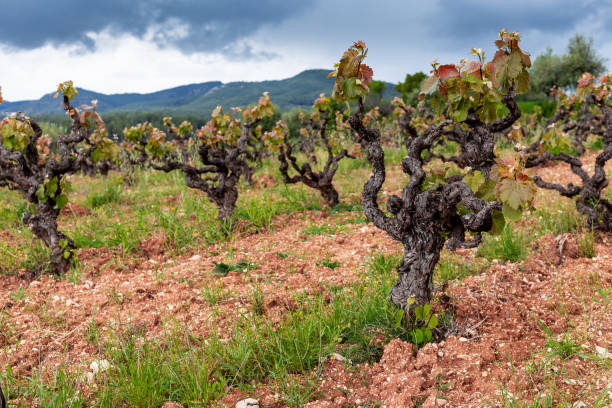
     vineyard - tempranillo spain stock pictures, royalty-free photos & images 

The vineyard in the photo above is one of many throughout Spain growing old-vine Tempranillo.  While yields from these gnarled bush vines are predictably low, the grapes the vines produce are deeply colored with concentrated tempting flavors.

Tempranillo is the work horse red of Spanish wine. Planted in Rioja, Toro, Ribera del Duero and other regions, the popular grape is responsible for a variety of styles, from youthful grapy-raspberry, to structured age-worthy, richly textured wines with spice notes. 

Although fans of complex red wines can find a style they like, Tempranillo lovers know that the best examples come from Rioja and along the Duero river in Ribera del Duero. 

Rioja Alavesa wines are delicate and aromatic, while those from Rioja Alta are richer and darker. The lesser wines of the hotter Rioja Baja tend to be jammy. 

Even with the dominance of Tempranillo in Rioja, many of the wines are blends of Tempranillo, Garnacha (Grenache), Graciano and Mazuelo. Blending creates a unique style, but it also deminishes the presence of a terroir in the wine. 

Ribera de Duero Tempranillos are bigger wines with more concentrated flavors. Tempranillo makes up about 85% of the vineyards in the Ribera and the wines must be a minimum of 75% Tinto Fino ( the local name for Tempranillo).  

Chalk, a porous sedimentary limestone, is a vital component of Tempranillo vineyards.  Chalky clays predominate in Rioja and Ribera and are part of the alluvial mixture in Toro.  Some vineyards in Ribera del Duero are so rich in surface chalk, they appear covered in snow.  

Chalk white against sky blue

After 20 years, a grapevine begins to lose its vigor, producing smaller crops. But grapevines are long-lived, some reaching 100 years and still producing grapes.  Spanish Tempranillo vines are often grown as bush or "goblet" trained vines and exceed 35 years. 

Aside: When it comes to wine grape vines, the question is how old is old?  The controversy has been kicking around for years, especially in California.  Some say a vine should be 25-35 years old before you tag it as an "old vine."   But most vines are only getting started at that age, so maybe it should be 50-75 years old?  

The bottom line is that wine marketers like the old vine designation, so it doesn't matter to them if it sells wine. Grape growers, however, are more inclined toward a statement of maturity.  As someone of age, I tend to side with growers.

Tempranillo is a natural with oak.  American oak has been used in Rioja, where Tempranillo is the major red grape, since the late 19th century.  Tempranillo's mellow fruit melds nicely with the subtle vanilla notes drawn from American oak. Due to the long aging in old barrels, Rioja needs little to no bottle aging, especially for joven and crianza. 

Joven wines are unoaked, although some wineries wood-age them for less than six months.  To distinguish between oak or no oak, some wineries add "roble" (oak) on the labels to denote that the wine has spent some time in oak.

By law, Crianza must age a minimum of 24 months, with at least six months in oak. In practice, though, Rioja and Ribera del Deuro require a full year minimum in oak and many wineries keep their wines in barrel longer.

Old barrels are still mostly used in Rioja, the wine getting subtle oak seasonings from long aging periods.  However, the trend, first started in Ribera del Duero, leans to more fruit and less oak, as well as the introduction of French oak.  

Before the era of knowledge sharing, growers had local names for the same grape, a practice that remains today.  Thus, in Ribera del Duero Tempranillo is known as Tinto Fino, in Valdepenas it is called Censibel, Ull de Libre in Catalonia and Tinto de Toro in Toro.  In neighboring Portugal, Tempranillo is called Tinta Roriz or Tinta Aragonez.  Fortunately, the grape naming remains local and doesn't appear on labels. 

There are a lot of Spanish wines in the market today and not all of them are available in all markets.  It's always best to consult your local wine merchant, but to help you along, here are a few popular Spanish Tempranillos.

Rioja: Marques de Riscal, Campo Viejo, Martinez Bujanda, CVNE, Muga, Lopez de Heredia. 

Ribera del Duero: Alejandro Fernandez, Protos, Condado de Haza, Vega Sicilia, Hacienda Monasterio, Arzuaga.

Others: Civite and Guelbenzu (Navarra) and Marques de Grinon (Castilla-La-Mancha).

Tempranillo is a tempting wine of many styles and character and best of all, there is a Tempranillo to go with the food of your choice. 


Next blog: My Life in Wine Episode 25

Contact me at boydvino707@gmail.com
Thursday, January 20, 2022

2121 Recap

 Business woman hand writing on a notepad with a pen and using laptop in the office. Web banner stock photo

Every year at about this time, columnists and contributing writers like to look back at the past year and recall major events, or what they liked and disliked on the world scene.  "Best" and "Worse" lists abound, often including things readers had completely forgotten. 

Wine articles and blogs are no different.  This blog, however, will not bore you with yet another screed about the hated three-tier system, the stupidity of some state laws regarding direct shipping of wine or whether some of the nation's sommeliers are misbehaving.

What follows, then, is a look back at the topics covered in "Gerald D Boyd On Wine" in 2021.  They are offered here as an indexed guide of what you read (or missed) throughout the past year; topics that will help increase and improve your knowledge of wine, while giving you more power to make better wine purchases. 

By my count, this space carried 31 blogs plus 14 "My Life in Wine" entries in 2021, which doesn't come to 52 weeks, but then a few things happened, like illness and an unrelanting pandemic. 

To make it easy for you, the reader, the blogs are grouped alphabetical by country, with a separate section for "My Life in Wine."

Australia: Australian Shiraz (18 Nov 2021). I thought I had written more than just one blog on this popular red last year.  Look for more background on Australian wine in the coming year.

California: Sierra Foothills (8 July), Napa Valley (19 Aug), Beyond Napa (26 Aug). Yikes!  Only three blogs on the most popular U.S. wines; I'll have to do better in 2022, with more on lesser known California wines.

Chile: Wine from this narrow country in South America continues to appeal to American wine drinkers.  An overview of Chilean wines is in the (23 Dec) blog.  In 2022, I'll write about the appeal of Chilean red wine.

France: Loire wines Part 1 (30 Jan), Loire wines Part 2 (9 Feb), Chablis (29 Apr), wines of the Cote de Beaune (6 May), Champagne (29 Jul), Cabernet Franc (5 Aug), Viognier (9 Sep), Grenache (16 Sep), wines from south of Beaune, (11 Nov).  Clearly, I had a preference for French wines in 2021.  This blog focused on French wines more than any other region or country.  Alsace and the affordable wines of southwest France will be featured later this year.

Israel: There is more to Israeli wines than kosher, as presented in a (7 Oct)  update.

Italy: Nebbiolo (10 Jan), Pinot Grigio & Pinot Bianco (8 Apr), Barbera & Dolcetto (15 Apr), Soave (21 May), Sicily (15 Jul).  I admit, Italian wines are favorites for their variety and overal high quality, so there will be more on Italian wine in 2022.

Miscellaneous: Covid Watch (24 Feb), "How did you get into wine?" (1 Apr), Summer Roses (24 Jun), The impact of climate change in the vineyard (30 Sep), "When did wine change?" (28 Oct), Light Reds (2 Dec), Holiday Wine (9 Dec).

Oregon: Oregon Red Wine (21 Oct).  There is more going on with wine in Oregon than I wrote about last year, so look for more Oregon coverage.

Portugal: Portuguese Reds (6 Mar), Madeira (25 Mar).  I could write volumes about Portugal, its wines and its people and will do so (although not volumes) in 2022.

MLIW: The remaining 14 blogs in 2021, Episode 10 thru Episode 23, were entitled "My Life in Wine," a running account of my experiences with wine, as a writer, wine judge and wine teacher.  

In Episode 10, while still in Colorado, I got an offer to join the Wine Spectator; and then my experiences as a writer and editor at the Spectator continued through Episode 16, when I resigned and returned to free lance wine writing.  

The ups and downs of free lancing, including contributing to the San Francisco Chronicle, the Santa Rosa Press Democrat and my exposure to electronic writing for Wine Review Online, plus a moment in 1989 when the Loma Prieta earthquake emptied my wine rack, are all in Episodes 17 to 21.

Episode 22 was about Scotland's "wine" and the year ended with an account of wine judging in Australia. 

Life is busy today and sometimes you need a little help with the answer to such questions as what wine to buy?  The above index of 2021 blogs on "Gerald D Boyd on Wine" provides a guide to some of the many wines available today and 2022 promises to include many of the wines not covered last year. 

There is so much more to write about...and I'd like to hear from you what wines or wine regions you'd enjoy reading about.  Use the Comments option below or email me at boydvino707@gmail.com.


Next blog: Tempting Tempranillo


Thursday, January 13, 2022

My Life in Wine Episode 24

In Episode 23, The U.S Air Force had decided to temporarily transfer me from the island of Oahu in the Hawaiian chain, where wine options were limited, to another tropical island, where wine didn't exist. I made due with lots of cold beer.  Then, I retired from the Air Force and got into wine, where I applied my tasting acumen at a major wine show in Australia and later, learned how to spit from an expert.  

This is an abbreviated story of a winemaker in training, who was bored with odd jobs, signed on as a winegrape harvest intern in Australia, New Zealand and Europe, discovered he liked wine production and eventually settled in Washington state as the winemaker and owner of his own winery.   

The making of a winemaker tells how one person endured the rigors of winery cellar work, being the new guy and an outsider.  It's not my story, although I started the story as the facilitator and later as an observer, in what became the latest episode of "My Life in Wine."

With three sons, you would think that at least one of them would follow in the old man's footsteps.  Admittedly, my footsteps - Air Force and wine - didn't make it easy for them. 

But then my oldest son, Kevin, entered the Air Force and the succession began to look promising.  Until, that is, when Kevin's brother, Mark, strayed from the path and joined the Navy.  At least the Boyd's were building a military tradition. 

A few years past and in 1991, Kevin and Mark's younger brother, Sean, said to his mother and me: "Dad, do you remember telling me about working a wine vintage somewhere?"  Janet looked puzzled, not sure it was Sean she heard, while I stalled for time, rummaging through my memory and not wanting to blow this opportunity to see Sean have a wine adventure. 


"Yeah, I did mention a contact who told me that Penfolds in Australia, had a couple of intern positions open every vintage.  Are you interested in checking it out?" 

The move began to take shape and once the internship was confirmed at Penfolds, Sean showed us the air ticket on Qantas, he bought, with a stop in Fiji.  "Fiji!" I yelled.  Here was a guy we couldn't hardly pry out of his room and now he's going to Fiji for a few days on the way to work in Australia.

A brief pause here to explain what motivates a person to become a winemaker. You either have a love or develop a love for making wine or for selling wine.   Some people are born into the family business, others discover wine while working in another field and some arrive at wine making after laboring in winery cellars.  Sean happened into winemaking by way of the latter path.

Things began to fall into place as we were with Sean and some of his friends at departures in San Francisco International.  Sean was nervously pacing back and forth, when suddenly, he said his goodbyes and passed through security.  Patience be dammed, there were places to go and people to see, so it was time to get on with this new adventure.

The next we heard from Sean, he was in Nuriootpa, South Australia working at Penfolds main winery, pulling hoses and cleaning tanks and barrels, on the midnight shift. 

At the end of a shift, his cellar mates wanted to knock back a few beers, but Sean was ready for sleep.  On the way to the room he was renting from a young couple, Sean stopped to pick up some photos from his vacation in Fiji. Back in the room he began sorting through the stack of snapshots, when he stopped short. There was a snap of Sean lying on the beach asleep, with his head resting on his day bag.  

"How could that be?" Sean thought.  Later, he decided that his camera had slipped out of the top of the day bag and someone walking by picked up the camera, took a photo of a sleeping Sean, then returned the camera with Sean none the wiser. 

Harvest was coming to an end and the three months experience at Penfolds was enough to hook Sean on winemaking as a way to make a living.  He had also been bitten by the travel bug, so he roamed around Australia and then New Zealand, finally returning to California.  Two years later, Sean was off to Spain and a harvest job at Torres, in the Catalan region.

Between harvests, looking to round out his knowledge of wine, Sean worked at retail sales at BevMo and Plump Jack in San Francisco.  Selling wine provided him with insight about people's wine likes and dislikes, but making wine was his main interest, so in 1994, Sean returned to Australia for harvest at Rosemount in the Hunter Valley. 

Then, it was back to California, but he soon grew restless, so in 1995 with bags  re-packed, Sean was off to Portugal and a harvest job at Ramos Pinto's Quinta Bom Retiro in the Douro Valley and a position testing wine samples in Ramos Pinto's laboratory in Vila Nova de Gaia.  From there, it was back to Australia and another harvest job, this time at McGuigan Wines, in the Hunter Valley.

Not wanting to miss an opportunity to see new places, and knowing that harvest in cooler New Zealand was usually a few weeks behind Australia, Sean left the Hunter Valley for Morton Estate in Marlborough.

Seattle and Mt. Raineer

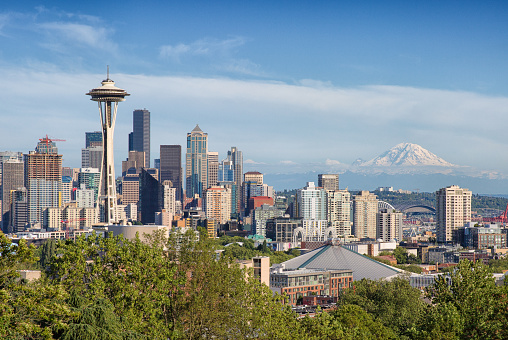
Finally, back in California, Sean applied for cellar work at various wineries in Sonoma County, but nothing was open, so he moved to Seattle, worked in wine retail, then assistant winemaker at the former Woodinville Wine Cellars and eventually, he and his wife opened Sightglass Cellars in Woodinville. 

There is a saying in the wine industry that university classes form a good foundation, but you don't learn how to make wine until you get to the winery.  In the classroom you learn the chemistry, the science of wine, but the cellar is where you learn how to apply that science.  Sean's path to winemaker was OJT "On the Job Training" and it has served him well.


Next blog: Recapping 2021 Blogs

Contact me at boydvino707@gmail.com


Thursday, January 6, 2022

The Emotional Stirrings of Wine & Music


                      Music, Notes, Symbols, Compose, Composition, Tunes

When Americans first "discovered" wine in the 1970s, some enterprising dreamers imagined that certain classical musical compositions had a symbiotic relationship with a type of wine: red Burgundy with a romantic Tchaikovsky symphony, or a Rhine Riesling with Wagner's Tristan and Isolde.

The pairings were viewed by some as highly subjective and fanciful.  In many cases, the only positive thing to come from one of the marriages was good wine and great music, shared with friends. 

Trends come and go, but I wonder is there a connection between wine and music, something tangible, even practical?  A possible answer (well, at least a theory) occurred to me recently while listening to one of the lectures in The Great Courses on "The Concerto."

Professor Robert Greenberg, music historian-in-residence with San Francisco Performances, was moving from one composer to another, then as he entered the 20th Century, Greenberg offered an energetic support for the "modern music" of Bela Bartok, Arnold Schonberg, Alban Berg, Elliott Carter and others.  

According to Greenberg, this is "music of contrast and contest, not the classical form of clear lines and balanced form."  And, I might add, the music is based on 12-tone scales, a revolutionary approach to music composition that you either find appealing or boring. 

Such is the association of wine and the practices used to make it.  Chardonnay, with or without oak?  Zinfandel, American oak or French oak? Champagne, fresh and vital or aged and caramelized?

Wine and music are both experiences that stimulate the senses.  Music appeals to our sense of hearing and the relationship that it has with listeners emotions.  Wine is a more synergistic blending of taste and emotions.  At the base level, both wine and music stir the emotions.  

A while back, "Wine Enthusiast" magazine ran an article about wine and music, suggesting Bordeaux is best with classical music, Oregon Pinot Noir with jazz and country music rolls along nicely with a glass of Zinfandel.

                                     Yin Yang, Karma, Music, Words, Speaks, Buddhism, Yang

As a classical music listener, I was checking the play list of WFMT Chicago and noticed an article quoting Enrique Mazzola, music director of Lyric Opera of Chicago and an ambassador of Vino Nobile di Montepulciano, a Tuscan red made  from Sangiovese.  Mazzola offered three wine and music matches and his personal comments:

Music: "Finch'han dal vino," from Wolfgang Mozart's "Don Giovanni."  Wine: Vino Nobile di Montepulcino. "Don Giovanni sings this crazy aria in a very fast tempo, which represents the excitement of sipping a good Vino Mobile di Montepulciano."

Music:  Allegro from Franz Schubert's Symphony No. 5 in B-flat major.  Wine: Eichberg Grand Cru Alsace Riesling.  "When you listen to this music, you have a stream of notes that introduces one to a simple and refreshing melody that makes you smile, just like a Riesling."

Music: "Un bal" from Hector Berlioz's "Symphonie Fantastique."  Wine: Saint-Emilion, a Bordeaux red wine based on Merlot.  Mazzola says "The opening of the third movement becomes more exciting, just like when you drink your glass of Saint-Emilion."

While the maestro's comments may be more emotional than descriptive, there is an underlying encouragement for the listener and taster to suss out their own conclusions.  It's an easy and pleasureable exercise and the possibilities are unlimited. 

After trying a few exercises, my curiosity was still stimulated, so I did what anyone else nowadays would do, I asked Charlie Google about wine and music.  What I found was not only surprising for the number of items there are on the subject, but also the deep dive that some folks have taken, exploring the depths of the subject.  Here is just one of the more comprehensive and serious theories I found. 

In 2013, Clark Smith, California winemaker, chemist and wine industry shaker, published "Postmodern Winemaking," an intriguing book that takes a serious whack at "traditional" wine making, while laying out Smith's "new vision of the winemaker's craft."  

"Postmodern" is not a how-to book but rather a series of essays based on Smith's experiences as a wine maker and industry observer.  Browsing through the internet, I found an interview with Smith by Drew Hendricks on his "Legends Behind he Craft" blog, about Smith's theory on wine and music. 

During the interview, Smith mentions "Liquid Music," in the last chapter of "Postmodern," that delves into the depths of the relationship between music and wine.  I dug Smith's book out of my library and read the chapter. 

Smith recounts a discussion he had with Don Blackburn, founding winemaker for Bernardus in California's Carmel Valley and a man who is serious about the affect music has on wine.  He maintains that wine's attributes are "innately subjective...  but modern enology has held back the lack of interest in exploring the subjectivity."

My experience with Blackburn was during a visit to Bernardus. Besides liking Blackburn's wines, the subtext of my conversation with him is that "Blackburn's Rule" meant no other music but classical in the winery. 


At the end of my visit to Bernardus, I pulled a cellar worker aside and asked him about Blackburn's prohibition. Without hesitation, he said that the first thing the crew did when Blackburn left was to change the music to rock and crank up the volume. 

If you decide that the whole wine and music thing is a lot of precious bunk, so be it, but look at all the great music and wine you enjoyed during the research.

End Note:  I'd like to hear from readers, if you think there is a link between wine and music (any music, not just classical) and if so, what are your favorite pairings.  If I get enough, it will be the subject of a future blog.


Next blog: My Life in Wine Episode 24

Contact me at boydvino707@gmail.com


Friday, December 31, 2021

No Blog This Week

 Dear Subscribers,

You've probably noticed that there was no blog in your inbox this week.  I could blame the problem on Covid (it is blamed for everything else) but the truth is that a broken computer and a heavy buildup of snow, were really the culprits. 

Computer is running once again and thanks to my son, the snow has been shoveled. 

Look for the next blog, "Wine and Music" in your inbox, Januray 7, 2022.

Happy New Year!

 Gerald D. Boyd

Thursday, December 23, 2021

Wine from a Narrow Country

Back in the Dark Ages of wine interest, that would be the 1960s or thereabout, the only Chilean wine I remember seeing in stores was a Riesling from Vina Undurraga, from the Maipo region.


What attracted my attention then was the unique bottle that stood out for its shape from all the others on the shelf.  The folks at Undurraga must have thought their Riesling was similar to the distinctive wines of Germany's Franken region, so they put their wine in a Bocksbeutel, a special bottle in the shape of a flattened flask.  

The bottle shape was a standout, especially alongside tall and slim German wine bottles. What I remember about the Undurraga wine was that it lacked the pale color and fresh fruit salad aroma and flavors of a Franken wine, which then might have been made from Sylvaner and not Riesling. 

Since then, I don't recall many sightings of Undurraga wines, at least on the West Coast, even though the Chilean winery began exporting to the United States in 1903. 

Today, Chile is a major player in the international wine market.  In 2013, Chilean wine production stood at 317 million gallons, with more than 75% of that exported. It has been said that one of the differences between the neighboring wine-producing countries of Chile and Argentina, is that Chile exports most of its wine, while the Argentines drink most of their wine; about 326 million gallons.

Chile is 2,670 miles long, from the Atacama desert in the north to Patagonia in the south, but only 217 miles wide at the widest point. It is this shape that makes Chile unique, especially for viticulture. The Pacific ocean is not far from many vineyards nor is the towering snow-capped Andes mountains that forms the spine of this long and narrow country.

Chile's fortune grew in the late 19th century when Spanish rule ended, a number of rich Basque families entered the wine business and the country's growing viticulture business dodged a bullet -- namely phylloxera.

phylloxera | SommWine
Phylloxera infestation

Phylloxera vastatrix (the devastator), a small yellow aphid, was destroying the vineyards of Europe, but it never entered Chile, because of the country's natural barriers: desert in the north, mountains in the east, cold temperatures and snow in the south and an ocean in the west.

By the mid-20th century, Chilean grape growing and wine making had moved forward, thanks to the infusion of foreign capital and European know-how. As the industry grew, these initial wine regions became Chile's most important.

Aconcagua: Traditionally, the northern most fine wine region, that in recent years has been joined by more northern and smaller Choapa, Limari and Elqui.  Coastal breezes help to keep temperatures cool enough for Chardonnay, Pinot Noir and Sauvignon Blanc.  Vina Errazuriz is the best known name.

Casablanca: Situated between Valparaiso and Santiago, Casablanca is known for its cool climate whites, such as Sauvignon Blanc.  A short distance from the Pacific ocean, the area and neighboring San Antonio Valley produce some of Chile's best sparkling wines.  

Central Valley: The heart of Chile's wine production is in the region called the "Central Valley."  Although not an actual named wine zone, the Central Valley includes such noted sub regions as Maipo, Maule, Curico, Rapel and Colchagua. Red wines predominate, especially Cabernet Sauvignon and Merlot.  Also important are Carmenere and Sauvignon Blanc.  Among the best known names from this large region are Las Vascos, Vina Montes, Casa Lapostelle and Santa Rita.

Premium Photo | Yerba mate in gourd calabash with bombilla
Yerba mate leaves, with mate calabash and straw

Before fine table wines, there was pisco and mate.  In fact, both drinks are still popular in Chile and Peru.

Pisco is a colorless high spirit brandy, distilled to about 40% abv and made from a variety of grapes, including Muscat, Torrontel and Pedro Jimenez.  Peru and Chile have been engaged in a long-standing dispute over the origin of pisco.  There is a long list of cocktails made with pisco, but the Pisco Sour one of the most popular. 

Mate, or Yerba Mate, is a tea-like drink, made by soaking yerba mate leaves in hot water.  The drink, said to have a mild calming affect, is served in a calabash gourd with a metal straw.  ADD 


Next blog: Wine and Music

Contact me at boydvino707@gmail.com


Thursday, December 16, 2021

My Life in Wine Episode 23

In Episode 22 of this personal journey, the narrative veered off the wine trail for a brief look at single malt Scotch whisky, a drink I think of as the "wine" of Scotland.  We're back on the wine trail in this episode, with a few remembrances from Australia, a fascinating place for its scenery, people and wine and about as far from Scotland as you can get. 

 Sydney, Port, Cruise Ship, Sydney Harbor

When I was station in Hawaii in the U.S. Air Force, word got around that the Air Force had a comm station in Townsville, Queensland,Australia.  Wine was not big on my list then, but diving was.  So, when I discovered that Townsville and the Great Barrier Reef were in Queensland, I volunteered for temporary duty (TDY) in Townsville. 

Someone beat me to it, but the Air Force, in all its unexplained wisdom, decided that, instead of Australia, I would be sent TDY ( Temporary Duty) to Johnston Island, a two-mile long sand spit that also happens to be surrounded by one of the best untouched snorkeling sites in the Pacific. 

Aside:  Johnston island, or "JI" as it was known, is an atoll, about 700 miles from Hawaii.  Johnston Atoll consists of five islands, but only JI and Sand Island, are used.  When I was there, the Air Force was tasked with monitoring missiles being launched into the Pacific by the Soviets.  The Soviets had a fleet of what they claimed were fishing boats, but the antenna arrays on the ships told a different story. 

JI is a small narrow island, less than two miles long and about a quarter of a mile wide, yet it housed the Air Force, an Army detachment running a top secret operation, a small detachment of Marines flying helicopters, supposedly as air rescue and a few Coastguards men operating a navigation aids site on nearby Sand Island.  

The whole thing was farcical since all we did was go to work, eat, snorkel and fish, eat, sleep, eat and drink cold beer at the small island club.  The Marines were especially bored so they flew their choppers over the Soviet ("fishing") ships, bristling with antennae, and dumped rolls of toilet paper on the ship to create a nuisance, while the ship's crew ran around giving the TPers the finger.

Anyway, I started going to Australia on wine trips in the late 1980s and after a few years and a few trips, I was invited to return as an international wine judge at one of the major state wine shows (show is the name the Aussies use for wine competition).

Wine shows are serious business in Australia.  All of the states with a wine industry have a major royal wine show; last time I checked, Victoria state had the largest show in terms of entries.  There is also a national show in the nation's capital in Canberra.  

And the Australian system provides for training future judges. Interested wine people enter the associate program and judge the wines alongside the regular judges, participate in the discussions at the panel table, but do not get to vote on medals. U.S. wine competitions have nothing similar, but in my opinion, a similar program should be adopted.

I had been judging wine in California, so the judging process wasn't completely new to me. But I wasn't prepared for how different the Australian system was.  In California, panels of four or five judges are seated at a table and wines are delivered to each judge, usually in flights of 10 or 12. The number of entries determined the number of panels.

My first wine show in Australia was New South Wales, staged at the 2000 Summer Olympics site outside Sydney.  Every morning for a week, we left the quay in a  boat cab and sailed out to the site as the sun hung brightly over the Harbour Bridge, known by Sydneysiders as the "Coat Hanger."  

Panels are used loosely by the Aussies since each judge samples the wines independently, standing at a waist-high trestle table.  The table tops are painted white, with a matrix of three parallel rows of squares running down the length of the table. The glasses of wine are placed in the center row and as the judge works their way through the wines, a glass can be moved up a square to retain the wine for another look, or down a square to reject the wine from further consideration.

The numbers of entries in Australian state shows is daunting, often in the thousands and only Australian wine. Somehow, the judges get through all of the wines, with fewer judges than would be in a U.S. wine competition.  

My most challenging time came later in the week when my panel was given 89 Shiraz, most of them from the most recently released vintage.  Standing at my tasting table,  I stared down the long red line, with a clipboard loaded with scoresheets and a plastic tub with an inch or so of sawdust, on the floor.

As the days slipped by, I learned to handle the daunting number of wines, the speed of Aussie tasters, the majority of whom are winemakers, and how to kick the spit tub around without toppling it onto the floor.  

Aside:  Spitting is considered a crude habit by many people, but it is an essential tool for the winemaker and wine taster.  The sad truth, though, is there are a lot of wine folks who haven't learned how to hit the bucket without spraying wine everywhere. 

Wine people, especially those who travel a lot, know of legendary spitters. I may have told about this anecdote before, but it's worth repeating. 

Len Evans

The Australian wine legend, Len Evans, was one of those wine persons known for the accuracy and distance of his spitted projectile.  I was in Evans' office in Sydney when he was asked to show the visiting wine writer his prowess as a spitter.  Hanging on the wall opposite his desk was a holy water font (he collected relics from decommissioned churches).  

Evans took a generous sip from his glass, swished the wine around in his mouth, faced the font and let loose with a tight glob of wine that arced out, landing perfectly, with not a drop hitting the floor.  Not believing what I just saw, Evans' assistant said "Do it again, Len." And he did.  That was years ago and I've tried many times to duplicate that feat, and though I became a respectable spitter; I've never matched Len Evans.

Once every judge tastes all of the wines, the panel sits together and discusses each wine, led by the panel chair, usually a senior judge.  Those wines awarded a gold medal by the panel majority are presented to the chief judge, who could veto the decision of the panel, although that rarely happened, especially after a spirited discussion and multiple re-tastings.

Discussions weighing the merits or lack of a specific wine, can get heated, with disagreement coming from the differing sensitivities of the judges.  Perceptive levels of such things as sulfur, alcohol and yeast spoilage are different for different tasters.

As the international judge, I was expected to know what I was tasting, such as the differences in Shiraz from Barossa, Margaret River, Victoria, Tasmania and Canberra.  And I was expected to defend my ratings and opinions.  Although I had a good handle on Australian wine, I knew enough to keep my mouth shut when it was obvious to everyone on the panel that this was an American tasting Australian wine in Australia with Aussies and the occasional Kiwi.

It was a priceless experience that I happily repeated at other state shows.  Eventually, I felt comfortable tasting through the very broad range of Australian wine and being able to pass that knowledge along to my readers.  I had many opportunities to brush up on my spitting skills and at the end of the show, there were only a few red spots on the floor by my tasting table.


Next blog: Wine From a Narrow Country

Contact me at boydvino707@gmail.com


Thursday, December 9, 2021

Holiday Wine

Holy holly!  It's that time of year again and we're all trying not to look at the calendar.  

It won't work. Christmas will be here in just 15 days. 

                   Family Having a Christmas Dinner Together               

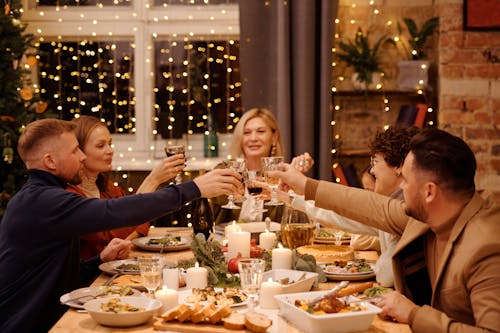
That means, of course, that along with all the other things on your to-do list, there is that nagging recurring question: Which wine or wines to have with the holiday dinner? 

You could take the easy way out and give in to the old adage of "white wine with white meat and red wine with red meat."  That's a neat and pain free way to approach the question, but before you surrender, consider these few helpful hints to make your decision easier.  

How important is it for you to make the right wine choice?  Christmas dinner should be a time of celebration, a time to join with family and friends.  Worrying if the wine will be perfect can throw a wet blanket on the celebration. 

Will the meal be simple or complex?  One size doesn't fit all for many holiday meals. A groaning table laden with two or three meat choices, a variety of side dishes, both sweet and savory and a long list of accompanying condiments, requires more than one type of wine, so everyone can make their own wine choice.                

For a simple traditional meal of roast turkey and one or two sides, Pinot Noir or other light reds will be just right. In this space, on December 3, was the  suggestion to pass on (for a change) heavier reds like Cabernet Sauvignon and Syrah, in favor of lighter-bodied reds from France, Spain, Italy and California. Beaujolais, Spanish clairette, Italian Pinot Noir from Trentino and a California Gamay, might be the wine to go with the holiday bird.


What is the color of the meal you plan to serve?  Odd question, I know, but turkey is a two-tone bird with both light and dark meat.  Go with a dry white of your choice, like unoaked Chardonnay or a Riesling with a hint of sweetness and a light red or one wine that will handle light and dark meat, such as Pinot Noir. 

And, of course, you'll need different wines for red beef (get out your big red) or pink ham (a substantial rose from Spain or Provence).  

More important than the color is the preparation. A simple standing rib roast is a good match with Pinot Noir, Cru Classe Beaujolais or a northern Italian Cabernet Franc, while a sturdier Rhone, Zinfandel or California Cabernet Sauvignon is a better choice with a beef roast, seasoned with a special rub. 

If you've read this far, you noticed that I am a big fan of Pinot Noir.  It's one of the best all-purpose red wines I know and in recent years, winemakers around the world have been making better and better pinots.

Family favorites, especially all those covered dishes brought by quests, are hidden mines waiting to destroy the most astute wine choices.  What do you do with Aunt Jane's sweet potato casserole, the one with the marshmallows?  Or, Uncle Ned's "famous" spicy three bean dish with a thick topping of pepper jack cheese?  Yield to pressure from Uncle Ned and Aunt Jane and offer chilled beer!  

Controversy has been swirling for years about whether the holiday dinner is the time to break out your best bottle, or opt for something not as old and not as expensive. 

There are too many flavors and textures in a traditional turkey meal with all the trimmings to chance an aged Bordeaux/Cabernet or Rhone/Syrah; save them for a meal centered around red meat like beef or lamb.  Instead, go with one of the no-worries wines mentioned above.

vegducken
Vegducken

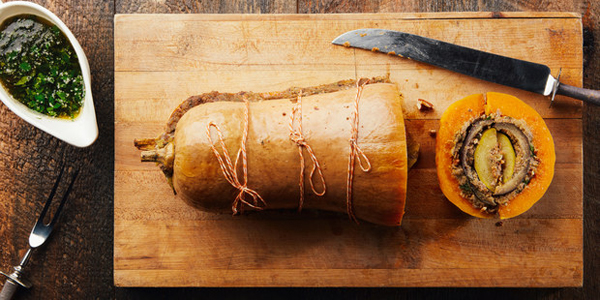
Finally, there has been a noticeable rise in interest for meatless meals.  Call it vegetarian, plant based, vegan, whatever, the idea is to build a tasty meal around dishes with no meat or fish, and if you're vegan, then no dairy or animal products, like honey.  Sounds complicated, but it needn't be.

As for wine choices with a vegetarian holiday meal, the options are about the same. Except seasoning plays a bigger role with meatless dishes, as do the types of grains and nuts and veggies used.  The internet is loaded with recipes for tasty meatless dishes that will satisfy everyone at your table.   Cheers!


Next blog: My Life in Wine Episode 23

Contact me at boydvino707@gmail.com