Gerald D Boyd On Wine

www.geralddboydonwine.com

Posts
Atom
Posts
All Comments
Atom
All Comments

Thursday, September 22, 2022

Australia Series: The Other Regions

The bulk of wine produced in Australia comes from four states: Western Australia, Victoria, New South Wales and South Australia. To read about them, consult the Index on the opening page of any of my blogs. 

The last installment in the Australia Series, is an overview of the wines of Tasmania, Australian Capital Territory and Queensland.  The combined output of these three regions is small, yet each offers something unique or different.

Tasmanian devil Tasmanian devil tasmanian devil stock pictures, royalty-free photos & images
Tasmanian Devil

Tasmania is an island off the southeastern coast of Victoria.  Named for settler Abel Tasman, "Tassie," as it is fondly known, has experienced the problem that few winemakers want to go there, because the island is thought to be a backwater and maybe a career killer.  But making wine on Tasmania poses challenges a winemaker may not face elsewhere and that makes it attractive. An array of micro climates and terroirs pose the biggest challenge. Tassie wineries, though, have built a solid reputation for Pinot Noir, Chardonnay, Riesling and sparkling wine, mainly from Pipers River and the Tamar Valley.  Brands: Pipers Brook, Tamar Ridge, Apogee, Morilla Estate, Clover Hill.

Australian Capital Territory is an odd duck in Australian wine. For one thing, the area is known as both ACT and the Canberra District, after the capital city of Canberra. But, because of strict land use rules, the small group of ACT wineries operate outside the borders in Yass Valley and around Lake George. A handful of tiny wineries make Riesling, Chardonnay, Sauvignon Blanc and a little Shiraz.  Wines to look for include Clonakilla, Helm and Lark Hill. Many of the ACT wines are hard to find even in major Australian markets. So ask your local wine merchant to special order them.

Bunch of grapes on vine in Amiens
Queensland cluster

Queensland was a wine powerhouse in the late 19th century.  The northern region went through a series of ups and downs, but now seems to be on an up turn. The most significant wine area is Granite Belt, a small sub region on the southern border with New South Wales. However, the higher elevation, means spring frost can be a problem. Chardonnay, Semillon and Sauvignon Blanc are the main whites, with Shiraz and Cabernet Sauvignon the best reds. The larger wine sub region is South Burnett Valley, with most of the wineries along the coast and around Brisbane. Wine tourism is the popular attraction.

Final thoughts on Australian wine

This series brings to a close an overview of Australian wine. But there still is a few things to say about the past and future of Australian wine in the U.S. market.

Wine drinkers with long memories will remember a charming Aussie named Paul Hogan who extended an invitation to Americans to come to Australia and they'll put a "shrimp on the barbie."  The popular TV ads, that ran in major U.S. markets, were a follow up to Hogan's mega hit movie, "Crocodile Dundee."  

Although Hogan's pitch was on behalf of Australian tourism, the ads and the movie helped to open the flood gates of what seemed like an endless flow of Australian wine that soon became the new wine sensation in America. 

For a time, American wine drinkers enjoyed well-made Aussie Chardonnay, Cabernet Sauvignon, Shiraz (Syrah) and were re-acquainted with the pleasures of Semillon as a varietal wine.  

For many, Australian wines were a lot like those from California, yet they were different, especially Shiraz.  American wine drinkers had gotten used to leaner Syrah from the Rhone Valley, aged in French oak and then along comes brawnier Aussie Shiraz, aged in American oak.  The Aussies had shaken up the American wine consciousness. 

It wouldn't be the last shaking from Down Under.  Aussies took over pop music and movies, Russell Crowe and Nichole Kidman were everywhere and American movie goers had a hard time deciding if the actor they were seeing with a convincing accent was American or Australian. 

Wine drinkers were just as puzzled.  Australian wines, of course, had their own personality, but to the casual wine consumer, Aussie Chardonnay and California Chardonnay were like close cousins: warm climate fruit and French oak tended to blur the differences.

From the earliest days of the Aussie invasion, price was the leveling market factor. Australian wine was beating California wine at most price points, until it wasn't.  In time, Australian wineries raised bottle prices high enough that consumers thought  why should they pay a premium price for an Australian wine when a comparable California wine was on the shelf for less.  

Today, Australian wine offers a good quality/price ratio.  Trying different wines is always a good policy, especially when wineries throughout Australia offer such a wide variety of wine.  

The Sonoma Series is next, with the first installment scheduled for October 14,  featuring Alexander Valley and Knights Valley.

Next blog: Focus on Malbec

Leave a comment or write me at boydvino707@gmail.com


  • Your article brought back old times. In regards to eucalyptus, I remember one day parking my pick up next to a windbreak of eucalyptus to help the guys move sprinkler pipe. when I came back there was sap from the trees all over the windshield of my pick up and it dawned on me checking further that the first five or six rows of vines we’re going to have a lot of sap on them also. Sure enough one eucalyptus tree can flavor 50 acres of grapes. I also remember the Chenin Blanc, Gewurztraminer, Reisling and Chardonnay that we produced from the San Vicente Vineyard which was just on the east side of 101 were all‘s absolutely delicious. the only real problem was Cabernet and it was unfortunate for us because as we got into the 70s as Cabernetsauvignon went so went your reputation. No one cared about how good your reasoning was at that point in time had we focused on Pinot and graft it over the Cabernet right then we would probably still be in business as Mirassou.
    That’s the joy of being a Pioneer. I think of the pioneers who first came across America to California, a lot of them ended up with arrows in their butt and Cabernet was one of our arrows. Ah the things that could’ve been!
    Hi to Janet and stay well


    Sent from my iPad


  • at September 22, 2022 No comments:
    Email ThisBlogThis!Share to XShare to FacebookShare to Pinterest

    Friday, September 16, 2022

    Monterey County

    Note: Evil (and costly) scammers are to blame for this blog showing up late in your in box.  The site has been down for a couple of days, while a scammer claiming to be Apple Security, did a job on my wife's and my computer.  But, we're back...at least until the next hack.  


    There was a time when wines carrying a Monterey County appellation were accused of having a bad case of the "Monterey Veggies."  Never mind that other Monterey wines, not made from grapes gown in the northern part of the county, Jekel Rieslings for example, were not vegetal at all. 

    Northern Monterey, specifically Salinas, is known as the salad bowl of the nation, because trailing off to the east and west of H-101, are endless rows of lettuce, artichokes and other row crops. Some people claim that after the lettuce is picked and the plants are plowed under, the decomposing matter leaves a vegetal presence in the soil.  

    Eucalyptus nuts and leaves

    The same theory has been suggested (and scoffed at) for vineyards adjacent to eucalyptus trees. According to one theory, the eucalypt leaves and nuts drop from the trees and are mixed into the vineyard soil, giving red wines a "certain" eucalypt character.  The most noted example is Heitz Martha's Vineyard Napa Valley Cabernet Sauvignon.

    I asked Joe Heitz about that theory in the late 1970s and he scoffed, saying it was a lot of bunk.  "Years ago, I worked for a winery in the Central Valley and on hot days we had gondolas full of grapes parked under the shade of eucalypts. Eventually we processed the grapes along with the leaves and nuts and never picked up eucalyptus in the wines."  

    A few months ago, I opened a 1999 Martha's Vineyard and thought it was one of the best Napa Cabernets I had tasted in years, but I didn't detect eucalyptus or even mint. 

    The beautiful rainbow eucalyptus

    Aside:  There is a sensory difference between the smell and taste of mint and that of eucalyptus. Eucalyptus is more menthol than mint, while mint is often like peppermint, which in turn is different than spearmint. For most wine consumers, arguing the differences is splitting hairs, but distinguishing the differences is important to wine professionals.

    Monterey Sub-Regions

    Today, Monterey is a vibrant wine region, with a handful of sub regions producing distinctive wines.  Gavilan mountains is home to the Burgundian-style wines of Chalone Vineyards.  The Santa Lucia Highlands has built a solid reputation for Pinot Noir, Carmel Valley leans more toward Cabernet Sauvignon.

    The northern part of the county, mainly the Salinas Valley, is cool and often fog bound. The valley is open to the Pacific Ocean and as the temperatures cool, evening fog is drawn into the valley,making it difficult to grow wine grapes.  The opposite is the case in the south where daytime temperatures are higher and the area doesn't cool off in the evenings.

    Note:  The following Monterey regions will include an AVA (American Viticultural Area) and the year it was granted.  Monterey has some of the oldest AVAs in the state.  There are nine Monterey AVAs; Chalone the first in 1982, San Antonio the most recent, granted in 2006.

    Monterey AVA (1984) encompasses the entire valley, stretching from the cool Salinas Valley in the north to the hot southern end. The large appellation is composed of eight distinct wine regions, all but the San Antonio Valley, covered by its own AVA: San Bernabe AVA, Carmel Valley AVA, Santa Lucia Highlands AVA, Arroyo Seco AVA, Chalone AVA, San Lucas AVA and Hames Valley AVA. 

    San Bernabe AVA (2004) is at the southern end of the AVA. The are is dominated by the 13,000 acre San Bernabe Vineyard, the largest contiguous vineyard in the world, owned by Delicato. San Bernabe also supplies grapes to wineries throughout California.

    Santa Lucia Highlands  AVA (1991) lies along the western side of Salinas Valley. Pinot Noir, Chardonnay and Syrah are planted on elevated terraces and are protected from ocean gusts by the Santa Lucia mountain range.  Santa Lucia Pinot Noir is considered among the best in the state.  Look for Paraiso Vineyards, Hahn Estate, Morgan Winery, Mer Soleil. 

    Chalone AVA (1982) is one of California's early success stories with Pinot Noir and Chardonnay, that looked tio Burgundy for style. High above the Salinas Valley in the eastern Gavilan Mountains, Chalone grapes get their energy and character from limestone soils and a cooler climate. In 1965, Richard Graff purchased Chalone Vineyard and employed oak-barrel fermentation and lees aging, then mostly unknown in the Golden State. Michaud Vineyard is the other winery in the tiny AVA. 

    Arroyo Seco AVA (1983) is named for the dry wash in this part of Monterey.  At the center is Greenfield and Jekel Vineyards, a winery, as noted earlier that made its reputation on juicy Rieslings and later Chardonnay.  Those two wines are the flagships for Arroyo Seco.  Cabernet Sauvignon is less successful but does has its moments. Look for the appellation on Ventana Vineyards, J. Lohr, Kendall-Jackson, JC Cellars.

    Carmel Valley AVA (1983) is a small AVA, about 10 miles inland from the city of Monterey.  The enclave is fashionable, with Clint Eastwood bringing fame, as  mayor, to the nearby city of Carmel-by-the-Sea.  The top wines are Cabernet Sauvignon and Merlot, especially from Bernardus and Galante Vineyards.  Pinot Noir has seen some success, planted at the higher parts of the valley, mainly from Talbot Vineyards and Diamond T Vineyards.

    Monterey County is vast and varied, with the popular touristy coastal Monterey City, Pebble Beach golf courses, Carmel and Big Sur.  Vineyards and wineries are spread out, but with a plan, winery visits can be rewarding.


    Next blog: Australia Series: Tasmania, ACT, Queensland and more. 

    Leave a comment or write me at boydvino707@gmail.com


    at September 16, 2022 No comments:
    Email ThisBlogThis!Share to XShare to FacebookShare to Pinterest

    Thursday, September 8, 2022

    Livermore

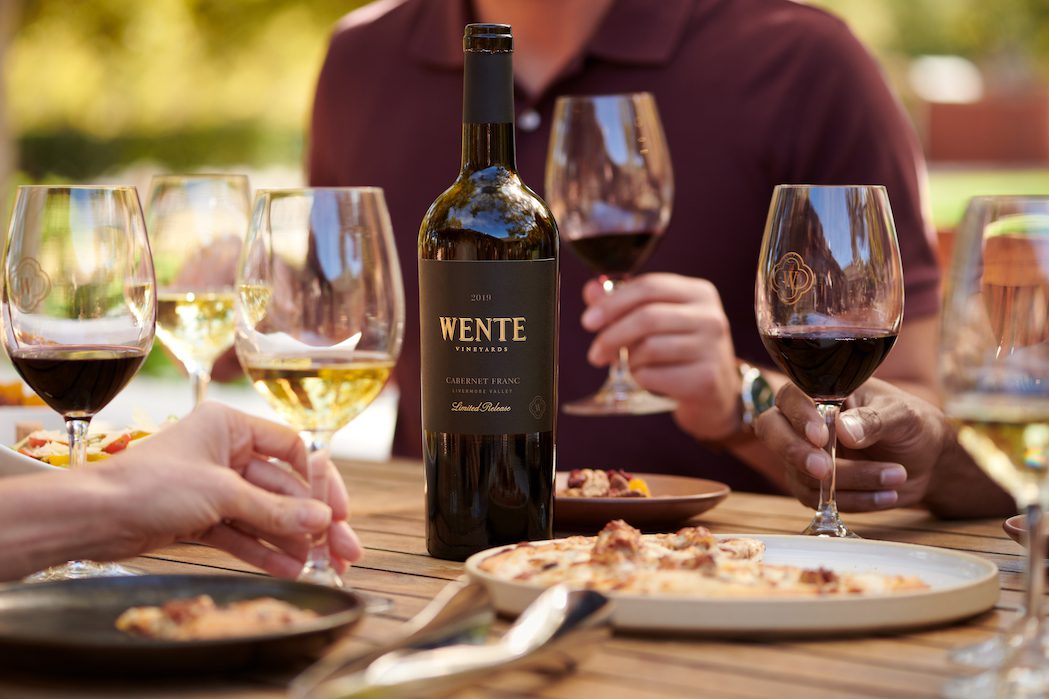
    A few years ago, I was sitting at a table with some members of the Wente wine family, at their restaurant in Livermore. The interview was going well until I said to the family matriarch, Jean Wente, "I understand, but in wine country..."

    Mrs. Wente looked directly at me and with a slight smile said, "Mr. Boyd, Livermore is also wine country."

    You could have heard a cork drop as I quickly tried to recover from my faux pas.   While trying to hold up my part of the conversation with this considerate lady, I bumbled into making the same mistake I accused others of, that "wine country" must mean Napa and Sonoma. 

    Jean Wente knew my mistake but she wasn't going to pass up a delicious opportunity to set the record straight with a visiting wine writer.  

    And that's how a polite reminder marked my new appreciation of the Livermore Valley and the wine produced there. 

                                                                        Wente Vineyards image

    In the early 1880s, Carl Wente and Joseph Concannon planted vineyards in the Livermore Valley, a few miles apart.  A few decades earlier, settlers in the Napa Valley were making wine for their own tables from the then common Mission grape. The first wine from more noble grapes didn't happen in the North Coast, however, until about 1860.

    From the first major plantings of Vitis vinifera, Livermore has been known more for white wines, like Sauvignon Blanc and Semillon, than reds.  Today, Cabernet Sauvignon is the leading red variety in the valley, followed by Petite Sirah.  

    While concentrating on Cabernet Sauvignon, Concannon Vineyards cpntinues to enjoy a solid following for its Livermore Petite Sirah and Semillon.  Still, even though Concannon continues to show the impessive merits of Semillon, American consumers want their Chardonnay.

    The Valley

    Livermore valley is 15 miles long and 10 miles wide, with more than 40 wineries in a loose cluster south of I-580.  Prior to Prohibition, there were 50 wineries in the valley. Today, with the exception of large wineries like Wente and Concannon, the majority are small.  And a handful describe themselves as "boutique," like Mia Napote Wines, specializing in Italian varieties. 

    Here are eight Livermore wineries with wide distribution: Wente Vineyards, Concannon Vineyards, Fenestra, Murrieta's Well, Retzlaff Vineyards, Steven Kent Winery, Cedar Mountain Winery, Darcie Kent Estate Winery. 

    Early morning light shines on the rolling hills and valleys of the Tri-valley area of Northern California, just east of San Francisco Bay. This region is known for its vineyards and open space.
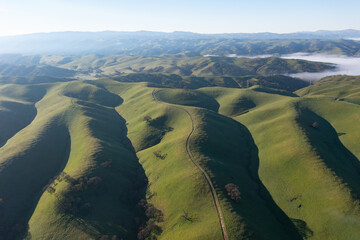
    Ocean fog creeping across East Bay hills to Livermore Valley

    Daytime temperatures can be very warm in Livermore Valley, but because of the valley's east-west orientation, coastal fog from the Pacific ocean and San Francisco Bay is drawn through the low East Bay hills, cooling the nights.

    The Wines

    This daily temperature change has allowed Livermore winemakers to make a range of wines from traditional French grapes such as Chardonnay, Cabernet Sauvignon, Merlot, Syrah, Sauvignon Blanc and Semillon.  And Petite Sirah and a few Italian varieties.  

    Livermore's contribution to California viticulture is the Wente clone of Chardonnay, now used by an estimated 80 percent of wineries in the state. In 1912, German immigrant C.H. Wente brought in a Chardonnay clone from Burgundy.  A process called "vegetative propagation" has adapted the clone to Livermore's unique growing conditions.  Today, the Wente clone produces Chardonnay with apple, pear, citrus and floral characteristics.

    Although Petite Sirah is favored as a blending component, especially with Zinfandel, the grape is well suited to Livermore terroir and is made as a varietal by a number of Livermore wineries, most notably, Concannon Vineyards, with three separate bottlings and a Petite Sirah Port.

    Livermore Valley wine country, with its array of wineries, is an easy drive from San Francisco or Oakland.  It's an inviting place to spend a day or two dining, tasting wine, or playing golf at the valley's excellent golf courses. 


    Next blog: Monterey County

    Leave a message or write me at boydvino707@gmail.com

    at September 08, 2022 No comments:
    Email ThisBlogThis!Share to XShare to FacebookShare to Pinterest

    Thursday, September 1, 2022

    Australia Series: Western Australia

    Western Australia, the huge state that makes up one-third of the entire country-continent, has one of the most remote wine regions on the planet. The closest wine country to WA is in South Australia, a distance of about 1600 miles.

    In Western Australia, the culture of wine-growing is sustained close to the Indian Ocean. Vineyards are scattered along a narrow strip that runs close to the water, from the Swan Valley, north of Perth, to the isolated Great Southern, where the Indian and Great Southern oceans merge. 

    When you are in Western Australia, you don't appreciate how remote you are; how far away you are from the rest of populated Australia.  It only sinks in when you look back from afar.  And in all those hundreds of miles, except for the occasional sheep ranch, there are few settlements.

    Straight ahead through the outback

    Aside:  On my first visit to Australia, in 1985, I flew from Adelaide to Perth, chasing a setting sun.  On a similar route in the United States, say Dallas to San Francisco, the sight out the airplane window would be cities, towns and settlements, beneath glowing lights.  Flying over the vast central part of Australia, all I could see was darkness, with the rare sighting of a small cluster of lights.  It was like there was no one home!

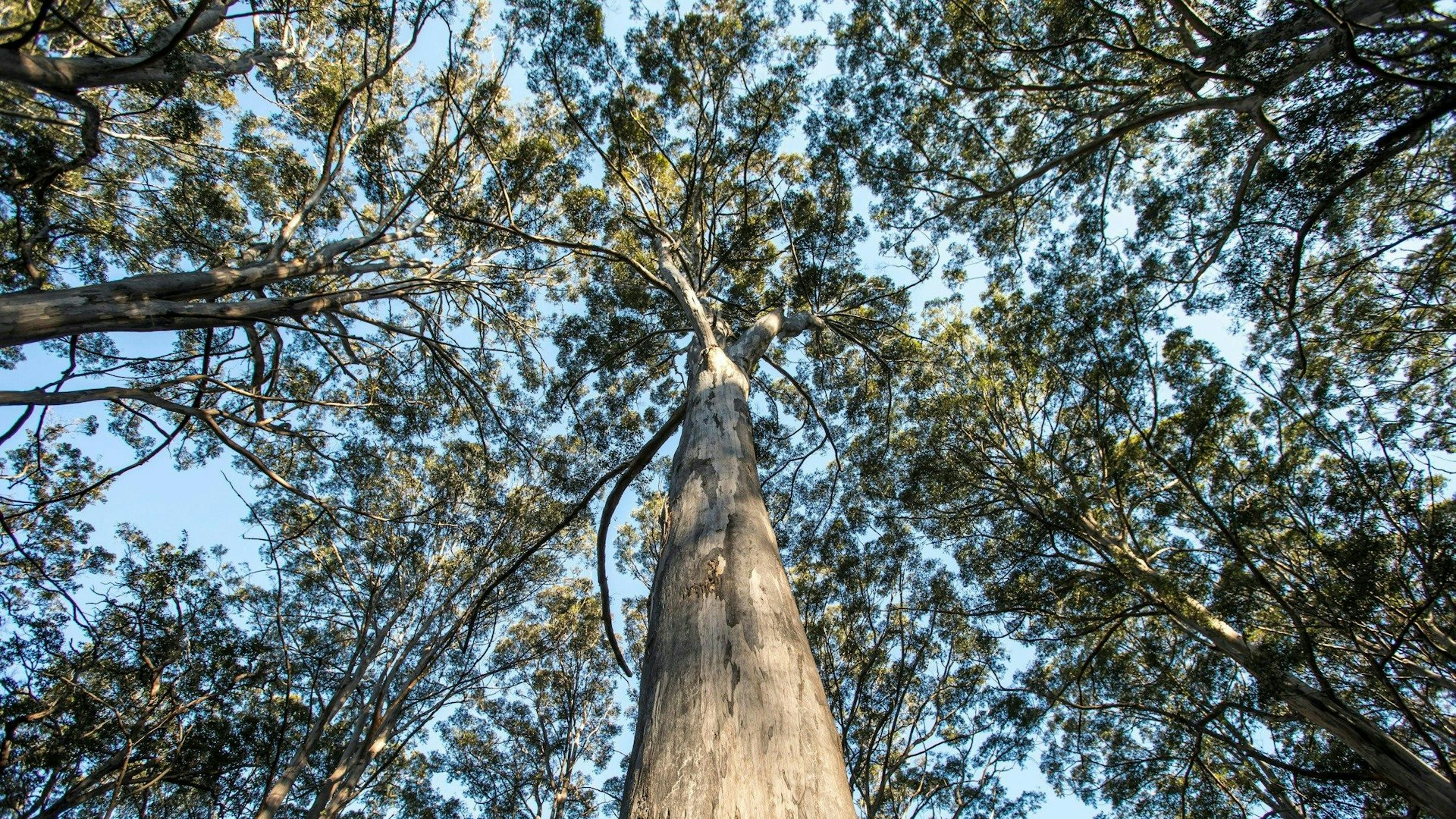
    Mining is the major industry in the northern part of Western Australia, as well as the vast barren inland parts of the continent-country. Another resource are the giant karri forests.  A type of eucalypus, karri trees can grow to 200 feet, making them among the tallest trees in the world.

    WA Wine Regions

    There are three wine areas around Perth: historic Swan District, new and promising Perth Hills east of the city and the Southwest Coast district, including the sailing-center city of Freemantle, south of Perth. 

    Geographie is further south, then the famous Margaret River sitting on a hook-shaped peninsula, followed by Pemberton and finally, completely bordering the stormy Great Southern Ocean, is the Great Southern wine district.  Inland from Margaret River is Blackwood Valley, a wine district not well known in the United States. 

    What follows then is a brief summary of the major wine districts, with particular emphasis on Margaret River, Geographe, Pemberton and Great Southern.  

    Margaret River quickly built a reputation for elegant Cabernet Sauvignon, once the wines first appeared in the 1970s.  Today, Cullen, Leeuwin Estate and Moss Wood continue to produce some of Australia's finest Cabernets and Merlots.  Margaret River is also noted for excellent fruit packed, crisp Chardonnay, Sauvignon Blanc and Semillon. Vanya Cullen, daughter of the founders of Cullen Wines makes stylized Sauvignon Blanc and a juicy seamless Cabernet-Merlot blend.

    Other noteable Margaret River wines: Devil's Lair, Vasse Felix, Cape Mentelle, Evans & Tate.

    Boranup Karri Forest, Margaret River, Western Australia
    Karri forest near Leewin Estate

    Great Southern is aptly named as the area is influenced by the Great Southern ocean.  And the Great Southern has a California connection.  In 1955, UC-Davis professor Harold Olmo was hired by the Western Australia government to assess the potential of the Great Southern as a viable wine region. The venture gave rise to vineyard and wine operations including Franklin Wine Estate, Plantagenet and Goundrey, all producing wine today. A smaller venture producing quality table wines, is Howard Park, outside the scenic coastal town of Denmark. Today, there are nine wineries near  Denmark, with such poetic names as Mariner's Rest. 

    Great Southern does best with Riesling, Shiraz, Chardonnay, Cabernet Sauvignon.  Other worthy Great Southern wines: Chatsfield, Alkoomi, Harewood Estate.

    Geographe is south of Perth, just before you get to Margaret River, a positioning that will help the growing number of wineries in Geographe, as tourists head toward Margaret River.  Limestone soils and a coastal climate are good for white grapes like Chardonnay and Semillon. The regions five rivers form micro-climate valleys, as they flow to the sea. 

    Principal wine styles of Geographe include Chardonnay, Sauvignon Blanc, Semillon, Riesling and Shiraz.  Capel Vale is the major winery in the region.

    Pemberton is a relatively new wine region in Western Australia, with a name that almost wasn't its name.  The Australian equivalent of the French AOC or United States AVA wine place naming systems is GI or Geographic Indications. Local officials couldn't decide if the region should be called Manjimup, Warren Valley or Pemberton, but they ultimately decided on the latter.  A sub region, also called Pemberton has the right climate for Chardonnay and Pinot Noir. Manjimup is warmer, with more rain and humidity, just the right conditions for Bordeaux varieties.

    Pemberton is best known for its Pinot Noir and Chardonnay.  Wines to look for include: Salitage, Mountford, Smithbrook.

    A few miles north of Perth lies the historic Swan Valley wine region, a popular destination for day-trippers looking for Chenin Blanc and Chardonnay at major wineries like Houghton and Sandalwood.  Two other areas - Perth Hills and Southwest Coast - round out Australia's west coast wine regions.  

    The market for Australian wines in the United States has been up and down.  Over the past few years, Australia's major export market was China. But the two countries are having a trade war, so the Aussies may be looking again at the United States.  Which could mean that more Western Australia wines may soon be on the shelves of your local wine shop.

    Next blog: Livermore Valley

    Leave a comment or write me at boydvino707@gmail.com


    at September 01, 2022 No comments:
    Email ThisBlogThis!Share to XShare to FacebookShare to Pinterest

    Thursday, August 25, 2022

    Portugal's Fortified Duo

    Portugal, the narrow western part of the Iberian Peninsula, is the source of two of the most distinctive fortified wines in the world.  Port and Madeira, however, could not be more different. 

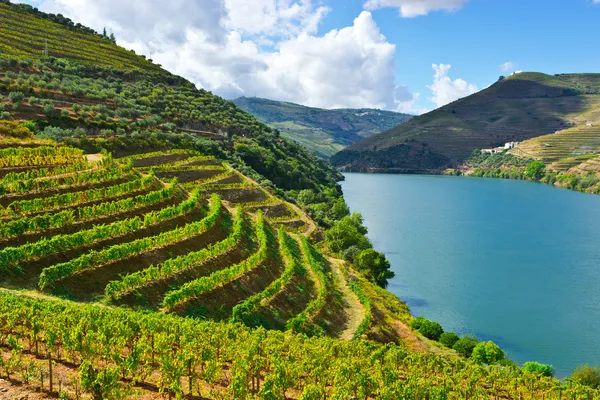
    Madeira comes from an island that is closer to Africa than Portugal.  Port is made in the wildly beautiful Douro river valley. 

    Terrace Stock Photo
    Terraced vineyards along the Douro River

    Both wines are steeped in history.  Port became associated with the English wine trade long ago, while Madeira was used to celebrate the independence of colonial America from the British crown. 

    Port takes its name from Oporto, the port city in northern Portugal, from where all Port, red and white, is shipped worldwide. The name Madeira applies to both the fortified wine and the island that is 625 miles off the Portuguese mainland and 466 miles from North Africa.

    Madeira is made from a diverse variety of eight grapes, including traditional varieties such as Sercial, Verdelho, Tinta Negra, as well as American hybrids. More than 80 different grapes are authorized in Port, but research conducted in the 1970s, identified Touriga Nacional, Touriga Franca (formerly Touriga Francesa), Tinta Barroca, Tinta Roriz and Tinto Cao as the best varieties. 

    Traditionally, grapes for both Madeira and Port, were trod by foot in granite troughs, known as lagares. Today, most Madeira producers buy grapes and use tank fermentation, while Port houses have gone to autovinification, a tank process, using pump-over to extract maximum color from red grapes.   

    Lagares are still used by some Port houses in the production of vintage and specialty Ports.  By 2010, there were just six exporters on the island of Madeira, down from a high of 30, and few of those remaining use the lagare.

    Production of Madeira is centered around the estufa system, a method used to heat the wine, to develop an aged character.  A large estufa, used for bulk Madeira circulates heated water through pipes in stainless steel tanks.  A more traditional type of estufa employs wooden casks or lodge pipes (a Portuguese barrel, measuring approximately 115 gals.) stored in warm rooms and is considered a gentler method of aging the wine from six months to a year.  Select vinhos de canteiro are aged in estufa rooms for 20 to 100 years.  

    Both wines are fortified with grape brandy, bringing the alcohol for Madeira to a alcohol strength of between 17 and 18% and for Port the strength is 19% or 20%.

    Port wines are divided into cask aged and bottle aged.  Wood Ports (Ruby and Tawny) are intended for immediate drinking, after aging in oak casks, then filtered and bottled.  Vintage Port is aged for a short time in oak and then matured in bottle for 30 years or more.  Madeira is aged in a estufa for various lengths of time, up to a century.


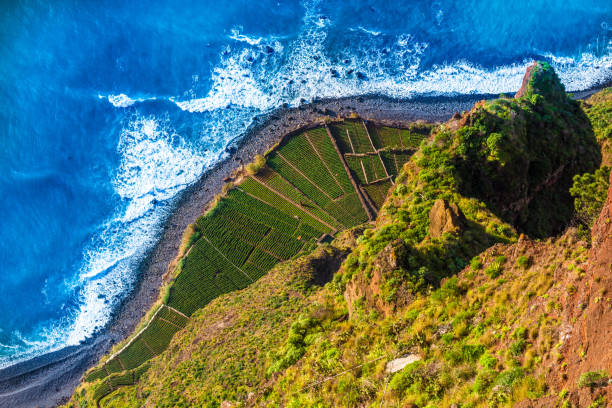
    Cape Girao, Madeira Aerial view from the highest Cabo Girao, Madeira island, Portugal madeira island stock pictures, royalty-free photos & images
    Utilizing ever suitable spot for a vineyard on Madeira

    The types of Madeira are named after the principal grapes grown on the island and range from dry to sweet. Sercial is the driest followed by Verdelho, made in a medium-dry style with a smoky character.  Sweeter yet is raisiny Bual and Malmsey, made from the Malvasia grape.  

    Due to the many types of both Port and Madeira, describing the flavors of the wines is difficult.  However, in general, young Port like Ruby is fruity/grapy with a pleasant sweetness, good acidity and soft tannins.  With age, Port is more complex, showing ripe plums and roasted nuts. Tawny Port is light brown in color, with a subtle fruitiness and touch of roasted nuts. Madeira is nutty with a blended fruit base and a hint of burnt caramel.  The sweeter types of Madeira are rich and treacly, yet possessing impeccable balance.

    Both Port and Madeira have met modern consumer demand for different products by adding "specialty" wines to their inventories.  Both have vintage wines, but while Vintage Port is bottled after spending a maximum of three years in wood, Frasqueira (Vintage) Madeira must age in cask for a minimum of 20 years. 

    Additionally, a few exporters on the island of Madeira release a wine matured in a solera, similar to Sherry and sold as Solera Madeira.  Port has no equivalent of "solera" but a number of Port lodges make a Single Quinta (vineyard or winery),Vintage and Garrafeira Port, comparable to a reserve wine.

    Approximately half of the output from the Douro river valley is fortified.  The other half is red table wine, many made by Port houses, such as Duas Quintas from Ramos-Pinto.  North of the Douro valley is the emerging wine region known as Tras-os-Montes ("behind the mountains").  Only fortified wine is made on the island of Madeira, except for a little table wine made for local consumption.

    Both wines have devoted collectors who value the wine's complexity and longevity. Madeira may hold the record for aging and is considered the longest-lived of all wine. Vintage Ports have been known to age for 30 years or more. 

    Try these Ports: Quinta do Noval, Ramos Pinto, Warre's, Graham's, Sandeman, Taylor, Taylor Fladgate, Fonseca, Cockburn's, Dow's.  And these Madeuiras: Blandy's Henriques & Henriques, Madeira Wine Company.

    Madeira and Port are two of winedom's greatest wines, yet they are known and appreciated by few. Show your appreciation today.  


    Next blog: Australia Series: Western Australia

    Leave a comment of write me at boydvino707@gmail.com

    at August 25, 2022 No comments:
    Email ThisBlogThis!Share to XShare to FacebookShare to Pinterest

    Thursday, August 18, 2022

    Marvelous Mendocino

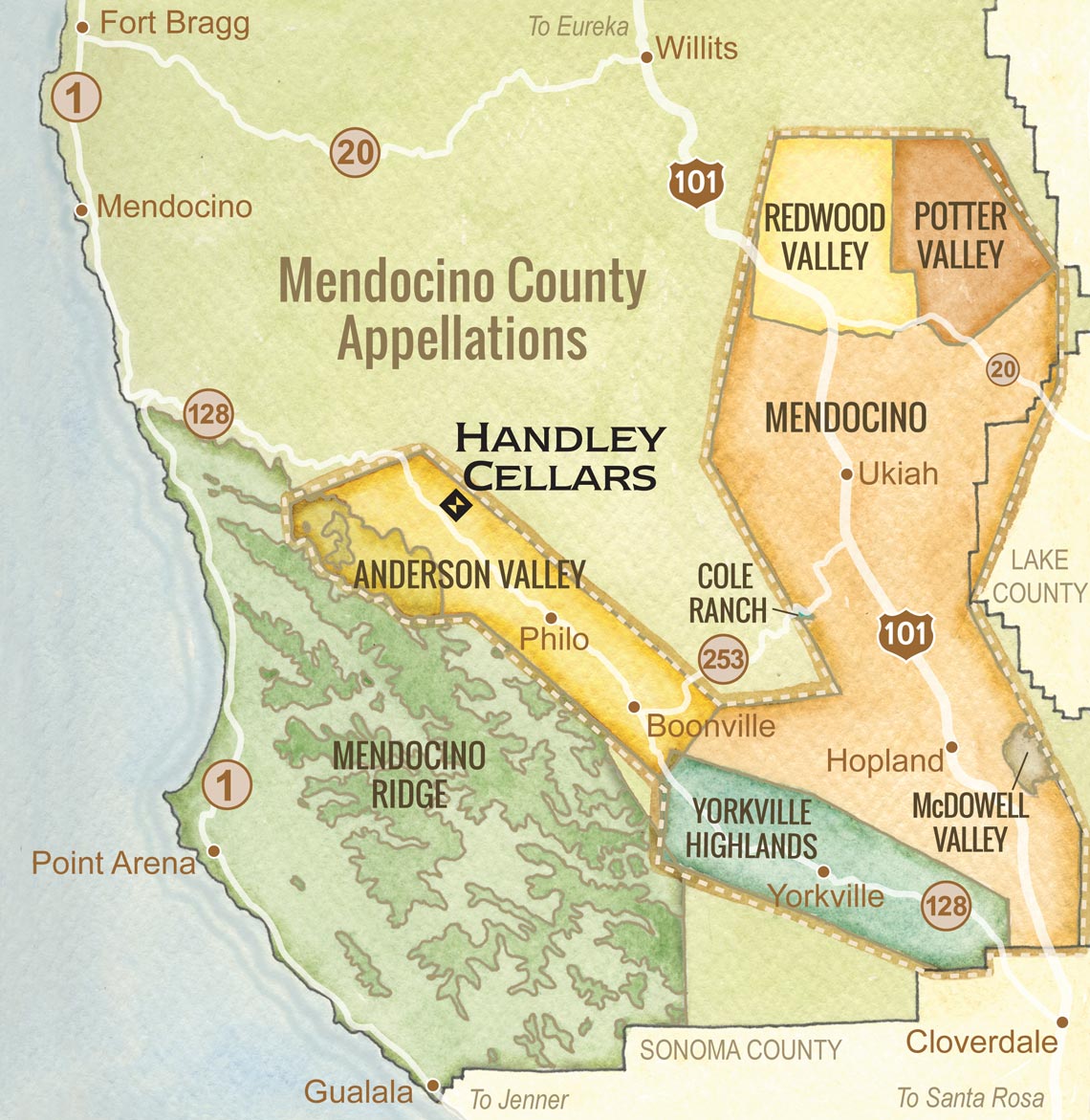
    (Handley Cellars image)

    In the early days of the California wine ascendancy, Napa and Sonoma were going full throttle while Mendocino lagged a little behind.  The rising popularity of California wine was spurred on by the famous Judgement at Paris, but Mendocino didn't have a skin in that game. 

    That didn't bother winemakers like John Parducci, who told anyone who would listen that Mendocino wines, especially those from the area around Ukiah, were as good as any Napa wine, just different.  Soft approachable Cabernet Sauvignons and Merlots, such as Parducci Mendocino and Fetzer Redwood Valley, were benchmark Mendocino wines. 

    The diversity of Mendocino, however, wasn't limited to Cabernet. On the west side of the county, smaller Anderson Valley, along Highway 128, between Boonville and Navarro, had been quietly establishing itself as the go-to place for cool climate wines like Pinot Noir, Riesling and Gewurztraminer.

    There's something to admire in a wine region that, in the face of consumers being Napaized, slowly and quietly were building a reputation for Pinot Noir and Germanic-style whites. 

    Back in the 1990s, the odd Pinot from the likes of Navarro Vineyards, Handley Cellars, Husch Vineyards and Greenwood Ridge, came to the attention of Pinot lovers and the rush was on. 

    While Anderson Valley was eager to show its Pinot Noir to the wine world, the attraction for consumers was to the north in Oregon's Willamette Valley. There was a handful of California Pinot Noirs, outside Anderson Valley, such as Hanzell, Saintsbury and Acacia, but the focus of the market for U.S. Pinot Noir then was  Willamette Valley.

    Anderson Valley 

    Early on, Ted Bennett and Tony Husch recognized the potential for great wines in Anderson Valley.  In the early 1970s, they left the hectic life of an urbanite and settled in rural isolated Anderson Valley, planted grapes and eventually opened wineries. 

    In those days, California Gewurztraminer lacked the dry and clearly distinctive character of German and Alsatian Gewurz. So, Bennett's Navarro Vineyard and Husch's eponymous winery began making impeccably balanced Riesling and Gewurztraminer, emphasizing fruit sweetness that didn't hide the distinctive varietal character of the grapes. 

    Before long, Lazy Creek Vineyards, joined the rising Gewurz movement, followed by Handley Cellars, Claudia Springs Winery, Greenwood Ridge and Christine Woods, all mid-valley near Philo. 

    Pinot Noir and Chardonnay were doing so well in the Anderson Valley, that the  obvious next step was sparkling wine.  In 1983, John Scharffenberger opened Scharffenberger Cellars and the French Champagne producer Roederer purchased land near Philo for Roederer Estate sparkling wines that soon earned wide acclaim and, according to some, even bested Roederer's French wines.

    Today, Scharffenberger is part of the Roederer Collection. I haven't tasted Scharffenberger bubbly lately, but I can report that Roederer Estate NV Brut is a nicely balanced satisfying sparkling wine and the Roederer Estate l'Ermitage Brut  is a complex richly textured California sparkler, the equal of Champagne.

    The Rest of Mendocino

    The rest of Mendocino covers a lot of land, with the largest concentration of wineries between Ukiah and Hopland.  

    In 1968, Barney Fetzer built a wine dynasty, with the help of his 11 children, in Redwood Valley, north of Ukiah. Today, Fetzer Vineyards, under different ownership, has a major operation outside the small town of Hopland, once the center of hop yards for local brewing.  

    North of Ukiah, Parducci Vineyards operates a busy tasting room, featuring Zinfandel, Merlot and Cabernet Sauvignon. The tasting room was once a shady nook under Parducci's house, but a new tasting room was built to show the wide range of Parducci wines. 

    Gnarly vines

    East of Hopland is McDowell Valley with its single winery, on sloped bench land. In the early 1980s, the Keehn family opened McDowell Vineyards.  And while they worked to establish a reputation for Rhone-style wines, mainly Syrah and Grenache, the Keehn's also helped secure the McDowell Valley American Viticultural Appellation (AVA), establishing it as the smallest AVA in California. McDowell Valley Vineyards was one of the first wineries in California to be partially powered by solar.

    Northeast of Redwood Valley is Potter Valley, a cooler area due to its slightly higher elevation.  Sparkling wine makers, such as Scharffenberger, like the grapes from Potter Valley.  The region is also known for its Sauvignon Blanc. 

    Summer is now in full swing and the warmer weather is a good time to think about the lightly chilled fruity whites and structured reds of Mendocino County. 


    Next blog: Portugal's Fortified Duo

    Leave a comment or write me at boydvino707@grmail.com


    at August 18, 2022 No comments:
    Email ThisBlogThis!Share to XShare to FacebookShare to Pinterest

    Thursday, August 11, 2022

    Australia Series: New South Wales

    In 1820, Australian wine making got its start at Farm Cove, in what is today the thriving modern city of Sydney, in the state of New South Wales.

    It wasn't long before the center of wine making shifted to the Hunter Valley, where it remains today.  The Hunter is known for fine table wine. Further west, the huge basins of the Riverina, Murrumbidgee and Murray rivers, collectively became the most productive wine regions in the state, thanks to the advent of irrigation.

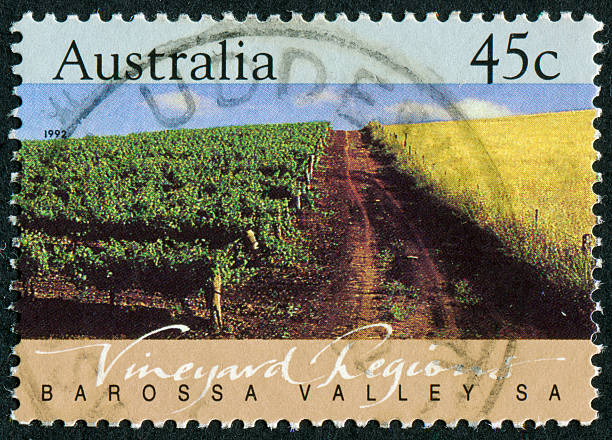
                                        Australian Vineyard Stamp Cancelled Stamp From Australia Commemorating The Barossa Valley Wine Region In South Australia. barossa valley australia stock pictures, royalty-free photos & images

    Over time, the importance of wine making in Australia moved west to South Australia and the Barossa Valley, arguably Australia's most important wine region.  Meanwhile, NSW wine making fell behind and today accounts for little more than 20 percent of Australia's total production.

    While all this movement was taking place, the Hunter was adding vineyards and wineries, mostly in the Lower Hunter.  And, southeast of the Hunter Valley Zone, three sub-regions were making their marks: Mudgee the largest, then Orange and Cowra, the smallest. 

    Hunter Valley is divided into the Lower Hunter and the Upper Hunter. The Lower Hunter, by far, has made the largest number of vineyards and wineries.  There are more than 60 wineries scattered along Broke Road and Allendale Road, outside Cessnock.  Add another 20 wineries a few miles west around the town of Broke. 

    Perhaps the one wine that has risen to star status in the Lower Hunter is Semillon.  A little thin and grassy in its youth, Hunter Semillon develops into a rich wine with honey and roasted nuts, after 10 years in bottle.  Look for Semillon from Brokenwood, Tyrrell's, Rothbury Estate and Lindemans. 

    Aside: I had a pretty good palate for wine tasting, in my salad days, but I admit that tasting Hunter Semillon fooled me more than once.  Readers of this blog may recall an occasion I wrote about when the late Len Evans of Rothbury Estate showed me some bottle aged unoaked Hunter Semillon that I thought had seen oak. It was a humbling experience, but one that illustrated the caveat that with wine, things are not always as they seem. 

    Hunter Shiraz needs the same bottle aging to transform from an angular youth, to a full-bodied red with a velvety texture and layered fruit.  McWilliams, Tyrrells, Rothbury and Brokenwood are the main producers. 

    Travel northwest along the Golden Highway to Denman and you are in the Upper Hunter.  Known for Chardonnay and Semillion, the Upper Hunter's most visible brand in the U.S. market is Rosemount Estate. Other Upper Hunter wines to look for include Reynold's, Arrowfield and Inglewood Vineyards.  

    Cowra is known more for grazing than grapes. Aussies of a certain age may remember Cowra as the site of Australia's prisoner of war camp for Japanese soldiers and the great escape of some of the POWs. Today, activity in and around Cowra is more benign.

    Situated on gentle slopes, the climate is hot and dry, but with good rainfall.  Cowra is best known for Chardonnay and Semillon with sizeable plantings of Shiraz. Brands to consider include Rothbury Estate, Richmond Grove and Cowra Estate.

                                Mudgee vineyards, New South Wales, Australia Scenes from Mud mudgee australia stock pictures, royalty-free photos & images

    Mudgee is the Aboriginal name for "Nest in the Hills," an apt description of the rolling hills, pocketed with green spots that nestle in the Mudgee countryside.  

    Mudgee runs along the western edge of the Great Dividing Range, giving the area a more temperate grape growing climate.  Shiraz, Chardonnay and Cabernet Sauvignon are the leading varieties.  The reds are deeply colored and usually need bottle aging to show their best qualities. Look for Montrose, Lawson's Hill Estate, Andrew Harris. 

    Orange was once known as the Central Highlands.  Today, Orange vineyards are located mainly on Mt. Canobolas, a name you may see on Orange region wines.

    Long known for its fruit orchards, since the late 1990s, the region has seen a major expansion in vineyards, with a lot of grapes going to wineries outside the area, such as Rosemount Estate and Rothbury. 

    Chardonnay is the leading white grape, with Cabernet Sauvignon and Shiraz the most planted red varieties.  Orange wines to seek out include Canobolas-Smith, Bloodwood Estate and Templer's Mill.

    Aside: Anyone that has traveled to Australia knows the country's reputation for lethal reptiles and insects. A few years ago, my Copy Editor and I were staying in a homestead outside Orange with some friends.  We went into town for dinner, returning to enjoy the lovely sunset. My CE retired before me and almost as fast as she had gone into the bedroom, she came rushing back out, saying there was something we had to see. 

    The three of us entered the bedroom and my CE told us to turn around.  There, above the door frame, was one of the biggest scary-looking spiders I had ever seen.  From where we stood, it looked like a small bird, with long hairy legs.  

    Huntsman spider Huntsman spider on ceiling  Huntsman Spider stock pictures, royalty-free photos & images
    Yikes!

    "I'm not sleeping in here with that thing hanging up there," yelled my CE!

    Our host came down to the guest cottage, took one look at the spider, shook his head and said, "Ah, that's just a Huntsman; it's harmless."  We didn't agree, so he gathered up the spider in a large cloth and took it outside.  We slept better that night.

    There are thousands of types of spiders in Australia, a number of them highly venomous, like the funnel-web spider.  Thankfully, the Huntsman isn't one of them. 

    The wines of New South Wales are distinct from other Australian wines.  There's a lot to choose from, but you can't go wrong with Hunter Semillon. 


    Next blog:  Marvelous Mendocino

    Leave a comment or write met at boydvino707@gmail.com. 

    at August 11, 2022 No comments:
    Email ThisBlogThis!Share to XShare to FacebookShare to Pinterest

    Thursday, August 4, 2022

    The Chardonnay Question

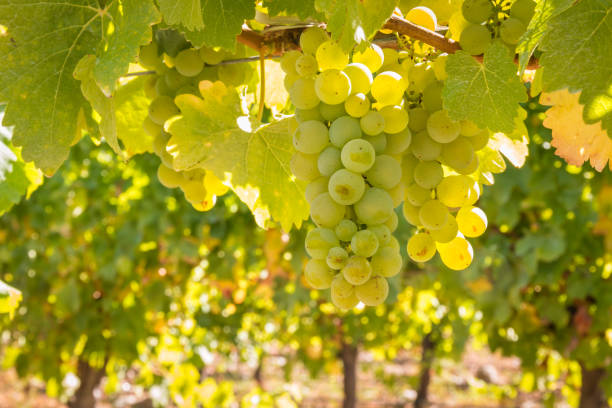
                        ripe chardonnay grapes hanging on vine in vineyard at harvest time with blurred background and copy space closeup of ripe chardonnay grapes hanging on vine in vineyard at harvest time with blurred background and copy space chardonnay grape stock pictures, royalty-free photos & images

    Are you under the sway of the Chardonnay mystique?   You're not alone and I wonder why.

    It's not a secret that Chardonnay continues to dominate the white wine market.   Sauvignon Blanc has been making inroads, thanks in part to New Zealand, but Chardonnay, oaked and unoaked, holds on. 

    The question is: Why?

    Wine drinkers, in general, like and want flavor, which is the primary reason they reach for Kiwi "Sauvvie," as it is known in the Southern Hemisphere.  Zesty and forward, lime juice and passion fruit are but a few of the ways to describe the wine.  Fans love it and can't wait to open a fresh bottle. 

    Others are not as enthusiastic about what they say is the in-your-face New Zealand style, especially when they read this description from one over-heated wine writer: "(the) taste of green peppers sliced with a silver knife."  

    And that brings us back to the question of why people like Chardonnay?

    An often-heard comment from winemakers is "If you don't have it in the vineyard, you won't have it in the winery."  Which is to say, grapes rule.  You can make poor quality wine from high quality grapes, but not the reverse. 

    I once heard a winemaker say that Chardonnay is "a winery wine," meaning that a finished Chardonnay is more a product of wine making than grape growing. 

    That's not as obvious as it sounds.  Sample a ripe Cabernet Sauvignon or Gewurztraminer grape in the vineyard and you'll get a mouthful of flavor.  There's more there than there is with freshly picked Chardonnay. 

    Fermented Chardonnay that passes through the cellar with little handling tastes of green apples and in some cases a touch of minerals.  Riper Chardonnay offers flavors of ripe pears, honey and maybe roasted nuts.  Extending the apple analogy: Granny Smith and barely ripe Chardonnay; Golden Delicious and ripe Chardonnay.  

    Chardonnay and acidity is another factor to consider.  Cool climate Chardonnay tends to show sharper, even mineral, acidity, at least when young.  Warmer climate Chardonnay has softer more tropical fruit, like mango and melon, that is more integrated with the acidity.

    And then there's the influence of oak. 

    Opinions vary about what oak to use (French, Yugoslavian, American), toasting levels and how long the wine should be in contact with the oak. Some say that without oak aging Chardonnay, you might just as well be drinking Chenin Blanc.  

    Today, French oak has become an integral part of the character and taste of most Chardonnay.  Until recently, the smell and taste of new French oak was so strong in most Chardonnay that the wines were undrinkable.  

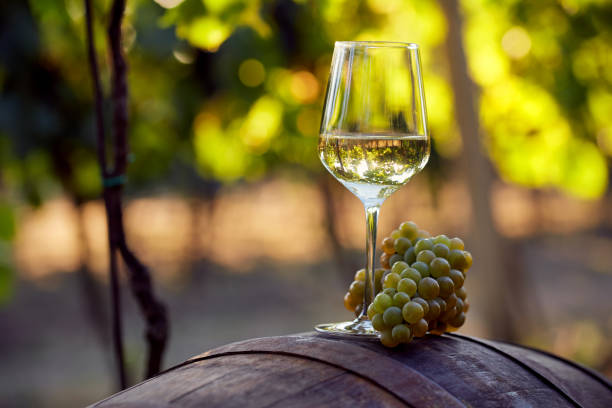
                        White wine with grapes on a barrel A glass of white wine with grapes on a barrel chardonnay grape stock pictures, royalty-free photos & images

    The situation got so bad with California and Australian Chardonnay, that a snarky comment sneaked into wine conversations: "Anything But Chardonnay." Needless to say, Chardonnay fans were not too happy.

    But sometimes winemakers are slow to react to trends and the over oaked Chardonnay hung around until wineries, one by one, decided that there is such a thing as too much oak, especially new French oak.  

    Curiously, while winemakers were trying to decide what is too much oak in Chardonnay, Burgundian wineries were making Chardonnay that was fermented and aged in French oak, without anyone saying the wine was too oaky.

    The use of American oak with Chardonnay never took off, with ZD Wines, the Napa producer that stubbornly stayed with American oak when the trend was going French, the possible exception. 

    The bottom line is that consumers like the taste of oaked Chardonnay more than straight Chardonnay.  Why?  Because the drinking public only knew Chardonnay with oak.

    The good news is that most unoaked Chardonnay is coming on the market and the days of heavily oaked Chardonnay is, thankfully, behind us. 

    And, I guess that answers why Chardonnay maintains its popularity. 


    Next blog: Australia Series: New South Wales

    Leave a comment or write me at boydvino707@gmail.com

    at August 04, 2022 No comments:
    Email ThisBlogThis!Share to XShare to FacebookShare to Pinterest

    Friday, July 29, 2022

    The Colorado Wine Barons

    Recently, I read a notice about Joseph Phelps Vineyards changing ownership and it made me think of "The Colorado Wine Barons," an article I wrote in the early 1970s, about Phelps, Tom Jordan and Ray Duncan. 

    I was living in Colorado then and became aware of these three businessmen/vintners from a business article I read in a Denver newspaper.  Wine was mentioned only mentioned wine in passing.  For me, though, that mention was the germ of an idea for an article about Colorado wine for a wine magazine. 

    California wine was booming in the Seventies and everyone wanted a piece of it. Land in prime locations was still available and most of the wineries in Napa and Sonoma were still family owned. 

    With a little research, I learned that all three men had transformed their love of wine and the culture associated with it into successful wine businesses in California.  Phelps, a Colorado building contractor, hired his own company to build  Joseph Phelps Vineyards in the Napa Valley.

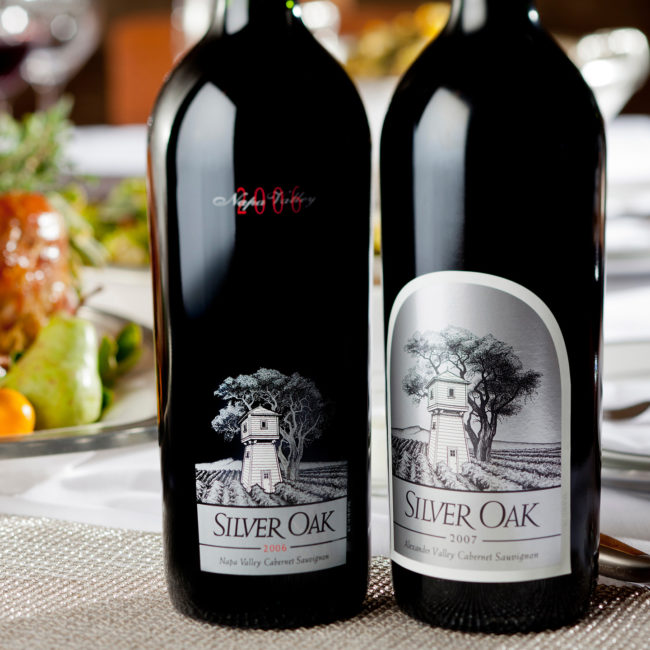
    Colorado entrepreneur, Raymond Duncan, with his partner, Justin Meyer, started Silver Oak Cellars and for a short time, owned Franciscan Winery, both in the Napa Valley. 

    Tom Jordan, a Denver-based businessman in oil and gas exploration, and his wife Sally, established the Bordeaux inspired hilltop Jordan Vineyard & Winery outside Healdsburg, in Sonoma County. 

    Jordan Vineyard & Winery 

                                 1998 Cabernet Sauvignon

    Long before I met him in his offices in the Petroleum Building in downtown Denver, Tom Jordan had made his fortune exploring for oil and natural gas in Indonesia. It was only natural that this new found wealth would support the love that Tom and Sally Jordan had for fine wine and food.

    The Jordans were Francophiles with a refined passion for French food and Bordeaux wine and a distinct style of "chateau architecture." In 1972, construction began on the Jordan chateau on the crest of a rolling hill outside Healdsburg, in Sonoma County.

    It was, and is, a handsome pile, complete with two elegant apartments, gourmet kitchen and a grand dining room that looks out on the winery tank room.  The space became legendary in Wine Country for elegant soirees attended by politicians and film stars.  At one dinner, actor Danny Kaye swept off the table, jumped up and danced a fandango, or so it has been rumored. 

    From the first vintage in 1976, Jordan winemaker Rob Davis made only an Alexander Valley Cabernet Sauvignon and later added a Russian River Valley Chardonnay.  The Jordan Cabernet Sauvignon is a Bordeaux-style blend, aged in French oak.

    Davis, who retired in 2019, was mentored by legendary winemaker Andre Tchelistcheff, who developed the iconic Beaulieu Vineyard Private Reserve Cabernet Sauvignon.   

    Joseph Phelps Vineyard

                                               2018 Insignia, Napa Valley product shot

    In the early 1970s Hansel Phelps Construction Company, a Colorado based firm that specialized in large buildings, was contracted to build Souverain of Rutherford winery.  Souverain, located off the Silverado Trail, later changed names and owners, to Rutherford Hill. 

    Joe Phelps visited the Napa Valley many times during the construction phase of Souverain and was taken by the natural beauty of the valley.  Eventually he purchased land not far from Heitz Cellars in a spot known as Spring Valley, where he commissioned his construction company to build Phelps winery.

    A vineyard was planted along Taplin Road and the German-born winemaker, Walter Schug was hired to make the first Phelps wines. Before Phelps was known for the Cabernet-based Insignia, Schug won acclaim for Phelps Rieslings, including one of the first late-harvest wines in the state.

    Interest in Riesling tapered off while the Phelps reputation for Napa Cabernet Sauvignon, took off.  Insignia, has been credited as one of the first so-called Napa cult Cabernets, as well as the impetus for Meritage, a concept that promotes Bordeaux-style blends.  Phelps Vineyard was also the first winery to bottle the true Rhone Syrah, while other California wineries were making Petite Sirah.

    Phelps has said that he credits Joe Heitz, Louis Martini and Robert Mondavi for teaching him about grape growing, wine making and the business of running a winery.

    In 2005, Joe Phelps turned over ownership and management of the winery and vineyards to his children, to spend more time with his grandchildren and cooking, his long-time passion. 

     Silver Oak Cellars & Franciscan Winery


    At first glance, it would seem that Ray Duncan and Justin Meyer were an unlikely pair to get into the California wine business together.  But the partnership proved to be a success.  

    Duncan, an entrepreneur, financed the investment and Meyer, a former Christian Brother, who studied wine making under Brother Timothy, supplied the wine expertise. The partnership thrived through the ownership of two Napa wineries.

    In 1972, Duncan and Meyer founded Silver Oak Cellars, focusing only on making Cabernet Sauvignon, one from Napa Valley and the other from Alexander Valley, in Sonoma County.  Silver Oak maintains its reputation as one of Napa's best. 

    The Franciscan brand was sold to Silver Oak, keeping it in the Duncan family. Franciscan makes a Monterey Cabernet Sauvignon and a Napa red blend, Magnificat Meritage, mainly Cabernet Sauvignon, with small amounts of Malbec and Cabernet Franc.

    My connection to all three men and their wines and wineries was as a writer.  In the early 1970s, the most successful wine shop in downtown Denver, was Harry Hoffman. The unusual thing about Harry Hoffman, in those days, was a focus on California wine, when most other stores promoted European wines. 

    Among the selections at Hoffman were Phelps and Franciscan wines, even though Ray Duncan had opened a Franciscan tasting room in historic Laramer Square. Colorado law at that time required a facility operating as a winery that served  wine also had to make wine on the premises.  So, Duncan installed a miniature press and fermentation tank, making just enough wine to satisfy the state. 

    Jordan's oil exploration business included two corporate jet planes that he and some members of his crew used to move back and forth from Denver to Healdsburg.  I was fortunate to have hitched a ride to Sonoma and was invited to visit the winery before the official opening and release of the first Cabernet Sauvignon.

    So many things have changed in the California wine business, but Jordan Vineyard & Winery, Joseph Phelps Vineyard and Silver Oak Cellars, maintain their high-end reliability for quality wine.


    Next blog: The Chardonnay Question

    Leave a comment of write me at boydvino707@gmail.com


    at July 29, 2022 No comments:
    Email ThisBlogThis!Share to XShare to FacebookShare to Pinterest

    Thursday, July 21, 2022

    Covid Delay


     Free Red Bicycle on Green Grass Field Near Green Trees Under Blue Sky Stock Photo

    A couple of weeks ago, I got Covid and ever since I have been bothered with persistent fatique.  At times I have trouble standing and my legs don't work the way I want them to.

    I'm working with physical therapy to get my strength back.  So, for now, today's regularly scheduled blog, "The Colorado Wine Barons, is postponed to July 29.

    I hope to see you all then. 

    Gerald D. Boyd

    at July 21, 2022 No comments:
    Email ThisBlogThis!Share to XShare to FacebookShare to Pinterest

    Thursday, July 14, 2022

    Australia Series: Victoria

    "Yarra Valley is a place of extreme beauty, of constantly changing light, of colour and mood...Once you've seen it you cannot help but love it."  Writer and winemaker James Halliday describing where he lives and makes wine.

    Australia's Victoria state is in the far southeast fertile corner of the country, with Melbourne as its capital.  Victoria is the most densely populated and most urbanized of all the states.

    Sorting out Australian geography can be confusing because there are states and  territories, a mainland and an island. Victoria is the smallest of the six states on the mainland while the island state of Tasmania is the smallest. Smaller still is the Australian Capital Territory, which was established from two areas of New South Wales. The other territory is Northern Territory.  Western Australia is the largest state and occupies the western third of the continent.

    Melbourne and Sydney each have a population of about 3 million, although bragging rights for the most populous goes back and forth.  Melbourne and Sydney are rivals in many ways, from population to sport.

    An interesting thing about Australian cities is the relative size of first and second; Geelong, Victoria's second largest city has a population of only about 120,000, a fraction of Melbourne's three-plus million.

    Victoria's Wine Regions

    Victoria can claim at least eight major wine grapes, with Chardonnay, Pinot Noir and Cabernet Sauvignon the principal varieties. Victoria's climate is generally temperate (climates are reversed in the Southern Hemisphere), just the right conditions for cool climate grapes like Pinot Noir. 

    In all, there are 17 wine regions in Victoria, clustered in the southeast part of the state.  Noteworthy are Yarra Valley, Mornington Peninsula (both close to Melbourne), Geelong and Pyrenees. 

                                   Old winery in Yarra Valley, Australia Yarra Valley, Australia – February 19, 2016: Yering Station established in 1838 is the oldest winery in Yarra Valley, which is one of Australia’s premium wine growing regions. Yarra Valley Stock Photo

    Yarra Valley is, by some estimations, Australia's premier area for Pinot Noir and one of the top regions for Chardonnay.  In the 1980s, France's Moet & Chandon was looking for a place to make sparkling wine in Australia and settled on Yarra. The view from the Chandon tasting room is superb, as are the wines, which in my opinion, are better than the Chandon sparkling wines I've tasted in the Napa Valley and Argentina.  Microclimate pockets in the Yarra are ideal for Cabernet Sauvignon, Merlot and a little Shiraz.  Yarra brands to look for: Coldstream Hills, Yarra Yerring, Yering Station, DeBartoli, Mount Mary, Domaine Chandon, St. Huberts.

    Geelong lies off Port Phillip Bay and is dominated by the Bellarine Peninsula. Noted for Pinot Noir, this cool climate area also makes Chardonnay and Shiraz, plus distinct long-lived Cabernet Sauvignon.  Geelong's history is the history of Australian wine, as 130 years ago, the region was one of the most important in Victoria.  Wines: Bannockburn, Prince Albert, Scotchmans Hill.

    Mornington Peninsula; the name conjures up images for day-trippers of small wineries, trendy cafes and restaurants and beautiful sea vistas.  The Peninsula, as its known, is a pleasant drive from Melbourne.  Chardonnay and Pinot Pinot Noir are the leading wines, along with growing interest in Pinot Gris, Viognier and the odd Italian-style wine.  Wines: Dromana Estate, T'Galant, Stonier's, Kings Creek, Port Phillip Estate.

    Pyrenees is an odd name for an Australian wine region since most people associate the name with a mountain range along the French-Spanish border. And in a country where the highest peak is 7,300 feet above sea level, the Victoria Pyrenees, known locally as Blue Pyrenees, for the soft blue cast on the rolling hills. Grape growing didn't get going in the Pyrenees until the 1970s, with arrival of Taltarni, Mount Avoca and Redbank.  They found Shiraz and Cabernet Sauvignon grew well in the mountain climate. Taltarni and the French firm of Remy Martin also produce sparkling wines from non-traditional varieties.  Wines: Taltarni, Redbank Winery, Dalwhinnie, Blue Pyrenees Estate, Mount Avoca Vineyard, Summerfield.

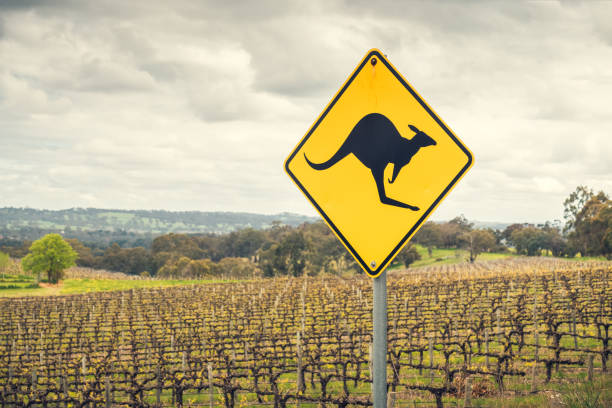
                        Kangaroo road sign in Australia Kangaroo road sign on a side of a road in  Adelaide Hills wine region, South Australia australian wine stock pictures, royalty-free photos & images

    Aside.  I have pleasant memories of Victoria, but among the most vivid and lasting was my time with Dominique Portet, brother of Bernard Portet of Napa's Clos du Val.  We had arranged an evening visit and when I arrived, Portet came bounding out of the winery door, smiling broadly and shouting, "G'day mate."  The greeting surprised me as I didn't expect to be met by a Frenchman with an Aussie accent. 

    By the time Portet and I had lingered over a light supper and tasting of Taltarni wines, the light was gone.  The Victoria Pyrenees are a long way from anywhere and it was pitch dark. To make matters worse, when I got to the end of the lane, I couldn't remember which way to turn back on to the main road back to Avoca where I was staying the night.

    There were no road signs and no other buildings to help me and I was driving on the right side of the road and you had to watch for nocturnal kangaroos.  

    I sat at the end of the lane for a few minutes, then figured there was a fifty-fifty chance, so I turned left. After what seemed like endless nervous kilometers, there were the first signs of Avoca.  Good thing, because considering the size of Australia, I could still be driving.

    Even though Cabernet Sauvignon and Shiraz dominate Australian wine, it's nice to know, especially for pinot fans, that there is a temperate region like Victoria for cool climate wines like Pinot Noir and Chardonnay. 


    Next blog: The Colorado Wine Barons 

    Leave a comment or write me at boydvino707@gmail.com


    at July 14, 2022 No comments:
    Email ThisBlogThis!Share to XShare to FacebookShare to Pinterest

    Thursday, July 7, 2022

    A Weighty Subject

    The other day, I was thinking about Spanish red wines and how they differ in weight from light to heavy. And it occurred to me that the relationship between wine and weight needs some explanation. 

    Weight is very subjective. If you have any doubt, consider the ageless dilemma of the hapless male upon hearing, "Honey, do I look heavy in this?" 

    Heavy to one person is likely not the same to someone else.  Wine is a weighty subject too.  In wine terms, weight usually refers to the tactile pressure of the wine in the mouth. This is true more for red wine than white wine. 

    Weight can also mean must weight, or the measurement of ripeness, in terms of certain compounds in grape juice, either in the vineyard or winery, or both. Must is the intermediate liquid -- neither grape juice nor wine.


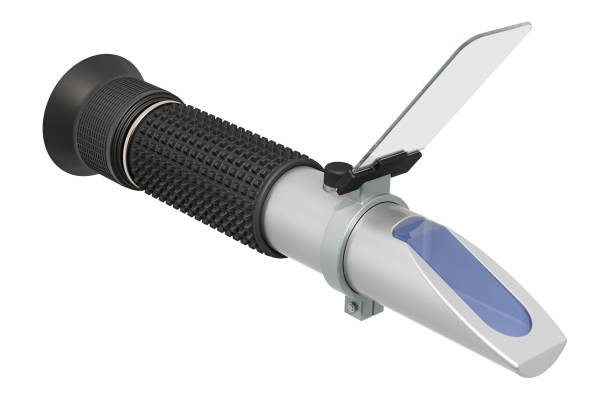
    Winemakers use a refractometer, like the one shown above, to measure grape ripeness.  

    You probably don't have a refractometer laying around, so next time you take a sip of a red wine, think of your tongue as a scale, measuring the weight of the wine.  It's a trick that I found works, mainly when the sensation of the wine is present, but words to describe that presence are missing. 

    Everyday examples of liquid weight are water as the lightest and milk as heavier.  Weight in wine might begin with a light rose, to a medium Pinot Noir and weigh out with a Syrah.

    Spanish Reds

     Spanish red wines follow a more prescribed scale.  Learning Spanish wine terms is a good way to decipher the weight and style of the wine.  The terms are spelled out under Spanish wine laws, known collectively as DO laws or Denominacion de Origen. 

    Higher quality categories include Denomacion de Origen Calificada (DOCa) and Denomacion de Origen de Pago (reserved for single estates). 

    The following two age levels of quality and weight apply only to wines with DO and DOCa designations, although the aging differs for red and white wines:

    Joven wines are the lightest because they are the least handled in the winery and usually not aged before release.  Joven wines, white and red, are harvested in one year and released with little or no time in oak.  These immediate-drinking wines are light and fruity and may carry the word "roble" (oak) on the label, indicating the wine spent less than six months in oak.  Wines: Bodegas Santa Rufina, Teofilo Reyes, Abadia la Arroyada.

    Crianza red wines are aged for at least 24 months, with at least six months in oak.  This popular category of Spanish wine often presents the right balance of fruit and oak.  Longer extraction time coupled with more contact with oak adds weight and structure.  Wines: Bodegas Casa Juan Senor de Lesmos, CVNE, Bodegas Puelles, Lopez de Heredia, Vina Real, Bodegas 220 Cantaras.

    At the top end of the aging categories are Reserva and Gran Reserva, required to spend 36 and 60 months, respectively, in barrel before being sold.  

    Joven wines, and some of the lighter and less weighty Crianzas, are good choices with casual outdoor meals and take-alongs for picnics.  Spain's workhorse red grape, Tempranillo, is adaptable enough to make light and fruity reds, as well as ones destined for aging. 

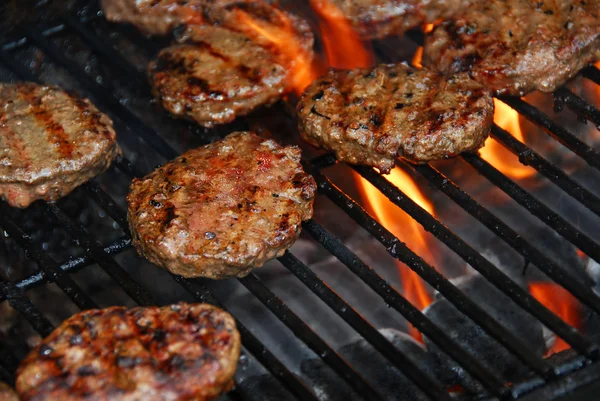
                      Hamburgers on barbeque Stock Photo

    Grilled burgers and sausages are great with light Spanish reds and those labeled Tempranillo. Another trouble-free choice is spit-roasted chicken, like those pre-cooked birds you find in supermarkets.  Joven reds are quaffing wines, so just about any of your favorite al fresco foods will work, even spicy dishes. 

    Easing into summer usually means a transition from heavier wine and heartier foods, to light and easy.  As the temperature rises, you'll feel more comfortable with less complicated meals, complimented by lighter wine.  Salud!


    Next blog: Australia Series: Victoria

    Leave a comment or write me at boydvino707@gmail.com

    at July 07, 2022 No comments:
    Email ThisBlogThis!Share to XShare to FacebookShare to Pinterest
    Newer Posts Older Posts Home
    Subscribe to: Posts (Atom)

    Subscribe to the blog

    Facebook

    • Facebook

    Followers

    Blog Archive

    • ▼  2026 (5)
      • ▼  August (1)
        • THE PASSING OF A GREAT MAN
      • ►  July (1)
      • ►  January (3)
    • ►  2025 (52)
      • ►  December (4)
      • ►  November (4)
      • ►  October (5)
      • ►  September (4)
      • ►  August (4)
      • ►  July (6)
      • ►  June (3)
      • ►  May (5)
      • ►  April (4)
      • ►  March (4)
      • ►  February (4)
      • ►  January (5)
    • ►  2024 (55)
      • ►  December (4)
      • ►  November (6)
      • ►  October (6)
      • ►  September (4)
      • ►  August (5)
      • ►  July (4)
      • ►  June (4)
      • ►  May (5)
      • ►  April (4)
      • ►  March (4)
      • ►  February (5)
      • ►  January (4)
    • ►  2023 (53)
      • ►  December (5)
      • ►  November (5)
      • ►  October (4)
      • ►  September (4)
      • ►  August (5)
      • ►  July (4)
      • ►  June (5)
      • ►  May (4)
      • ►  April (4)
      • ►  March (5)
      • ►  February (4)
      • ►  January (4)
    • ►  2022 (51)
      • ►  December (5)
      • ►  November (4)
      • ►  October (4)
      • ►  September (5)
      • ►  August (4)
      • ►  July (4)
      • ►  June (5)
      • ►  May (4)
      • ►  April (4)
      • ►  March (4)
      • ►  February (4)
      • ►  January (4)
    • ►  2021 (48)
      • ►  December (5)
      • ►  November (4)
      • ►  October (4)
      • ►  September (5)
      • ►  August (4)
      • ►  July (5)
      • ►  June (1)
      • ►  May (4)
      • ►  April (5)
      • ►  March (4)
      • ►  February (4)
      • ►  January (3)
    • ►  2020 (38)
      • ►  December (4)
      • ►  November (3)
      • ►  October (3)
      • ►  September (3)
      • ►  August (4)
      • ►  July (3)
      • ►  June (3)
      • ►  May (3)
      • ►  April (3)
      • ►  March (3)
      • ►  February (3)
      • ►  January (3)
    • ►  2019 (17)
      • ►  December (3)
      • ►  November (3)
      • ►  October (3)
      • ►  September (3)
      • ►  August (3)
      • ►  July (2)

    About Me

    Gerald D. Boyd On Wine
    Anacortes, Washington, United States
    I have been actively writing about wine and spirits since the late 1960s and have traveled extensively to all of the major wine regions in the world. My byline has appeared in various newspapers including the Rocky Mountain News, San Francisco Chronicle and Santa Rosa Press Democrat. I was editor of the Wine Spectator in the early years, editor of Wine & Spirits Buying Guide (later renamed Wine & Spirits Magazine) and have contributed to various other national and international magazines. I have been a professional wine judge since 1968, serving on panels at major wine competitions in the United States, Australia, Belgium, Italy, South Africa and China. And I was an adjunct wine instructor in the Wine Studies program, Santa Rosa Junior College, California for 12 years.
    View my complete profile

    Blog Archive

    • ▼  2026 (5)
      • ▼  August (1)
        • THE PASSING OF A GREAT MAN
      • ►  July (1)
      • ►  January (3)
    • ►  2025 (52)
      • ►  December (4)
      • ►  November (4)
      • ►  October (5)
      • ►  September (4)
      • ►  August (4)
      • ►  July (6)
      • ►  June (3)
      • ►  May (5)
      • ►  April (4)
      • ►  March (4)
      • ►  February (4)
      • ►  January (5)
    • ►  2024 (55)
      • ►  December (4)
      • ►  November (6)
      • ►  October (6)
      • ►  September (4)
      • ►  August (5)
      • ►  July (4)
      • ►  June (4)
      • ►  May (5)
      • ►  April (4)
      • ►  March (4)
      • ►  February (5)
      • ►  January (4)
    • ►  2023 (53)
      • ►  December (5)
      • ►  November (5)
      • ►  October (4)
      • ►  September (4)
      • ►  August (5)
      • ►  July (4)
      • ►  June (5)
      • ►  May (4)
      • ►  April (4)
      • ►  March (5)
      • ►  February (4)
      • ►  January (4)
    • ►  2022 (51)
      • ►  December (5)
      • ►  November (4)
      • ►  October (4)
      • ►  September (5)
      • ►  August (4)
      • ►  July (4)
      • ►  June (5)
      • ►  May (4)
      • ►  April (4)
      • ►  March (4)
      • ►  February (4)
      • ►  January (4)
    • ►  2021 (48)
      • ►  December (5)
      • ►  November (4)
      • ►  October (4)
      • ►  September (5)
      • ►  August (4)
      • ►  July (5)
      • ►  June (1)
      • ►  May (4)
      • ►  April (5)
      • ►  March (4)
      • ►  February (4)
      • ►  January (3)
    • ►  2020 (38)
      • ►  December (4)
      • ►  November (3)
      • ►  October (3)
      • ►  September (3)
      • ►  August (4)
      • ►  July (3)
      • ►  June (3)
      • ►  May (3)
      • ►  April (3)
      • ►  March (3)
      • ►  February (3)
      • ►  January (3)
    • ►  2019 (17)
      • ►  December (3)
      • ►  November (3)
      • ►  October (3)
      • ►  September (3)
      • ►  August (3)
      • ►  July (2)

    Search This Blog

    Report Abuse

    About Me

    Gerald D. Boyd On Wine
    Anacortes, Washington, United States
    I have been actively writing about wine and spirits since the late 1960s and have traveled extensively to all of the major wine regions in the world. My byline has appeared in various newspapers including the Rocky Mountain News, San Francisco Chronicle and Santa Rosa Press Democrat. I was editor of the Wine Spectator in the early years, editor of Wine & Spirits Buying Guide (later renamed Wine & Spirits Magazine) and have contributed to various other national and international magazines. I have been a professional wine judge since 1968, serving on panels at major wine competitions in the United States, Australia, Belgium, Italy, South Africa and China. And I was an adjunct wine instructor in the Wine Studies program, Santa Rosa Junior College, California for 12 years.
    View my complete profile

    Popular Posts

    • Original Zin
                                                                                                                                       iStock imag...
    • A Look at Hybrids
                                                                                                                                                  ...
    • Napa's Other Wines
                      It doesn't take a Master of Wine to see the connection between Cabernet Sauvignon and the Napa Valley. The two are as in...
    Simple theme. Powered by Blogger.