Thursday, October 27, 2022

Lake County


Heading north out of Calistoga, along a narrow twisting road that dips across low hills, then dropping down to Middletown, you arrive in Lake County, the smallest wine region in California's North Coast.  

Prohibition dealt a devastating blow to the small wine industry in Lake County. Recovery started back in the 1970s and today 24 wineries are gathered around Clear Lake. Grape growers have carefully selected sites, based on terroir, that are ideal for growing wine grapes. 

The result of this selection are eight Lake County AVAs: Red Hills Lake County, High Valley, Big Valley District, Kelsey Bench, Benmore Valley, Upper Lake Valley, Guenoc Valley and Clear Lake.  All Lake County AVAs are under the broad North Coast AVA. 

An Aside:  One of the major differences between American Viticultural Areas (AVA) and French Appellation Origine Controlee (AOC) is an AOC designated area may plant and use only prescribed varieties, such as Pinot Noir in Burgundy. American wineries have no such restriction and thus may plant and make wine from any grape they think will thrive in their area.  Consider the range of grapes grown in Lake County.  

Such viticultural freedom is not valued by all French winemakers. Some believe it is better to concentrate your talents on perfecting one wine (Pinot Noir in Burgundy) then trying to make a line of wines.  American winemakers who make a excellent variety of white and red wines obviously don't agree.

Lake County is a hidden treasure, like Anderson Valley in neighboring Mendocino County.  Hidden is a fanciful way to describe Lake County, as it actually isn't hidden, but more like off the beaten path and for some people that live in Lake County, that's just the way they like it.

The feeling in Lake is that Napa Valley is too touristy, Sonoma, although more spread out, is still too busy for some.  Lake County, especially around Clear Lake where most of the wine action takes place, is laid back. Lake County winemakers are just as serious about growing grapes and making wine, but at a slower, more thoughtful pace.

Most of the major vineyards in Lake County are within the shadow of Mt. Konocti, a dormant volcano and the source of the distinctive rocky red soil that supplies the nutrients for Sauvignon Blanc, Chardonnay, Tempranillo, Nebbiolo, Petite Sirah, Mourvedre and Cabernet Sauvignon.  The other major influence is the tempering effect of Clear Lake, the largest fresh water lake entirely within California.

Nearly every winery in Lake County makes Cabernet Sauvignon, but a lot of the winemaking energy and excitement is going into so-called alternative red wines like Tempranillo and Mourvedre, the latter known sometimes by old-timers as Mataro.

Here's a look at the four most important Lake County AVAs and what wines they have to offer:

Red Hills Lake County AVA (2004) could be the sub-appellation of Lake County with the most promise. It has the soil and southwestern position along Clear Lake.  Cabernet Sauvignon and other red varieties are favored by the growing number of wineries in the Red Hills appellation. 

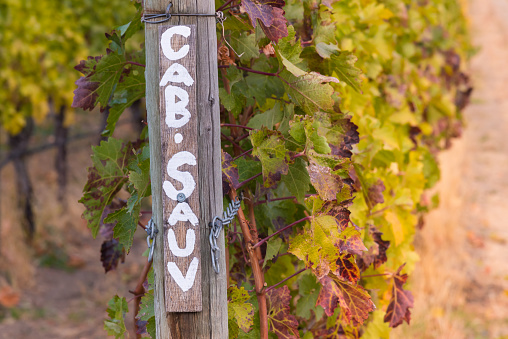
Red Hills vineyard cloaked in autumn color

Clear Lake AVA (1984) is one of the coolest wine regions in California, cooler even than Carneros and Santa Barbara. Half of the appellation is the lake itself,  a major influence on surrounding grape growing.  Sauvignon Blanc is the major variety. 

Big Valley AVA (2013) has a long viticultural history going back to the 19th century.  Today, there are dozens of vineyards and six wineries in Big Valley, with Sauvignon Blanc the major grape. 

High Valley AVA (2005) has vineyards at 1,600 to 3,000 feet planted in red volcanic soils. Cabernet Sauvignon is the major variety. 

Clear Lake not only benefits vineyards, but it supports a thriving water sports industry, attracting players from Napa and as far away as the Bay Area.  Visiting a wine tasting room is a nice diversion after a day on the water, but if you can't get to Clear Lake, ask your local wine merchant for the refreshing wines of Lake County. 


Next blog: Sonoma Series: Dry Creek Valley & Rockpile

Leave a comment of write me at boydvino707@gmail.com


Thursday, October 20, 2022

The Scent of Cash Flow

Next month an annual wine event, anticipated by some and ignored by others, will take place.  On the third Thursday of November, Beaujolais wineries will release their new wine into Paris bistros and major world markets. 

                                        Beaujolais nouveau Stock Photo

For most Frenchmen and the many wine drinkers around the world anticipating the grapy goodness of Beaujolais Nouveau, November 17 can't come soon enough. But there are those who take a dim view of the Beaujolais Nouveau promotion, reflected in this snarky comment I once heard from a Frenchman: "the scent of cash flow."

Over the years, Nouveau (new) has had its ups and downs.  The popularity Nouveau enjoyed throughout the '80s, waned in the '90s, but has finally stabilized. Today, whether or not you're a fan of Beaujolais Nouveau, it is here to stay.

Americans finding a place for Beaujolais Nouveau or Beaujolais-Villages on the Thanksgiving menu has helped. Beaujolais Nouveau is one of the few wines that can stand up to the array of flavors and textures commonly found on an American Thanksgiving table.  But more on that match later.

The Beaujolais Difference 

The region of Beaujolais is in east-central France, south of the Maconnais region of Burgundy. Administratively, Beaujolais is considered part of Burgundy, but the two regions are quite different in terms of climate and soil types, not to mention grapes.

Beaujolais is a red wine made from the Gamay Noir a Jus Blanc grape, commonly referred to as Gamay.  At one time, Gamay was permitted in Burgundy, often drawing comparisons to Pinot Noir, the red grape of Burgundy. A minuscule amount of Beaujolais Blanc, made from Chardonnay, tastes similar to Macon.

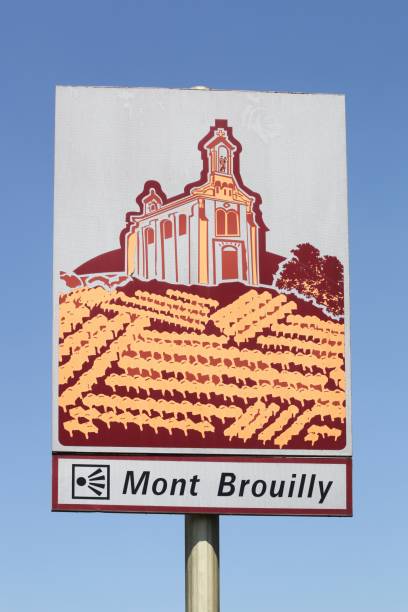
                                                   Signboard with Mont Brouilly in Beaujolais, France Signboard with Mont Brouilly in Beaujolais, France gamay grape stock pictures, royalty-free photos & images

Beaujolais-Villages is narrowed further with ten wines known as Beaujolais Crus. In the French system of classifying wines, sites such as villages and specific vineyards, are recognized as being the best of the breed.  For Beaujolais, the best are these Beaujolais cru (vineyard) wines: Moulin-a-Vent, Brouilly, Cote de Brouilly, St- Amour, Chiroubles, Chenas, Julienas, Morgon, Fleurie and Regnie. In 1988, Regnie became the most recently added Beaujolais Cru.  

Today, mature Beaujolais Grand Cru (Gamay), like Moulin-a-Vent, is sometimes favorably compared to a Volnay or Pommard (Pinot Noir) from the Cote de Beaune. A step up are Beaujolais-Villages and Beaujolais-Villages Blanc. The red wine is roughly between Nouveau and the cru wines, in quality and price.

Credit Carbonic Maceration

The very essence of Beaujolais, and in particular Beaujolais Nouveau, is the result of a wine making technique known as carbonic maceration.  Whole clusters of grapes are placed in a tank, carefully so as not to break the skins of any of the grapes, in an oxygen-free atmosphere, usually by using carbon dioxide.  

The use of carbonic maceration allows each berry to become a mini-fermenter.  However, achieving 100% CM is impossible since the grapes at the bottom of the tank are crushed by the weight of the grape clusters at the top of the mass, starting a natural fermentation.

Nearly all Nouveau is made by carbonic maceration, but CM is not used in the production of Beaujolais cru wines.  Carbonic maceration is also not generally used for white grapes.

Expect to pay about $15 or less for Beajolais Nouveau and $14 to $18 for a cru wine.  Here is a half-dozen Beaujolais producers to watch: Domaine Jean-Michel Dupre, Domaine Laurent Gauthier, Chateau de Julienas, Yvon Metras, Antoine Sunier and Georges Duboeuf.

Beaujolais and Food

For Americans, the time to break out a bottle of Beaujolais Nouveau or Beaujolais-Villages, is at Thanksgiving or Christmas.  A traditional holiday meal usually consists of turkey and a variety of side dishes with a range of flavors and textures. Some people forgo the bird in favor of baked ham or prime rib.


The choice of meat is easy to match with a wine, but problems arise when choosing a wine that won't battle with cranberry sauce, sweet potato casserole and seasoned dressing (stuffing?) to name but a few side dishes. 

And my last piece of advice for holiday wine and food pairing is to save that special bottle for an occasion when the food is more likely to merit it.  

Enjoy the day and the meal and make it easy on yourself by opting for Beaujolais Nouveau. The up-front fruity flavors, soft tannins and moderate acidity go nicely with the cornucopia of flavors of a holiday meal.  


Next blog: Lake County: A Hidden Treasure

Leave a comment or write me at boydvino707@gmail.com
 

Thursday, October 13, 2022

Sonoma Series: Alexander Valley & KnightsValley

For the next several weeks, the 19 AVAs in Sonoma County will be featured in the Sonoma Series. Most of the attention will be focused on Sonoma's major regions like Alexander Valley, Dry Creek Valley, Sonoma Valley and Carneros. 

Sonoma is one of California's most important wine counties. In the late 18th century, missionaries build a series of coastal missions along what is now California, ending their work in the town of Sonoma.  

Franciscan friars brought with them a black grape, known in Chile as the Pais that in time became known in California as the Mission grape, an important variety  until Prohibition became the law of the land in 1920. 

Following Repeal, the wine industry turned a corner with expanded plantings of Vitis vinifera varieties like Cabernet Sauvignon that were the standard in France. The intent was not to emulate Bordeaux Cabernet-based reds, but to create a unique California style.  

Sonoma Series begins with profiles of Alexander Valley, an early benchmark for Sonoma Cabernet Sauvignon, and Knights Valley, one of Sonoma's smaller AVAs.


Alexander Valley (AVA 1984)

Looking back at the rise in popularity of Alexander Valley Cabernet Sauvignon, it's a bit ironic that one of the major forces behind the success, was a Napa Valley icon. And this at a time when he had already established Beaulieu Vineyard as one of the major wineries in the Napa Valley, if not California.

Andre Tchelistcheff, the Russian-born enologist who once claimed that Pinot Noir was one of his favorite red wines, led the Beaulieu team in creating BV Private Reserve Cabernet Sauvignon. 

In 1976, a couple of years after Tchelistcheff retired from BV, Tom Jordan hired Tchelistcheff as consulting enologist at Jordan Vineyard and, in turn, he  recommended that Jordan hire Rob Davis, as Jordan's first winemaker. Together, Davis and Tchelistcheff developed and fashioned Jordan's first 1976 Cabernet Sauvignon, from Alexander Valley grapes.

The Alexander Valley is a short distance northeast of the gateway city of Healdsburg, a mecca of wine tasting rooms and smart restaurants. Before Prohibition, the area was known more for prunes and hops than it was for grapes, although a few black varieties like Alicante were planted for bulk red wines.  

Not until 1970, with the rebirth of Simi Winery, did Alexander Valley enter the modern age of winemaking.  Chateau Souverain followed and then in 1976, Jordan Winery and Vineyard brought elegance to the winery scene, on a hilltop outside Healdsburg. 

By 2013, there were 50 wineries in the valley and by the 1990s, Kendall-Jackson and Gallo, purchased large tracts of land.  Alexander Valley had arrived as the source of one of California's premiere Cabernet Sauvignons.

Despite the solid reputation for AV Cabernet Sauvignon, some Cab fans still leaned more toward Napa, where Cabernets are more berrylike than herbaceous. The occasional trace of an herbal character in AV Cabernets can still be found, but AV winemakers have worked their way around the problem.  

Alexander Valley Sauvignon Blanc has had limited success, while AV Chardonnay has taken its place in the lineup of desirable California Chardonnay.

Noteworthy Alexander Valley wineries include Simi, Jordan, Peter Michael, Seghesio, Robert Young, Geyser Peak, Lancaster, Silver Oak.

Knights Valley (AVA 1983)

At the far southern end of Alexander Valley and the far northern end of the Napa Valley is a small enclave known as Knights Valley.  Visitors would be excused if they thought that KV was part of Napa County, because since the 1960s, Napa's  Beringer Vineyards had farmed a large vineyard there and for years were about the only vineyard owners in the valley. 

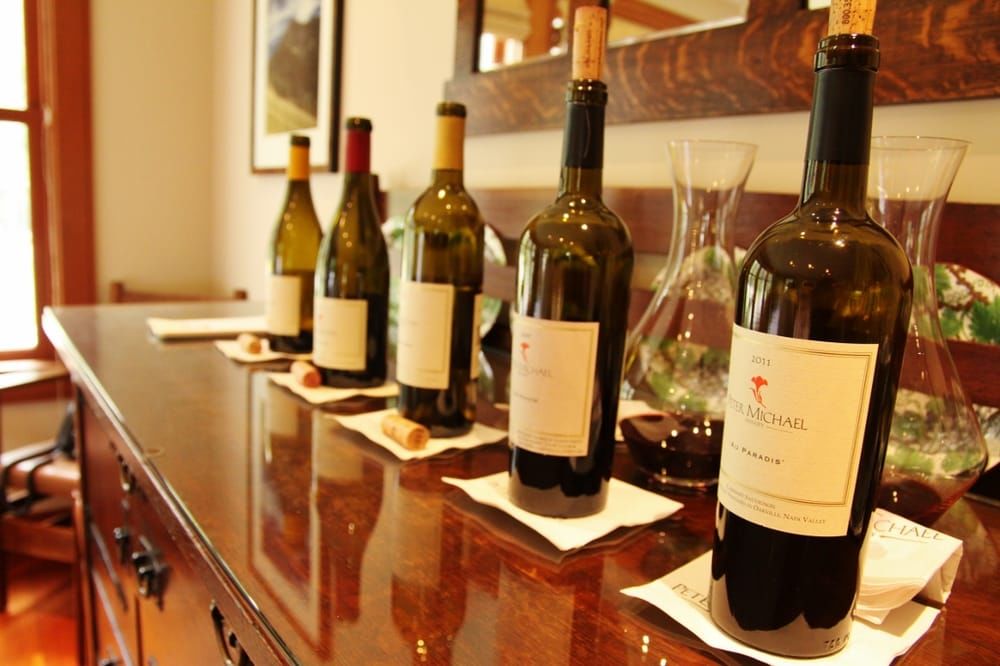
A tasting of Peter Michael red wines

In 1982, British businessman, Peter Michael, purchased land and planted a vineyard, hired a string of star winemakers (Helen Turley for one) and released a line of highly acclaimed and expensive wines with French names, like Les Pavots, a Bordeaux-variety red blend. 

A varied range of grapes is planted in Knights Valley, although the reputation of the valley rests on Cabernet Sauvignon.  Beringer has had a Knights Valley Cabernet since the 1974 vintage, Peter Michael's red blend and Kendall-Jackson sources a Cabernet Sauvignon from its Knights Valley vineyards. 

Compared to many of the major wine regions in the world, Alexander Valley and Knights Valley are relative newcomers.  But in that time great progress has been made in the vineyards.  So far, Peter Michael is the only winery in Knights Valley. 

Today, both valleys are producing distinctive Cabernet Sauvignon and red blends that are considered among the best of California's stellar red wines.  


Next blog: It's Nouveau time!

Leave a comment or write me at boydvino707@gmail.com

Thursday, October 6, 2022

Eucalyptus Part 2

There is a lot of talk circulating in wine circles about terroir: what is it and how does it affect wine?  Terroir is one of those untranslatable French terms that Americans grapple with. And opinions differ about how terroir applies to a vineyard environment and if the influence of terroir moves through the grape to the wine. 

Not to worry; this is not an essay on terroir. But it is an attempt to understand how external factors (eucalyptus trees near vineyards) can influence the growth of grapes and the taste of wine, even with or without the intervention of winemaking.    

Sometimes, people buy a bottle of wine without knowing anything more about it  than, "It's a wine I know and like."  Fair enough, but a more discerning drinker will ask about the wine's provenance, the background that helps round out a tasting experience.

A vineyard in Monterey County


The Folly of a Bad Decision

Which brings us to the former Mirassou Vineyards and Monterey County. In a previous blog (9/17/22) on Monterey wines, there was mention of the so-called "Monterey veggies" and how similar that distinct flavor was to the eucalyptus component in some red wines, a notable example, some say, being Heitz Martha's Vineyard Napa Valley Cabernet Sauvignon.

In the late 1970s, Joe Heitz told me that he had never detected eucalypt flavors in wines he made then in the Central Valley.  Not long ago, I opened a Heitz 1999 Martha's Vineyard Cabernet and marveled at how well the wine had matured.  But I didn't smell or taste any eucalyptus in the 1999 Martha's I had.

I did mourn the fact that a case of the '99 Martha's was not gathering dust in the back of my wine closet.  

Thinking back to that conversation with Joe Heitz, I remembered another event about vineyard soil imparting a distinct flavor to wine. In the late 1970s, Steve Mirassou, a member of the noted Mirassou wine family, and a friend of mine, was then in Mirassou sales, when the whole Monterey veggie brouhaha broke in a newspaper wine column. 

Mirassou Vineyards, then in San Jose, farmed an 80-acre vineyard in northern Monterey County, called San Vicente Vineyard. The vineyard was planted next to three windbreaks of eucalyptus trees.

"I remember parking my pickup truck next to the windbreak to help the guys move sprinkler pipe," recalls Mirassou.  "When I came back to my truck there was sap from the trees all over the windshield.

"It dawned on me then that the first five or six rows of vines would probably have a lot of sap on them...one eucalyptus tree can 'flavor' 50 acres of grapes," he explained. 

"And the Chenin Blanc, Gewurztraminer, Reisling and Chardonnay that we produced from the San Vicente Vineyard were all absolutely delicious,"  Mirassou said.

He explained that the whites didn't have a eucalypt character, "because unlike the red (varieties), the whites are pressed and only the juice is fermented.  The reds are fermented with the juice and the skins and the skins are coated with the eucalyptus oil."


Mirassou said the only problem (we had) was with Cabernet Sauvignon.  "And it was unfortunate for us (Mirassou Vineyards) that in the late 1970s, as Cabernet Sauvignon went so went your reputation." 

ADD ABOUT SOIL COMPOSITION

Recalling the marketing nightmare that came with that kind of vineyard problem, Mirassou added, "No one cared about how good your reasoning was at that time. Had we focused on Pinot (Noir) and grafted it over to Cabernet (Sauvignon) then we would probably still be in business as Mirassou."  The Mirassou brand is now owned by Gallo and most of the San Vicente Vineyard is now a subdivision.

In Steve Mirassou's opinion, the San Vicente Cabernet was so spoiled from the off  smell and taste that the wine was undrinkable.  Anthony Dias Blue, then writing for the Los Angeles Times, picked up on the Mirassou Monterey problem and wrote about it in his wine column. Blue faulted Mirassou for planting Cabernet Sauvignon in a part of Monterey County better suited to row crops.

"My sales team and I were getting crucified in the market at the time," recalls Mirassou.  "I went to my uncle about the problem and his comment was 'Well, maybe, but I kind of like it!'" 

"Would you like 60,000 cases of it?" I replied, astonished.

Steve Mirassou said that the encounter with his family was as far as he ever got in his quest to replant a lot of late ripening varieties in the San Vicente Vineyard, so he quit and eventually started Steven Kent Winery with his son, in Livermore. 

 Some 40 years later, Mirassou's memory of the event remains clear about the impact of eucalyptus on San Vicente Cabernet; a very different account from Heitz's memory of wine and eucalypt character in Central Valley wines.

The take away for consumers

The recollections of Steve Mirassou and Joe Heitz, although years apart, point to the problem of subjective impressions about wine and how that may influence a person's buying habits. 

Both of the observations are just that, observations and not based on science. Hopefully, Heitz's and Mirassou's impressions will inform your next wine tasting evaluation and purchasing decision.


Next blog: Sonoma Series: Alexander Valley & Knights Valley

Leave a comment or write me at boydvino707@gmail.com 


Thursday, September 29, 2022

Focus on Malbec

Who knew that Malbec, a mostly unknown grape, had the power to help transform the wine economy of a South American country? Although approaching obscurity in its homeland, Malbec went west and became an international wine juggernaut. 

                               Red grapes. rows of a vineyard in autumn malbec grape stock pictures, royalty-free photos & images

The Malbec story started in Bordeaux, but gained notice as a single varietal in an obscure corner of France. Back in the day, when England was importing a lot of wine from France, English wine drinkers liked their reds big and dark, so they turned to Cahors.  Malbec became known in England as the "black wine of Cahors."

Unfortunately for Cahors, the rustic red never reached the same popularity as the more refined Bordeaux.  Still, there are Cahors reds in the market, such as Ch. la Coustarelle and Ch. Armandiere.

Malbec was a team player in Bordeaux, but not a known one. Ironically, many of the people that liked Bordeaux were not aware that Malbec was contributing to their enjoyment.  This was especially true in light years when Cabernet Sauvignon needed a boost in color and flavor density. 

There's a line of five red grapes that make up the so-called "Bordeaux blend." For the majority of chateau blends, the order of importance is  Cabernet Sauvignion, Merlot, Cabernet Franc, Malbec, Petit Verdot.  Malbec is not the least important red variety in Bordeaux, but it's close. Lately, the value of Malbec (and Petit Verdot) has slipped in Bordeaux.

Malbec goes west

Malbec was destined for greater things when the grape found a new home in Argentina. Today, Malbec is the most planted red wine variety throughout Argentina, accounting for about 20% of the total. 

The first Argentine Malbecs were structurally bigger and riper than Cahors. To be clear, Cahors looks big and ripe, and by Bordeaux standards it is, but there is a refinement that defines the character of Malbec. The Argentine style evolved to more subtlety with berry and spice flavors, while Cahors continued to search for  for more refinement.

Argentine winemakers favor Cabernet Sauvignon, the third most planted red variety in Argentina, as the first choice for blending with Malbec.  Bonarda, the second most planted red grape, is a variety that has been shown by DNA profiling, to be the same as Charbono, a grape once popular in California in jug wine blends.

The Argentine take, then, on Malbec was to blend with Cabernet Sauvignon, make the wines less plummy/jammy and finish with lower alcohol. This approach allowed Malbec to be oak aged, elevating it to a top tier status.

Region by Region

Here's a region-by-region summary of Argentina's main spots for Malbec, along with a few notes on other wines that are doing well in these areas.

Argentina has a tiered system of appellations, starting with provinces, such as Mendoza, then departments which are in turn sub-divided into districts and then single vineyards.  Any of these appellations, such as the department of Maipu, can appear on wine labels.

Major provinces include Mendoza, San Juan, Salta, La Rioja and Rio Negro. Malbec is a popular variety in most of these provinces and is especially important in the Mendoza departments of Lujan de Cuyo, Maipu,Valle de Uco and Tupungato. In 1993, Argentina established its first "controlled appellation" for Malbec, combining the departments of Lujan de Cuyo and Maipu.  

Mendoza is where it's happening for Argentine Malbec.  Mendoza is a large province, with such important districts as Lunluna and Tupungato. Valle de Uco (Uco Valley) is a newer district with high promise for Malbec and Chardonnay. The wines are full-bodied with good natural acidity. 

San Juan, the second largest wine region, is north of Mendoza and at lower elevations. Long the producer of large amounts of sweet pink wine from the Cereza grape, San Juan has transitioned to a variety of whites, including Viognier and some experimental Malbec and Syrah. 

La Rioja, the oldest of Argentina's wine-producing provinces, specializes in the white Torrontes Riojano, an aromatic dry white, popular at home, but still building export interest. Torrontes Riojano, a cross of Muscat Alexandria and Criolla Chica (California's Mission grape), is one of four known Torrontes grapes in Argentina. 

Salta vineyard in the Andes

Salta is in the far northwest, with vineyards at high elevations.  California's Donald Hess' Colome comes from a vineyard at 10,000 feet. Malbec and Cabernet Sauvignon are the leading reds, with Argentina's unique Torrontes Riojano the favored white.  Salta wines are growing in popularity even though many of them are still tiny quantities. 

Rio Negra first planted vines in 2013 and since has been growing steadily. The southern province is in Patagonia, an untouched scenic region, home of large herds of cattle and sheep - and now vines. Malbec, the leading red, is made in an aromatic style with less concentration than Malbecs from Mendoza, reflecting the province's cooler climate. 

Argentine Malbecs worth a search include Catena and Catena Zapata, Salentein, Weinart, Famalia Zuccardi, Terrazas de Los Andes, Alta Vista, Norton, Colome, Luigi Bosco, Trapiche. 

Malbec Outside Argentina

In other parts of the world, such as Australia, California, Chile, Washington state, Malbec has a presence, but still stands behind Cabernet Sauvignon, both at the winery level and in retail shops.  The modest success of Malbec in the world is, no doubt, due to Argentina's wholehearted adoption of the variety. 

Across the Andes in Chile, winemakers took notice of Argentina's success with Malbec and soon began to add Malbec to their line of red wines.  Chilean Malbec (Montes, Mont Gras, Clos de Luz, Caliterra) tends to be bigger and more tannic and usually part of a Bordeaux blend.

The few Australian wineries that make Malbec, Like Jim Barry and Henschke, usually use it as a blending component with Cabernet Sauvignon.  

About 50 Washington wineries are making a varietal Malbec, like Canoe Ridge, Barnard Griffin and Three Rivers, but most Washington Malbec goes into blends with Cabernet Sauvignon and Merlot.  B.R. Cohn, Mt. Brave and Assisduous are among the growing number of California varietal Malbecs.

Who knew there was so much to say about Malbec?  A growing number of consumers know and are looking to Argentina, Cahors and Washington state for their next bottle of varietal Malbec. 


Next blog: It's in the Soil

Leave a comment or write me at boydvino707@gmail.com


Thursday, September 22, 2022

Australia Series: The Other Regions

The bulk of wine produced in Australia comes from four states: Western Australia, Victoria, New South Wales and South Australia. To read about them, consult the Index on the opening page of any of my blogs. 

The last installment in the Australia Series, is an overview of the wines of Tasmania, Australian Capital Territory and Queensland.  The combined output of these three regions is small, yet each offers something unique or different.

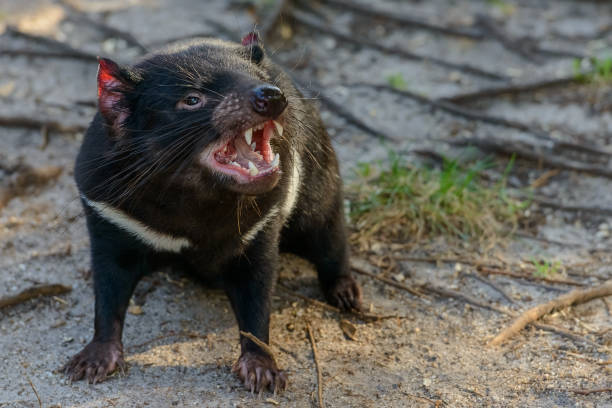
Tasmanian devil Tasmanian devil tasmanian devil stock pictures, royalty-free photos & images
Tasmanian Devil

Tasmania is an island off the southeastern coast of Victoria.  Named for settler Abel Tasman, "Tassie," as it is fondly known, has experienced the problem that few winemakers want to go there, because the island is thought to be a backwater and maybe a career killer.  But making wine on Tasmania poses challenges a winemaker may not face elsewhere and that makes it attractive. An array of micro climates and terroirs pose the biggest challenge. Tassie wineries, though, have built a solid reputation for Pinot Noir, Chardonnay, Riesling and sparkling wine, mainly from Pipers River and the Tamar Valley.  Brands: Pipers Brook, Tamar Ridge, Apogee, Morilla Estate, Clover Hill.

Australian Capital Territory is an odd duck in Australian wine. For one thing, the area is known as both ACT and the Canberra District, after the capital city of Canberra. But, because of strict land use rules, the small group of ACT wineries operate outside the borders in Yass Valley and around Lake George. A handful of tiny wineries make Riesling, Chardonnay, Sauvignon Blanc and a little Shiraz.  Wines to look for include Clonakilla, Helm and Lark Hill. Many of the ACT wines are hard to find even in major Australian markets. So ask your local wine merchant to special order them.

Bunch of grapes on vine in Amiens
Queensland cluster

Queensland was a wine powerhouse in the late 19th century.  The northern region went through a series of ups and downs, but now seems to be on an up turn. The most significant wine area is Granite Belt, a small sub region on the southern border with New South Wales. However, the higher elevation, means spring frost can be a problem. Chardonnay, Semillon and Sauvignon Blanc are the main whites, with Shiraz and Cabernet Sauvignon the best reds. The larger wine sub region is South Burnett Valley, with most of the wineries along the coast and around Brisbane. Wine tourism is the popular attraction.

Final thoughts on Australian wine

This series brings to a close an overview of Australian wine. But there still is a few things to say about the past and future of Australian wine in the U.S. market.

Wine drinkers with long memories will remember a charming Aussie named Paul Hogan who extended an invitation to Americans to come to Australia and they'll put a "shrimp on the barbie."  The popular TV ads, that ran in major U.S. markets, were a follow up to Hogan's mega hit movie, "Crocodile Dundee."  

Although Hogan's pitch was on behalf of Australian tourism, the ads and the movie helped to open the flood gates of what seemed like an endless flow of Australian wine that soon became the new wine sensation in America. 

For a time, American wine drinkers enjoyed well-made Aussie Chardonnay, Cabernet Sauvignon, Shiraz (Syrah) and were re-acquainted with the pleasures of Semillon as a varietal wine.  

For many, Australian wines were a lot like those from California, yet they were different, especially Shiraz.  American wine drinkers had gotten used to leaner Syrah from the Rhone Valley, aged in French oak and then along comes brawnier Aussie Shiraz, aged in American oak.  The Aussies had shaken up the American wine consciousness. 

It wouldn't be the last shaking from Down Under.  Aussies took over pop music and movies, Russell Crowe and Nichole Kidman were everywhere and American movie goers had a hard time deciding if the actor they were seeing with a convincing accent was American or Australian. 

Wine drinkers were just as puzzled.  Australian wines, of course, had their own personality, but to the casual wine consumer, Aussie Chardonnay and California Chardonnay were like close cousins: warm climate fruit and French oak tended to blur the differences.

From the earliest days of the Aussie invasion, price was the leveling market factor. Australian wine was beating California wine at most price points, until it wasn't.  In time, Australian wineries raised bottle prices high enough that consumers thought  why should they pay a premium price for an Australian wine when a comparable California wine was on the shelf for less.  

Today, Australian wine offers a good quality/price ratio.  Trying different wines is always a good policy, especially when wineries throughout Australia offer such a wide variety of wine.  

The Sonoma Series is next, with the first installment scheduled for October 14,  featuring Alexander Valley and Knights Valley.

Next blog: Focus on Malbec

Leave a comment or write me at boydvino707@gmail.com


Friday, September 16, 2022

Monterey County

Note: Evil (and costly) scammers are to blame for this blog showing up late in your in box.  The site has been down for a couple of days, while a scammer claiming to be Apple Security, did a job on my wife's and my computer.  But, we're back...at least until the next hack.  


There was a time when wines carrying a Monterey County appellation were accused of having a bad case of the "Monterey Veggies."  Never mind that other Monterey wines, not made from grapes gown in the northern part of the county, Jekel Rieslings for example, were not vegetal at all. 

Northern Monterey, specifically Salinas, is known as the salad bowl of the nation, because trailing off to the east and west of H-101, are endless rows of lettuce, artichokes and other row crops. Some people claim that after the lettuce is picked and the plants are plowed under, the decomposing matter leaves a vegetal presence in the soil.  

Eucalyptus nuts and leaves

The same theory has been suggested (and scoffed at) for vineyards adjacent to eucalyptus trees. According to one theory, the eucalypt leaves and nuts drop from the trees and are mixed into the vineyard soil, giving red wines a "certain" eucalypt character.  The most noted example is Heitz Martha's Vineyard Napa Valley Cabernet Sauvignon.

I asked Joe Heitz about that theory in the late 1970s and he scoffed, saying it was a lot of bunk.  "Years ago, I worked for a winery in the Central Valley and on hot days we had gondolas full of grapes parked under the shade of eucalypts. Eventually we processed the grapes along with the leaves and nuts and never picked up eucalyptus in the wines."  

A few months ago, I opened a 1999 Martha's Vineyard and thought it was one of the best Napa Cabernets I had tasted in years, but I didn't detect eucalyptus or even mint. 

The beautiful rainbow eucalyptus

Aside:  There is a sensory difference between the smell and taste of mint and that of eucalyptus. Eucalyptus is more menthol than mint, while mint is often like peppermint, which in turn is different than spearmint. For most wine consumers, arguing the differences is splitting hairs, but distinguishing the differences is important to wine professionals.

Monterey Sub-Regions

Today, Monterey is a vibrant wine region, with a handful of sub regions producing distinctive wines.  Gavilan mountains is home to the Burgundian-style wines of Chalone Vineyards.  The Santa Lucia Highlands has built a solid reputation for Pinot Noir, Carmel Valley leans more toward Cabernet Sauvignon.

The northern part of the county, mainly the Salinas Valley, is cool and often fog bound. The valley is open to the Pacific Ocean and as the temperatures cool, evening fog is drawn into the valley,making it difficult to grow wine grapes.  The opposite is the case in the south where daytime temperatures are higher and the area doesn't cool off in the evenings.

Note:  The following Monterey regions will include an AVA (American Viticultural Area) and the year it was granted.  Monterey has some of the oldest AVAs in the state.  There are nine Monterey AVAs; Chalone the first in 1982, San Antonio the most recent, granted in 2006.

Monterey AVA (1984) encompasses the entire valley, stretching from the cool Salinas Valley in the north to the hot southern end. The large appellation is composed of eight distinct wine regions, all but the San Antonio Valley, covered by its own AVA: San Bernabe AVA, Carmel Valley AVA, Santa Lucia Highlands AVA, Arroyo Seco AVA, Chalone AVA, San Lucas AVA and Hames Valley AVA. 

San Bernabe AVA (2004) is at the southern end of the AVA. The are is dominated by the 13,000 acre San Bernabe Vineyard, the largest contiguous vineyard in the world, owned by Delicato. San Bernabe also supplies grapes to wineries throughout California.

Santa Lucia Highlands  AVA (1991) lies along the western side of Salinas Valley. Pinot Noir, Chardonnay and Syrah are planted on elevated terraces and are protected from ocean gusts by the Santa Lucia mountain range.  Santa Lucia Pinot Noir is considered among the best in the state.  Look for Paraiso Vineyards, Hahn Estate, Morgan Winery, Mer Soleil. 

Chalone AVA (1982) is one of California's early success stories with Pinot Noir and Chardonnay, that looked tio Burgundy for style. High above the Salinas Valley in the eastern Gavilan Mountains, Chalone grapes get their energy and character from limestone soils and a cooler climate. In 1965, Richard Graff purchased Chalone Vineyard and employed oak-barrel fermentation and lees aging, then mostly unknown in the Golden State. Michaud Vineyard is the other winery in the tiny AVA. 

Arroyo Seco AVA (1983) is named for the dry wash in this part of Monterey.  At the center is Greenfield and Jekel Vineyards, a winery, as noted earlier that made its reputation on juicy Rieslings and later Chardonnay.  Those two wines are the flagships for Arroyo Seco.  Cabernet Sauvignon is less successful but does has its moments. Look for the appellation on Ventana Vineyards, J. Lohr, Kendall-Jackson, JC Cellars.

Carmel Valley AVA (1983) is a small AVA, about 10 miles inland from the city of Monterey.  The enclave is fashionable, with Clint Eastwood bringing fame, as  mayor, to the nearby city of Carmel-by-the-Sea.  The top wines are Cabernet Sauvignon and Merlot, especially from Bernardus and Galante Vineyards.  Pinot Noir has seen some success, planted at the higher parts of the valley, mainly from Talbot Vineyards and Diamond T Vineyards.

Monterey County is vast and varied, with the popular touristy coastal Monterey City, Pebble Beach golf courses, Carmel and Big Sur.  Vineyards and wineries are spread out, but with a plan, winery visits can be rewarding.


Next blog: Australia Series: Tasmania, ACT, Queensland and more. 

Leave a comment or write me at boydvino707@gmail.com


Thursday, September 8, 2022

Livermore

A few years ago, I was sitting at a table with some members of the Wente wine family, at their restaurant in Livermore. The interview was going well until I said to the family matriarch, Jean Wente, "I understand, but in wine country..."

Mrs. Wente looked directly at me and with a slight smile said, "Mr. Boyd, Livermore is also wine country."

You could have heard a cork drop as I quickly tried to recover from my faux pas.   While trying to hold up my part of the conversation with this considerate lady, I bumbled into making the same mistake I accused others of, that "wine country" must mean Napa and Sonoma. 

Jean Wente knew my mistake but she wasn't going to pass up a delicious opportunity to set the record straight with a visiting wine writer.  

And that's how a polite reminder marked my new appreciation of the Livermore Valley and the wine produced there. 

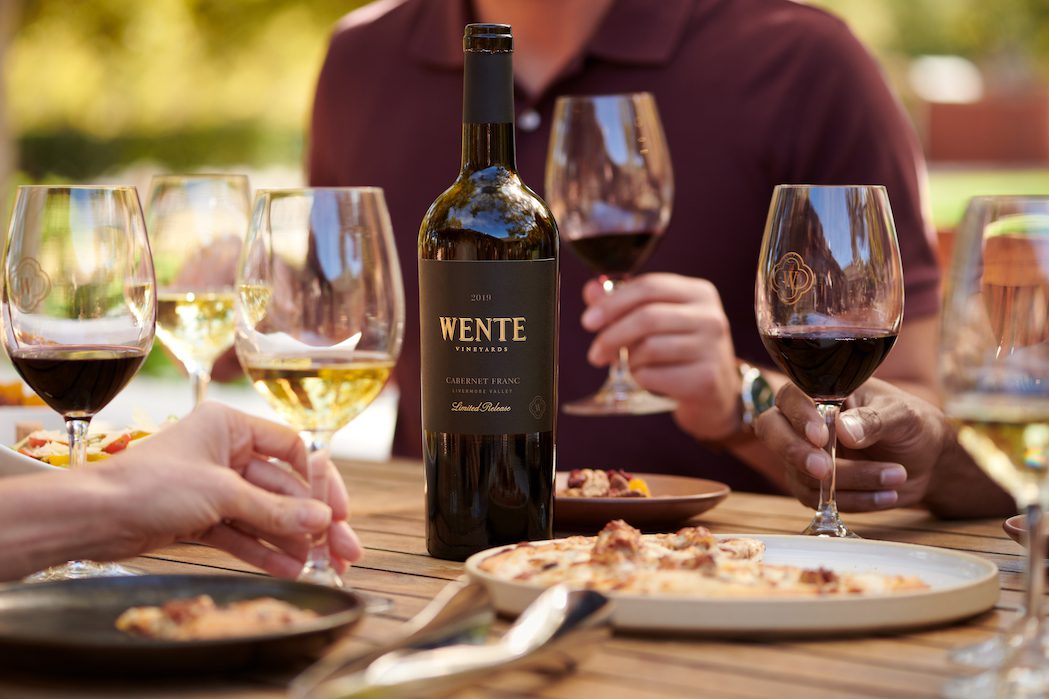
                                                                    Wente Vineyards image

In the early 1880s, Carl Wente and Joseph Concannon planted vineyards in the Livermore Valley, a few miles apart.  A few decades earlier, settlers in the Napa Valley were making wine for their own tables from the then common Mission grape. The first wine from more noble grapes didn't happen in the North Coast, however, until about 1860.

From the first major plantings of Vitis vinifera, Livermore has been known more for white wines, like Sauvignon Blanc and Semillon, than reds.  Today, Cabernet Sauvignon is the leading red variety in the valley, followed by Petite Sirah.  

While concentrating on Cabernet Sauvignon, Concannon Vineyards cpntinues to enjoy a solid following for its Livermore Petite Sirah and Semillon.  Still, even though Concannon continues to show the impessive merits of Semillon, American consumers want their Chardonnay.

The Valley

Livermore valley is 15 miles long and 10 miles wide, with more than 40 wineries in a loose cluster south of I-580.  Prior to Prohibition, there were 50 wineries in the valley. Today, with the exception of large wineries like Wente and Concannon, the majority are small.  And a handful describe themselves as "boutique," like Mia Napote Wines, specializing in Italian varieties. 

Here are eight Livermore wineries with wide distribution: Wente Vineyards, Concannon Vineyards, Fenestra, Murrieta's Well, Retzlaff Vineyards, Steven Kent Winery, Cedar Mountain Winery, Darcie Kent Estate Winery. 

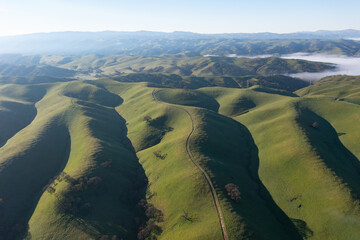
Early morning light shines on the rolling hills and valleys of the Tri-valley area of Northern California, just east of San Francisco Bay. This region is known for its vineyards and open space.
Ocean fog creeping across East Bay hills to Livermore Valley

Daytime temperatures can be very warm in Livermore Valley, but because of the valley's east-west orientation, coastal fog from the Pacific ocean and San Francisco Bay is drawn through the low East Bay hills, cooling the nights.

The Wines

This daily temperature change has allowed Livermore winemakers to make a range of wines from traditional French grapes such as Chardonnay, Cabernet Sauvignon, Merlot, Syrah, Sauvignon Blanc and Semillon.  And Petite Sirah and a few Italian varieties.  

Livermore's contribution to California viticulture is the Wente clone of Chardonnay, now used by an estimated 80 percent of wineries in the state. In 1912, German immigrant C.H. Wente brought in a Chardonnay clone from Burgundy.  A process called "vegetative propagation" has adapted the clone to Livermore's unique growing conditions.  Today, the Wente clone produces Chardonnay with apple, pear, citrus and floral characteristics.

Although Petite Sirah is favored as a blending component, especially with Zinfandel, the grape is well suited to Livermore terroir and is made as a varietal by a number of Livermore wineries, most notably, Concannon Vineyards, with three separate bottlings and a Petite Sirah Port.

Livermore Valley wine country, with its array of wineries, is an easy drive from San Francisco or Oakland.  It's an inviting place to spend a day or two dining, tasting wine, or playing golf at the valley's excellent golf courses. 


Next blog: Monterey County

Leave a message or write me at boydvino707@gmail.com

Thursday, September 1, 2022

Australia Series: Western Australia

Western Australia, the huge state that makes up one-third of the entire country-continent, has one of the most remote wine regions on the planet. The closest wine country to WA is in South Australia, a distance of about 1600 miles.

In Western Australia, the culture of wine-growing is sustained close to the Indian Ocean. Vineyards are scattered along a narrow strip that runs close to the water, from the Swan Valley, north of Perth, to the isolated Great Southern, where the Indian and Great Southern oceans merge. 

When you are in Western Australia, you don't appreciate how remote you are; how far away you are from the rest of populated Australia.  It only sinks in when you look back from afar.  And in all those hundreds of miles, except for the occasional sheep ranch, there are few settlements.

Straight ahead through the outback

Aside:  On my first visit to Australia, in 1985, I flew from Adelaide to Perth, chasing a setting sun.  On a similar route in the United States, say Dallas to San Francisco, the sight out the airplane window would be cities, towns and settlements, beneath glowing lights.  Flying over the vast central part of Australia, all I could see was darkness, with the rare sighting of a small cluster of lights.  It was like there was no one home!

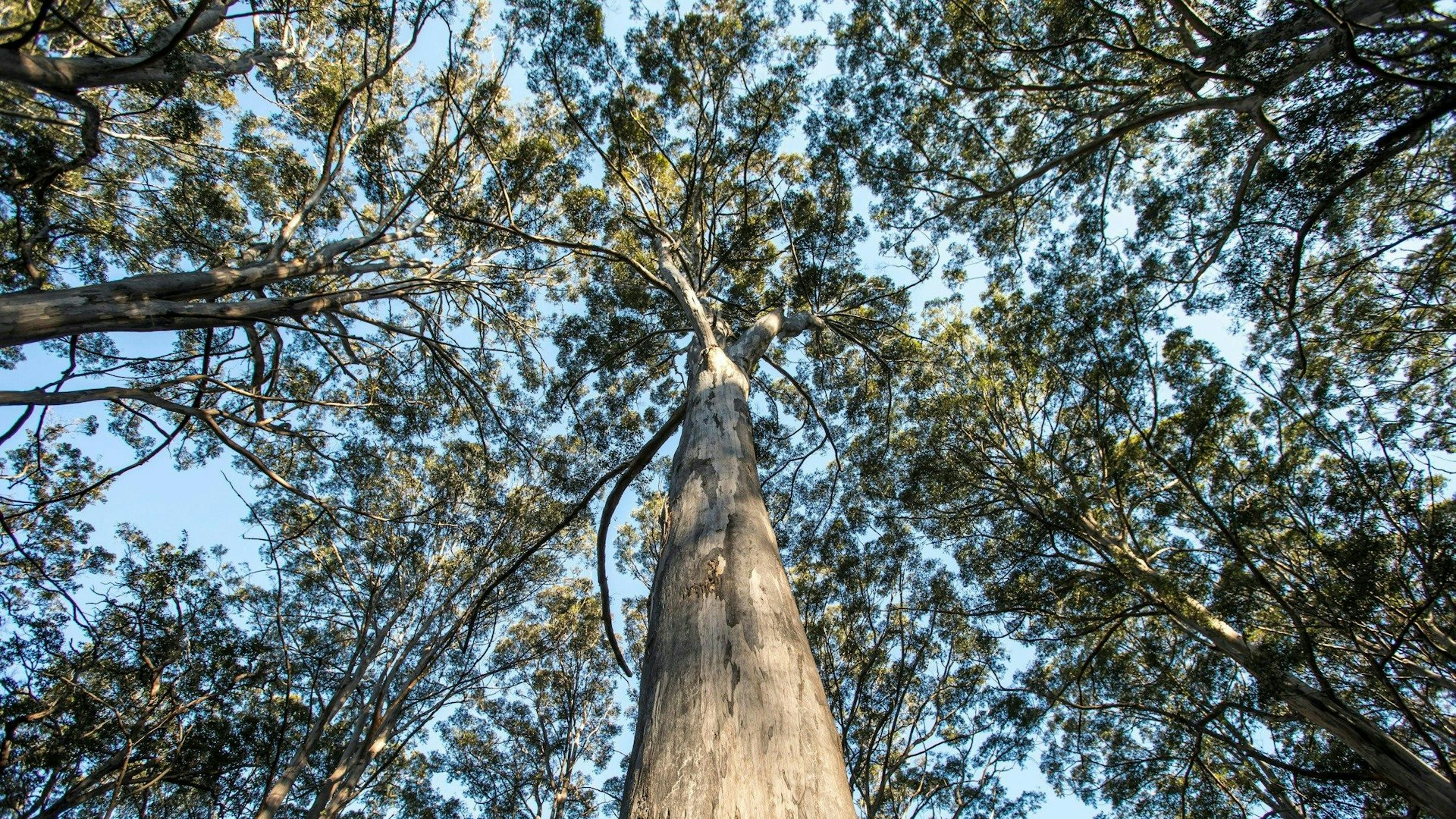
Mining is the major industry in the northern part of Western Australia, as well as the vast barren inland parts of the continent-country. Another resource are the giant karri forests.  A type of eucalypus, karri trees can grow to 200 feet, making them among the tallest trees in the world.

WA Wine Regions

There are three wine areas around Perth: historic Swan District, new and promising Perth Hills east of the city and the Southwest Coast district, including the sailing-center city of Freemantle, south of Perth. 

Geographie is further south, then the famous Margaret River sitting on a hook-shaped peninsula, followed by Pemberton and finally, completely bordering the stormy Great Southern Ocean, is the Great Southern wine district.  Inland from Margaret River is Blackwood Valley, a wine district not well known in the United States. 

What follows then is a brief summary of the major wine districts, with particular emphasis on Margaret River, Geographe, Pemberton and Great Southern.  

Margaret River quickly built a reputation for elegant Cabernet Sauvignon, once the wines first appeared in the 1970s.  Today, Cullen, Leeuwin Estate and Moss Wood continue to produce some of Australia's finest Cabernets and Merlots.  Margaret River is also noted for excellent fruit packed, crisp Chardonnay, Sauvignon Blanc and Semillon. Vanya Cullen, daughter of the founders of Cullen Wines makes stylized Sauvignon Blanc and a juicy seamless Cabernet-Merlot blend.

Other noteable Margaret River wines: Devil's Lair, Vasse Felix, Cape Mentelle, Evans & Tate.

Boranup Karri Forest, Margaret River, Western Australia
Karri forest near Leewin Estate

Great Southern is aptly named as the area is influenced by the Great Southern ocean.  And the Great Southern has a California connection.  In 1955, UC-Davis professor Harold Olmo was hired by the Western Australia government to assess the potential of the Great Southern as a viable wine region. The venture gave rise to vineyard and wine operations including Franklin Wine Estate, Plantagenet and Goundrey, all producing wine today. A smaller venture producing quality table wines, is Howard Park, outside the scenic coastal town of Denmark. Today, there are nine wineries near  Denmark, with such poetic names as Mariner's Rest. 

Great Southern does best with Riesling, Shiraz, Chardonnay, Cabernet Sauvignon.  Other worthy Great Southern wines: Chatsfield, Alkoomi, Harewood Estate.

Geographe is south of Perth, just before you get to Margaret River, a positioning that will help the growing number of wineries in Geographe, as tourists head toward Margaret River.  Limestone soils and a coastal climate are good for white grapes like Chardonnay and Semillon. The regions five rivers form micro-climate valleys, as they flow to the sea. 

Principal wine styles of Geographe include Chardonnay, Sauvignon Blanc, Semillon, Riesling and Shiraz.  Capel Vale is the major winery in the region.

Pemberton is a relatively new wine region in Western Australia, with a name that almost wasn't its name.  The Australian equivalent of the French AOC or United States AVA wine place naming systems is GI or Geographic Indications. Local officials couldn't decide if the region should be called Manjimup, Warren Valley or Pemberton, but they ultimately decided on the latter.  A sub region, also called Pemberton has the right climate for Chardonnay and Pinot Noir. Manjimup is warmer, with more rain and humidity, just the right conditions for Bordeaux varieties.

Pemberton is best known for its Pinot Noir and Chardonnay.  Wines to look for include: Salitage, Mountford, Smithbrook.

A few miles north of Perth lies the historic Swan Valley wine region, a popular destination for day-trippers looking for Chenin Blanc and Chardonnay at major wineries like Houghton and Sandalwood.  Two other areas - Perth Hills and Southwest Coast - round out Australia's west coast wine regions.  

The market for Australian wines in the United States has been up and down.  Over the past few years, Australia's major export market was China. But the two countries are having a trade war, so the Aussies may be looking again at the United States.  Which could mean that more Western Australia wines may soon be on the shelves of your local wine shop.

Next blog: Livermore Valley

Leave a comment or write me at boydvino707@gmail.com


Thursday, August 25, 2022

Portugal's Fortified Duo

Portugal, the narrow western part of the Iberian Peninsula, is the source of two of the most distinctive fortified wines in the world.  Port and Madeira, however, could not be more different. 

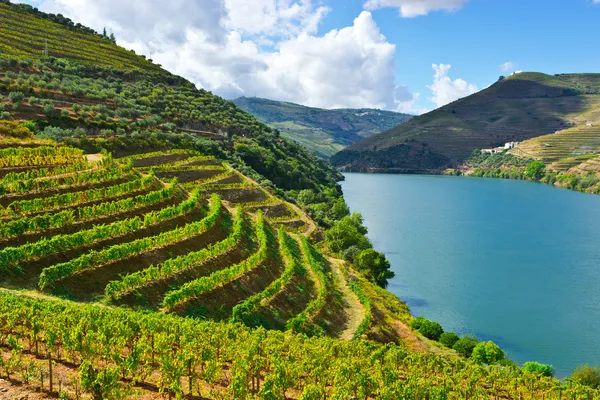
Madeira comes from an island that is closer to Africa than Portugal.  Port is made in the wildly beautiful Douro river valley. 

Terrace Stock Photo
Terraced vineyards along the Douro River

Both wines are steeped in history.  Port became associated with the English wine trade long ago, while Madeira was used to celebrate the independence of colonial America from the British crown. 

Port takes its name from Oporto, the port city in northern Portugal, from where all Port, red and white, is shipped worldwide. The name Madeira applies to both the fortified wine and the island that is 625 miles off the Portuguese mainland and 466 miles from North Africa.

Madeira is made from a diverse variety of eight grapes, including traditional varieties such as Sercial, Verdelho, Tinta Negra, as well as American hybrids. More than 80 different grapes are authorized in Port, but research conducted in the 1970s, identified Touriga Nacional, Touriga Franca (formerly Touriga Francesa), Tinta Barroca, Tinta Roriz and Tinto Cao as the best varieties. 

Traditionally, grapes for both Madeira and Port, were trod by foot in granite troughs, known as lagares. Today, most Madeira producers buy grapes and use tank fermentation, while Port houses have gone to autovinification, a tank process, using pump-over to extract maximum color from red grapes.   

Lagares are still used by some Port houses in the production of vintage and specialty Ports.  By 2010, there were just six exporters on the island of Madeira, down from a high of 30, and few of those remaining use the lagare.

Production of Madeira is centered around the estufa system, a method used to heat the wine, to develop an aged character.  A large estufa, used for bulk Madeira circulates heated water through pipes in stainless steel tanks.  A more traditional type of estufa employs wooden casks or lodge pipes (a Portuguese barrel, measuring approximately 115 gals.) stored in warm rooms and is considered a gentler method of aging the wine from six months to a year.  Select vinhos de canteiro are aged in estufa rooms for 20 to 100 years.  

Both wines are fortified with grape brandy, bringing the alcohol for Madeira to a alcohol strength of between 17 and 18% and for Port the strength is 19% or 20%.

Port wines are divided into cask aged and bottle aged.  Wood Ports (Ruby and Tawny) are intended for immediate drinking, after aging in oak casks, then filtered and bottled.  Vintage Port is aged for a short time in oak and then matured in bottle for 30 years or more.  Madeira is aged in a estufa for various lengths of time, up to a century.


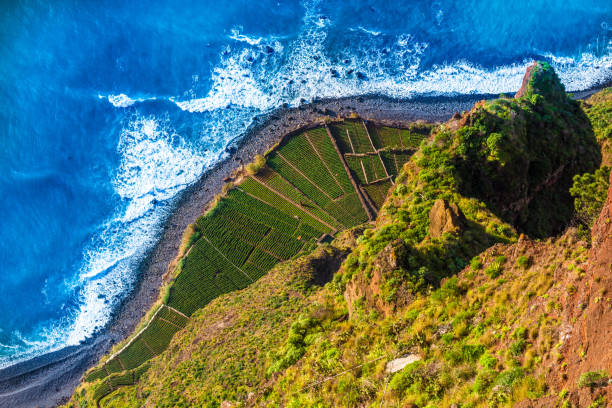
Cape Girao, Madeira Aerial view from the highest Cabo Girao, Madeira island, Portugal madeira island stock pictures, royalty-free photos & images
Utilizing ever suitable spot for a vineyard on Madeira

The types of Madeira are named after the principal grapes grown on the island and range from dry to sweet. Sercial is the driest followed by Verdelho, made in a medium-dry style with a smoky character.  Sweeter yet is raisiny Bual and Malmsey, made from the Malvasia grape.  

Due to the many types of both Port and Madeira, describing the flavors of the wines is difficult.  However, in general, young Port like Ruby is fruity/grapy with a pleasant sweetness, good acidity and soft tannins.  With age, Port is more complex, showing ripe plums and roasted nuts. Tawny Port is light brown in color, with a subtle fruitiness and touch of roasted nuts. Madeira is nutty with a blended fruit base and a hint of burnt caramel.  The sweeter types of Madeira are rich and treacly, yet possessing impeccable balance.

Both Port and Madeira have met modern consumer demand for different products by adding "specialty" wines to their inventories.  Both have vintage wines, but while Vintage Port is bottled after spending a maximum of three years in wood, Frasqueira (Vintage) Madeira must age in cask for a minimum of 20 years. 

Additionally, a few exporters on the island of Madeira release a wine matured in a solera, similar to Sherry and sold as Solera Madeira.  Port has no equivalent of "solera" but a number of Port lodges make a Single Quinta (vineyard or winery),Vintage and Garrafeira Port, comparable to a reserve wine.

Approximately half of the output from the Douro river valley is fortified.  The other half is red table wine, many made by Port houses, such as Duas Quintas from Ramos-Pinto.  North of the Douro valley is the emerging wine region known as Tras-os-Montes ("behind the mountains").  Only fortified wine is made on the island of Madeira, except for a little table wine made for local consumption.

Both wines have devoted collectors who value the wine's complexity and longevity. Madeira may hold the record for aging and is considered the longest-lived of all wine. Vintage Ports have been known to age for 30 years or more. 

Try these Ports: Quinta do Noval, Ramos Pinto, Warre's, Graham's, Sandeman, Taylor, Taylor Fladgate, Fonseca, Cockburn's, Dow's.  And these Madeuiras: Blandy's Henriques & Henriques, Madeira Wine Company.

Madeira and Port are two of winedom's greatest wines, yet they are known and appreciated by few. Show your appreciation today.  


Next blog: Australia Series: Western Australia

Leave a comment of write me at boydvino707@gmail.com