Thursday, September 23, 2021

My Life in Wine Episode 19

My Life in Wine had progressed, in 1994, to a staff wine writing job at the San Francisco Chronicle that involved, among other things, an encounter in a elevator with a cranky colleague and a tasting of corn flakes that prompted me to think twice about Kellogg's, but consider how the panel tasting idea would work with wine.
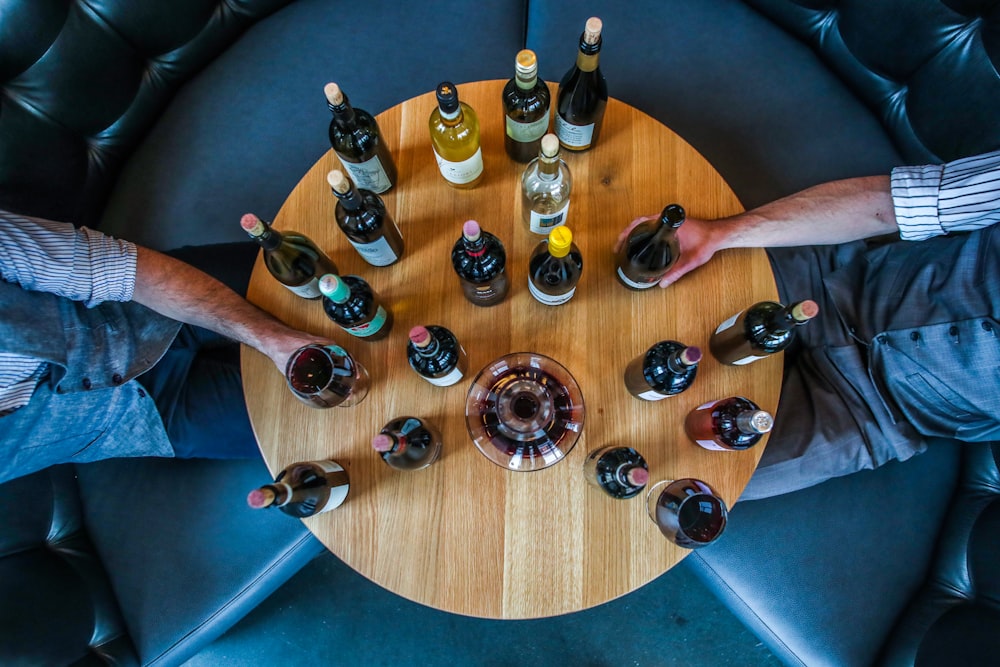
                    person holding glass bottle on round brown wooden table

At first, my editor in the Chronicle food department, was lukewarm to the idea of a wine tasting panel.  Food was a stand-alone section, growing in readership and he didn't see any open space, even every other week, for the results of a wine tasting. 

So, my pitch was to make the wine tasting panel a companion piece to the food tasting panel.  Eventually he agreed and we set about working out the details. 

Then the hard part began: getting the word out to the wine industry, finding  judges who could evaluate wine with the consumer in mind and finding space for the avalanche of wine samples I knew would be coming.

The one thing the Bay Area has in abundance is food and beverage people and a wealth of winemakers not far from the city.  A string of phone calls over a few days and I had a group of enthusiastic sommeliers, wine importers, retailers, winery owners, winemakers and wine savvy consumers, as panelists.

Large wine competitions that taste thousands of wines are often geared more toward "improving the breed of wines within a category," meaning feedback to wineries and winemakers on what is working and what isn't with a particular wine type; sweetness in Chardonnay, oak levels in Cabernet Sauvignon, excessive alcohol, quality/price ratio for high-priced wines. 

Wine competitions also provide winemaker/judges and others with a rare opportunity to taste and evaluate, even compare against their own wine, a large number of a specific varietal. Being faced with hundreds of Chardonnays is a daunting task but it also is a good learning experience.  

The Chronicle Wine Tasting Panel was looking only for three things: the best wine in a flight (grouping); the quality/price ratio; and some idea what food(s) would go with the wine. 

My job was to facilitate the tasting, invite the judges, organize the wines and fill in for a missing judge, while acting as an arbitrator, to break all ties and determine if a wine was perhaps flawed.  We always had a backup bottle or two for each wine tasted. If a wine didn't pass muster twice, it was eliminated and not mentioned in the tasting report. 

Panelists were selected from my personal knowledge of their qualifications, people I knew in the wine business that I had tasted wine with before.  Other panelists were recommended as having a "good palate." 

Some of these people worked out, others didn't.  Occasionally, a first-time panelist would throw around a lot of wine buzz words but didn't have a trained palate.  Most often these people were trying to break into the wine trade and, perhaps, had a part-time job as the sommelier at a small cafe, not known for its wine list.


A surprising discover was some winemakers did not have a sense of what the consumer wants in a wine, not as much as, say, a wine retailer.

Winemakers are taught at university how to detect possible flaws in a finished wine and then, how to "fix" the problem. Consumers are looking for appealing flavors, varietal correctness and not flaws. 

An example of a potential problem for judges would be agreeing on an acceptable level of Brettanomyces, a spoilage yeast found in some red wines such as Pinot Noir.  Winemakers disagree on what level of Brett is acceptable, while most consumers would not detect Brett in a wine and might not object to it being in the wine unless the level was really high. 

Winemakers were once taught that zero Brett is the only acceptable level, so if the presence of it is questioned in a judging and one judge follows the "zero rule," then there is a possible impasse in rating that wine. 

Fortunately, once the Chronicle Tasting Panel was up and running, the panelists were mostly in general agreement.  Wine judges learn to work together, so that one person who is not overly sensitive to sulfur, relies on another panelist, with a sulfur sensitivity, to bring that potential problem to the attention of all panelists.

After eight years, my tenure as the Chronicle wine writer and tasting coordinator ended in 2002, my wife and I moved to Santa Rosa, California and I embarked on the next chapter of My Life in Wine.


Next Blog: Changing Vineyards

Contact me at boydvino707@gmail.com


Thursday, September 16, 2021

Classy Grenache

  Grenache | Wine Varietals | Gold Medal Wine Club

Grenache is a class act. Its bright berry flavors and sassy spiciness have made Grenache a favorite in the southern Rhone Valley, Spain, California, Washington state and Australia.

The rule drink-or-wait for most red wine is wait a few years, or longer in some cases, before you pull the cork.  Not so with Grenache, an inviting red that shuns aging in favor of drink while still relatively young, for full enjoyment.

In its youth, Cabernet Sauvignon is raw and disjointed, young Pinot Noir tends to be grapy and lacks definition, and the same holds for Syrah.  But, with one or two exceptions, Grenache is ready to enjoy right out of the bottle.

In Spain it's Garnacha

Same grape, different name. Garnacha probably was first planted in the northern region of Aragon, then spread throughout Spain.  In one of those odd occurrences where a grape is not exported from France, Garnacha eventually made its way to Roussillon, in the south of France. 

Fans of Spanish red wines understand that the best expression of Garnacha comes from Priorat (Priorato in Spanish), where it is bottled both as a varietal or popularly blended with a handful of other red grapes. 

Priorat is a hilly enclave in Catalonia, producing concentrated reds based on Garnacha, sometimes blended with Carignan, or Merlot and occasionally Syrah. Priorat has become the darling of Spanish reds, thanks to pioneers Alvaro Palacios and Rene Barbier.  Priorat wines are expensive and sought after by those who like their reds powerful and richly textured.

The popularity of Garnacha as a blending grape is also important in Rioja where the traditional blend, based on Tempranillo, can include up to 30% Garnacha.  In neighboring Navarra, Garnacha is valued as a blending grape.  

And, Garnacha is the favorite grape for Spanish rose wines, that draw a lot of snarky comments from people who turn up their nose at pink wines.  Garnacha rose are the Spanish equivalent of French Grenache Rose.

Grenache and Chateauneuf-du-Pape 

Grenache Noir can be found across southern France where it is bottled as a red varietal and is the main grape for the oceans of pink wine, with the best roses coming from Tavel and Provence.  These two wines are the benchmarks for roses made from Grenache. 

The majority of Grenache, however, is planted  in the southern Rhone valley, with Chateauneuf-du-Pape (Pope's new castle) the grape's finest expression.  Fact is, the best use of Grenache in France is for Chateauneuf-du-Pape.

Vineyards Near Chateauneuf-du-Pape, Provence, France Stock Photo, Picture  And Royalty Free Image. Image 99605100.
Old vine Grenache, near Chateauneuf-du-Pape

Originally, Chateauneuf-du-Pape was a blend of 10 grapes.  In 1936, three more grapes were added. Today, 18 grapes are authorized.  At the top of the list is Grenache, considered the essential core of Chateauneuf-du-Pape.  Mourvedre and Counoise are the next important red grapes.  

Few producers use all 18 grapes, concentrating on less complicated blends based on Grenache.  There is also a Chateauneuf-du-Pape blanc, made mainly from Grenache blanc  and the northern Rhone white grape, Roussanne.   

Grenache's Worldwide Outposts 

Grenache has had a varied history in Australia.  Vastly popular in the 1960s, it began to lose interest and was eclipsed first by Shiraz (Syrah) and then Cabernet Sauvignon.  

Best Australian GSM wines - panel tasting results - Decanter
Aussie GSM wines

Today, the must popular use of Grenache by Aussie wineries is in GSM blends.  The popular blend of Grenache/Shiraz/Mourvedre was also of interest for a while in California and Washington.

At one time, Grenache was one of the most widely planted old vines in California, alongside Zinfandel and Carignane.  A lot of rose was made from Grenache, likely trading off the popularity of Tavel and Provence roses. 

Fortunately for California grown Grenache (and wine drinkers), a group of interested winemakers and consumers called the Rhone Rangers, got wine consumers interested in Grenache again. 

The rising popularity of GSM blends sparked an interest by Washington wineries in Grenache, though eventually the focus turned to varietal,Grenache, showcasing the grape's bright fruit and Washington's signature zingy acidity. 

Its been a struggle getting Grenache through the winters of eastern Washington and today there's maybe a dozen wineries in Woodinville and the Columbia Valley making varietal Grenache.


Next blog: My Life in Wine Episode 19

Contact me at boydvino707@gmail.com


Thursday, September 9, 2021

Albarino & Viognier

 Perhaps you've heard of the bar trick where someone is challenged to tell the difference, while blindfolded, between 7Up and Coca Cola.  Supposedly, without seeing the color of the soft drinks, one can't tell the difference just by taste. 

Some tricksters claim that the same challenge works with aged Cabernet Sauvignon and aged Pinot Noir.  In this vinous comparison, some of the flavor and aromatic components that separate the two wines when young fade away, or become similar, with age. 

Point being, grapes are grapes, and while there are differences, there are also similarities.  A red-on-red challenge is easier than red-on-white, because the chemical makeup of like varieties is more similar.  

Take Albarino and Viognier, both white grapes, native to different European regions: Albarino is most common in Spain's Rias Baixas and the Vinho Verde region of northern Portugal, where it is known as Alvarinho; in France, Viognier is mainly grown in the northern Rhone and southern Languedoc and there is substantial acreage in Australia and California. 

From the 1990s onward, both Albarino and Viognier spread outside of Europe to other worldwide regions, notably Virginia, New Zealand and Argentina.  

Learn about Albarino
Albarino

Albarino 

For many years Spain was known more for red wines than white.  The aromatic whites of Galacia were known more in Spain than in export markets. Then, in 1988, Galacia's Rias Baixas was awarded a DO (Spain's denomination of origin) and Albarino soon took the world white wine market by storm.

In a relatively short time, Albarino eclipsed Alvarinho (its Portuguese name) in Portugal's Vinho Verde. Today, Albarino is Spain's fashionable white and vineyard acreage is increasing to keep up with the demand. 

Both Albarino and Alvarinho are grown on wire-trained trellises, as well as growing up trees in the fashion that was popular long ago.  Modern vineyards sport large canopies, supported on wires, to promote vigor in the hot humid climate.

What does Albarino taste like?  Forward fruity aromatics, with apricot and peach scents, bright acidity and traces of spice in the finish.  In general, Albarino is lighter with more natural acidity than Viognier.

What tastes good with Albarino?   LIghtly chilled Albarino is a great sipping wine and it goes with just about any light food and grilled fish with a fruit salsa and rich shellfish like lobster with drawn butter or a light cream sauce. 

Albarino may require a search, but look for these popular brands, priced between $16 and $35: Granbazan, Granja Fillaboa, Santiago Ruiz, Morgadio, Bodega Torgo, Monte Pio, La Cana.

Viognier — Aerovina Estate
Viognier

Viognier 

In 2000, there was a spurt of interest for Viognier in California, but growers struggled to keep alcohols in check, while still getting the level of ripeness needed for the variety to show its character.

Australian winemakers were more successful with Viognier and, indeed, continue to focus on it as a major white variety, especially in South Australia, where Yalumba added a string of Viogniers to their line of white wines, based on different growing areas and vineyards.  Yalumba's top Viognier, Virgilius is richly aromatic with a hint of ginger and Muscat and a finish at 13% alcohol.

To be sure, Viognier is a well-traveled wine grape.  For thousands of years, though, Viognier has been grown in the Rhone Valley of France, the place that most people think of when they think of Viognier. 

Condrieu, Cote Rotie and the tiny Chateau Grillet are are all known for Viognier-based wines.  Actually, Cote Rotie red may legally add up to 20% Viognier with Syrah.  Ch. Grillet, all 7.5 acres of Viognier, is one of France's smallest appellations. 

In the northern Rhone, Condrieu is the major producer of Viognier, from more than 500 acres of vines, except for Ch. Grillet, an enclave in the Condrieu appellation.

Yields are low for Condrieu (thus the high prices) and the use of malolactic conversion and oak aging varies considerably. 

What does Viognier taste like?  Not unlike Albarino, the flavors are peach and apricots with, perhaps, more intensity and depth.  Viognier also can show subtle tropical floral scents like jasmine.  Acidity is usually low in Viognier, more in the California version than the French.

What tastes good with Viognier? Chicken or lobster in a cream sauce, Indian dishes with exotic spices and any dish seasoned with aromatic herbs like rosemary.

Although Ch. Grillet is priced at $150 for a current vintage and the odd Condrieu breaks $100 a bottle, you can find Condrieu for $50 to $70, including Guigal, Domaine Georges Vernay, Delas Freres.  

California Viognier like Pine Ridge, Cline, McManus and Mason Cellars are more modestly priced at about $12.

Viognier and Albarino do share some similarities, but the only trickery is the chemical composition of the grapes.  Try the two wines blindfolded and see if you can taste the differences. 


Next blog: Classy Grenache

Contact me at boydvino707@gmail.com

Thursday, September 2, 2021

My Life in Wine Episode 18

My departure from the Wine Spectator opened the door to a return to free lance wine writer and a short stint as editor of Wine & Spirits Buying Guide.  Then in 1994, while free lancing for a short time, a surprise offer came from the San Francisco Chronicle. 

FAQ | San Francisco Chronicle Archive | SFchronicle.com - San Francisco  Chronicle

San Francisco Chronicle


Encouraged by my friend and fellow wine writer, Diane Teitelbaum, I joined the food section of the San Francisco Chronicle as the staff wine writer. Even though I wanted the independence of free lancing, I couldn't pass up the opportunity to be the Chronicle staff wine writer.  Especially since there were no restrictions on outside writing, so long as the pub was not a competing newspaper. 

For me, working at the Chronicle was a learning experience.  My only other newspaper experiences were an Air Force base newspaper and wine contributor to the Rocky Mountain News. 

In those days there were not many staff wine writing jobs with U.S. publications, so the Chronicle was a step up.  But I didn't have a clue about the politics and pecking order of a big city newspaper.  An encounter with a star staff writer gave me a new perspective. 

One day, I entered the busy Chronicle lobby, walked past the Herb Cain "loyal Royal" typewriter, enshrined as a tribute to the famous columnist and stepped into a waiting elevator.  

"Hold the elevator!"  came a voice, more as an order than a request.  As the doors slid closed and we started up, the voice said, without looking at me, "Who are you?"

I turned with a smile, said my name and added that I was the new wine writer in the food department.  The elevator stopped at the second floor, the doors opened, and as he stepped out, the voice yelled over his shoulder, "I didn't know we had a food department."

The Chronicle City Desk was on the second floor, where all the main news writers worked, including my fellow elevator passenger, Phil Matier, veteran political reporter and columnist. Later, I was told by one food staffer that the comment was an example of Matier's abrasive personality, but another person said he was just taking the mickey out of the new guy. 

Whatever.  I thought it interesting that Herb Cain looked down on the hallowed news room from his corner office on the third floor, next to the food department.

There wasn't space in the cramped food department, so the new wine section set up shop on the second floor, along with the test kitchen, of one of the old buildings that the Chronicle owned near the main one on Mission Street.

Schlepping cases of wine up to the tasting area was in a creaking pee-stained freight elevator.  Every trip was an aromatic adventure.  On one occasion, I chased away a drunk sleeping off a bender in the elevator. 

Not long after starting at the Chronicle, I was asked to be on the Chronicle Tasters' Choice Panel, a small group of food professionals that met twice a month to taste and rate common food items -- corn flakes, mayonnaise, vanilla ice cream -- that could be found in any home pantry.  

I was a professional wine taster, so how hard could that be?

Harder than I thought.  The average consumer usually doesn't taste eight different brands of mayonnaise before stocking one in their own kitchen.  Whatever brand condiment your mother bought for the family is generally the one you use.

The range of flavor and quality found in the various products sampled by the panel was surprising.  And tasting and evaluating food products was a lot like tasting different wines.  Corn flakes is corn flakes, right?  Not exactly.  Before tasting a line of corn flakes, the panel had to first decide on what a corn flake should look and taste like. 

Wine evaluation is pretty much the same process.  Tasters first agree on basic standards for, say, Cabernet Sauvignon, as well as geographical growing differences and other factors.  Then, each wine is tasted and scored against these benchmarks.

The differences between brands of corn flakes, and other foods, often sparked vigorous debates with name brands not doing as well as expected. Consistent favorites often turned out to be house brands of major food chains. 

Occasionally, the panel's opinion of a certain product raised the hackles of the producer.  Frozen yogurt was the last item on the list tasted at one session and a popular Bay Area yogurt got a low score.  The company was incensed and immediately shipped boxes of the frozen yogurt we had tasted to the Chronicle and all of the panel members, with a snarky suggestion that the panel didn't know from frozen yogurt and we should re-taste. 

The Chronicle stood by the ratings and eventually the yogurt maker let it go. 

Frozen yogurt aside, the Tasters' Choice Panel became one of the most popular features in the already popular Chronicle Food section of the newspaper.  It made sense, then, to start a Chronicle Wine Tasting Panel.  More on that in the next episode.  


Next blog: Comparing Albarino and Viognier

Contact me at boydvino707@gmail.com

Thursday, August 26, 2021

Beyond Napa

NOTICE.  The mechanism used to transmit this blog to you by email will expire at the end of August.  Another system will take over but the transition period could take a week or longer.  So, there may a break in service before the publishing of "My Life in Wine Episode 18."

In 1977, my photographer friend and I visited wineries in Napa Valley, Mendocino and Monterey County, gathering material for magazine articles. Napa highlights included an interview with Joe Heitz, plus meetings with Joseph Phelps and Warren Winiarski.   Parducci Wine Cellars in Mendocino was the next stop.

One of the first wine articles I wrote was about Ivancie Cellars, a pioneer in Colorado wine making.  Dr. Gerald Ivancie's idea was to use California grapes for wines made at his small winery in Denver.  The California connection also included hiring a wine making consultant and a gape grower. 

Wines Vines Analytics
John Parducci

John Parducci, head of the leading Mendocino winery, Parducci Wine Cellars, helped Ivancie find grapes in California and had them trucked across two mountain ranges to Denver. The plan may go down in the record books as one of the most ambitious (and hare brained) vineyard-to-winery schemes in U.S. wine making.  

By comparison, wineries in western Washington purchase grapes from growers east of the Cascades, possibly making that annual trek the longest today.

The Ivancie connection was one of the reasons I wanted to meet and interview John Parducci.  There was also Parducci's reputation for speaking his mind and for being a great California wine story teller. 

So, Jack and I cranked up his tired VW Beetle and headed north to Ukiah and an extensive tasting of Parducci wines.

We met John Parducci in what passed then as the tasting room for Parducci Wine Cellars.  Two wine barrels supported the tasting bar, in a dark space for a wine tasting, but the atmosphere was bright and friendly.

Parducci poured wine after wine, while providing a running commentary on the vineyards, his non-stop schedule, in and out of his pickup truck, between the winery, the tasting room and the vineyards. All of this done while favoring a sore back he said came from riding a tractor for hours in the family vineyards. 

"Everything is automated today," Parducci groused with a trace of admiration. "When I was a teenager, my father taught me how to drive a tractor and sent me with boxes of grapes on the train to New York. I stayed with relatives in Brooklyn and went to an outdoor market, in a railroad yard, every day to sell the grapes out of a box car."  

Parducci Wine Cellars was founded just after the repeal of Prohibition, but despite winning awards in wine competitions and attracting attention from writers, Parducci wines never got the attention and acclaim bestowed on Napa wines. The lack of attention to his wines and Mendocino wines was a sensitive subject for Parducci and he never really let it go. 

In fairness, Anderson Valley, did bring well-earned national attention for Pinot Noir and aromatic white wines like Riesling and Gewurztraminer to Mendocino County.  Anderson Valley is not on any well-traveled wine trail, but the high quality of its distinctive wines have attracted visitors.

The large Mendocino AVA includes nine other AVAs, from the tiny Cole Ranch  to the larger Anderson Valley.  There are vast differences in the growing environments between the coastal influence of the Anderson Valley and the more continental environment of areas around Hopland. 

Cabernet Sauvignon and Sauvignon Blanc grow best in the corridor between Ukiah and Hopland, Zinfandel is good along a stretch of the  Russian River in the south county.  And, of course, aromatic whites and Pinot Noir are signature grapes in the Anderson Valley.  Pinot Noir does double duty in the bubbly from Roederer Estate, one of the best producers of California sparkling wine.

Monterey County

We were reluctant to leave the hospitality of Parducci Wine Cellars, but it was time to move on, with one more stop in Monterey County.

Chalone Vineyards, in the Gavilan Mountains, rests on a ridge about 1800 feet above the small farming town of Soledad.  I had arranged an interview ( in those days contacts were still by mail) with owner-winemaker Richard Graff at his isolated mountain retreat, but we had to get directions in Soledad, as there were no signs pointing the way.  

Richard Graff - Wikipedia
Richard Graff

Soledad, in northern Monterey County, is known for lettuce and other row crops.  Chalone Vineyards, had a reputation then for its Burgundian style wines.  In the early 1980s, the small nondescript winery and sprawling vineyards were in the shadow of the Pinnacles, an imposing rock formation, with a honeycomb network of caves. The one-lane narrow road to the Pinnacles, with its many switch backs, put a strain on Jack's aging Beetle.

At the top of the hill, the blacktop turned into a dirt driveway, leading to a Quonset hut in a small grove of trees.  The rattle of the VW announced our arrival but the only thing stirring, besides a large number of birds feasting on the grapes, was a rangy dog that circled the car and then christened our presence by lifting his leg and peeing on the left front wheel.

After relieving itself, the dog backed away and began barking, so we were wary about getting out of the car.  But all the barking did was disturb the intermittent silence, broken by loud blasts from an air cannon. 

It was comical to watch.  The birds would roost on the vines pecking away at the ripe grapes, the cannon would go off and the birds would scatter, then plunge back to the vines, as though their skinny legs were attached to a rubber band.

Nature defeating human innovation was mesmerizing, but we soon became aware that there was no one around.  So we left a note and retreated down the hill to Soledad. 

The next morning, I looked out the window hoping to see clear weather as this was the only day we had for photos of Chalone.  To my surprise, the fog was so thick and impenetrable that I couldn't see the VW parked outside the room. 

Fortified with plenty of coffee and a breakfast burrito, we headed up the hill, hoping for the best, but not knowing what to expect.  The narrow road seemed even longer, or maybe it was just the dense fog.  

As we eased slowly around one of the blind turns in the road, the fog started to lift and suddenly we emerged into blinding sunlight.  Jack found a pull over and we got out to look at the beautiful sight that stretched out below us. 

Everything in the valley was covered by a brilliant white irregular bumpy blanket that reminded me of cotton batting.  We had emerged into a complete reverse of the earlier foggy surprise in Soledad. 

The dog wasn't around to greet us but Richard Graff was, as we pulled up to the Quonset hut. He apologized for not being around the night before but he had gone down to Soledad in his truck to haul water up to the vineyards. 

Graff explained that it was the limestone soil base that attracted him to the hilly remote site.  Although Pinot Noir thrived in the shadow of the Pinnacles, Graff was also making Chardonnay in the Burgundian style.  In fact, Graff and Chalone became known for the use of malolactic and oak barrel fermentation.  

Chalone wines were a testament to what was possible with those grapes in California in the late 1970s.  The 1974 Chalone Pinot Noir placed third in the famous 1976 Judgement of Paris tasting the pitted California Cabernet Sauvignon and Chardonnay against French Bordeaux and Burgundy.


Next blog:  My Life in Wine Episode 18

Contact me at boydvino707@gmail.com

Thursday, August 19, 2021

Napa, then and now

                           5,299 Napa valley Stock Photos | Free & Royalty-free Napa valley Images |  Depositphotos


Although I'm not a resident of northern California anymore, I still like to keep up with the latest from wine country.  Recently, an interesting article in Time magazine caught my attention.  Time placed the Napa Valley on its list of "2021 World's Greatest Places." 

"Greatest" can be a questionable honorific awarded by an unknown person or persons. Moreover, "greatest" lists are open to broad interpretation.  

Webster defines "great" as "much higher in some quality or degree; much above the ordinary or average."  So is the claim of the "world's greatest" over blown?  Perhaps, by today's standards, the Napa Valley is great. 

But the honor stirred some memories of the Napa Valley at a time when things were decidedly different in the valley.

In 1977, fallout from the seventies wine boom was still being felt and, as a wine writer, I needed to get up to speed on what was going on in California.  So, I contacted a professional photographer friend, who I knew from the Air Force, about going with me on a road trip to California wine country. 

The plan was to spend a few days visiting wineries in northern California.  The trip began with me flying from Denver to San Diego and then Jack and I headed north in his VW Beetle for appointments at Heitz Cellars, Stag's Leap Wine Cellars and Joseph Phelps, all in the Napa Valley, then Parducci Wine Cellars in Mendocino.  Finally, on the way back to San Diego, a stop at Chalone Vineyards in Monterey County.   

I chose these wineries mainly for their Colorado connections, but also because the wines were personal favorites.  Heitz Martha's Vineyard Cabernet Sauvignon was a hot brand in those days and a big seller in Denver; Stags Leap and Parducci  had helped Denver's Ivancie Cellars get started and Chalone was just a great wine and a great story.

Motoring up H-29, in the mid seventies, past Yountville into the heart of the valley, I don't recall thinking the Napa Valley was "great."  Bucolic and open was more like it. 

The Napa Valley had not yet exploded into the tourist magnet it is today.  According to "Visit Napa Valley," there are presently 550 wineries (yes, you read that right), 400 open for tasting by appointment, 150 restaurants and 130 hotels and small inns. 

Now, my memory of those days is a little foggy; but we are, after all, talking about a time and place nearly 50 years ago.  

I wasn't on assignment and travel costs were a consideration.  So we settled for the modest (then) El Bonita motel, on the south side of St. Helena. The place looked a little worn, but from what we could tell, there were few alternatives, except for a small hotel in St. Helena.  So, we dropped our bags in the rooms, got back in to the Beetle and scouted out the location of our visits the following day. 

Not far from the El Bonita, we found a Heitz Cellars tasting room, set back from the Napa Highway.  While Jack was checking out the setting for photos, a Chevy Camaro convertible came racing down the gravel lane, braking to a stop before merging into the steady stream of traffic on 29.  As I jumped out of the way, I  recognized the impatient driver as Joe Heitz, the irascible owner of Heitz Cellars.

"Hello, Mr. Heitz.  My name is Gerald Boyd," I said stepping up to the Camaro.  He kept his eyes on the traffic, for a possible opening.  "Mr.  Heitz, my name is..."  

HEITZ MARTHA'S VINEYARD CABERNET; REVISITING THE 1980S - Moris Senegor
Joe Heitz

Without looking at me, he groused, "You damn writers are all the same, thinking all we have to do is wait around the winery for you to show up."  And with that, he gunned the Camaro and eased out into traffic. 

Jack and I stared at each other, mouths hanging open and thinking that the encounter with Joe Heitz was a rude way to start our Napa Valley visits.  So, we had dinner at the Grapevine Inn, got a good night's sleep and prepared for the unexpected at Heitz Cellars and hopefully a better welcome at Joseph Phelps. 

The following morning we found Heitz Cellars, set back off the Silverado Trail.  We were a little early, so we poked around the reception.  We didn't have to wait long.  Heitz rushed into the room, and barked "Good morning," but with a smile and an extended hand.  Compared to the encounter the day before, we were treated like long lost cousins. 

Joe Heitz was a good interview because he spoke his mind and answered questions directly without first thinking of local valley politics. I had asked him about the source of the eucalyptus character in the Martha's Vineyard wine.

"It comes from the nuts or seed pods getting in the soil," he explained.  "When I worked in the Central Valley, on days when we picked, the large hopper trucks full of grapes were parked in the shade under eucalyptus trees, waiting for processing. Leaves and nuts would fall off the trees and get mixed in with the grapes and I don't ever remember those wines tasting like eucalyptus."

"But that doesn't explain the eucalyptus character in the Martha's Cabernet," I pressed. "There are eucalyptus trees along the sides of Martha's and over the years, what fell off the trees got mixed with the vineyard soil," he said.

We concluded the interview, got a few photos of the reluctant Heitz and said good bye, and headed to Joseph Phelps, then Stags Leap Wine Cellars, followed with a drive north to Mendocino and a visit with John Parducci.  Our last stop was Chalone Vineyard in the hills above Soledad. 

Footnote: The national newspaper, USA Today, recently released its "10 Best Readers' Choice Awards" and for the second consecutive year, Washington's Walla Walla Valley was selected as "America's Best Wine Region."  The Napa Valley did not make the Top 10.


Next blog:  Napa, then and now Cont.

Contact me at boydvino707@gmail.com