Thursday, April 27, 2023

Benchmark Roses

In the wide world of wine, a crowded field of thousands of different types, there is no wine that has had more ups and downs than rose.

Perhaps it's because people can't get their heads around pink wines. Are they lightly tinted white wines, weak reds, or a refreshing fruity wine?

The confusion is understandable, because the market keeps shifting for pink wines. Roses are in and before you know it, they're out. And then the cycle begins again. 


Pink wines are made in just about every place where wine is made, from Austria to New Zealand, Argentina to Italy and from California to South Africa. And while all  of these places have a well-defined style of rose, based on a specific grape or grapes, the benchmark for them all lies in the warmer southern part of France. 

Estimates are that about 30% of world pink wine production comes from France.  Specifically, age-worthy Cabernet Rose d'Anjou from the Loire Valley, full-bodied blends from Aix-en-Provence and fruit-sweet dry Tavel from the southern Rhone Valley. 

Elsewhere in the wine world, pink wines are often an after thought.  What to do with a red variety in its third or fourth leaf that is still not mature enough for a saleable red wine?  Maybe squeeze a little profit out of the grapes by making a rose.  Or, take some of your Grenache or Gamay and make a rose to round out the line and provide an alternative for those visitors in the tasting room that cannot decide on white or red. 

No matter how it works out, few wine regions, except for France, dedicate all or most of their harvest to rose wines.

Cabernet Rose d'Anjou is the preferred style of pink wine today in Anjou, replacing a sweet rose, called Rose d'Anjou, made from the undistinguished Grolleau grape. Improved vineyard practices for the Grolleau have given Rose d'Anjou wines new life.

Cabernet Franc or Cabernet Sauvignon build Anjou roses structure, complexity and the ability to age and mature, not usually a characteristic of pink wines. Cabernet Rose d'Anjou are deeply colored, with a subtle herbaceousness and good balancing acidity. 

Aix-en-Provence Rose can be made from a blend of a wide range of red grapes, including Grenache, Cinsaut, Carignan, Cabernet Sauvignon and Syrah.  Provence roses are lightly colored, simple and fruity and ready to drink. A huge amount of pink wine comes out of this large Mediterranean region.

Tavel, is the noted all-rose appellation in the southern Rhone Valley, across the river from Chateauneuf-du-Pape. A blend of Grenache and Cinsaut grapes, gives Tavel roses a pleasant sweet impression, though the wine is always dry.  Tavels are light in color, fruity, with a good acid/fruit balance. 

Roses' Best Grape

There is a case to be made that there is really just one grape for pink wine and that would be Grenache (technically Grenache Noir since there is a white Grenache.) In Spain Garnacha (Grenache) is the grape of delightful Garnacha Rosado.

Grenache ready to pick

 One taste of a pink wine made from Grenache and you're hooked on the bright strawberry flavors, accented with earthy notes, sometimes with a subtle leathery note. Braced with good acidity, Grenache/Garnacha roses are great summer wines, especially with light foods, like cold ham off the bone and chicken salad. 

Of course, you can make a pink wine from any red variety.  In France, Cinsaut is a popular add-in, as is Merlot and occasionally Pinot Noir, although pinot is a challenge to get varietal character in a pink wine.  Zinfandel roses have had mixed success, with some tasting more like light red wines than pink wines.  Same is true for those pink wines made from other deeply colored grapes like Mourvedre, Malbec and Carignan.

Making Rose 

Today, there are two popular ways to make a rose wine: macerating dark-skin grapes, like Grenache, for 8 to 12 hours, and by blending red wine with white wine.  Maceration is the most common and generally makes the best wine.  Blending finished wines is usually preferred for basic pink wines, except for Rose Champagne, perhaps the best-known blended pink wine. 

And then there is a technique known as saignee, or "bleeding," where a small amount of juice is run off from crushed dark-skinned grapes. Co-fermenting red and white grapes is another method used to make pink wines.  Lastly, there is Vin Gris, that despite its gray name is a rose fermented like a white wine, except that the juice is not macerated.

Enjoying Rose

Roses are a good alternative wherever the call is for a white or light red wine. Grilled fish or vegetables, pork, chicken or turkey white meat are good choices as is any vegetarian dish.  The idea is to not get stuck in rules, but find what you like and then enjoy the combination. 


 Next blog: Bordeaux Blend

Leave a comment at boydvino707@gmail.com


Thursday, April 20, 2023

Napa Series: Oak Knoll to Calistoga


There is a large sign along Highway 29 announcing to all travelers that they are passing through the famous Napa Valley.  The "Welcome to the Napa Valley" greeting, near Oakville, may be the most photographed sign in California, after the famous "Hollywood," sign on the hillside outside Los Angeles. 

By the time you've passed the Napa Valley sign, you are already about mid-way up the valley, past Oak Knoll and Yountville, with Rutherford, St. Helena and Calistoga to come. Geographically, Napa Carneros is separated from the main part of the valley. 

These names (and others) are the source of noted wines with specific pedigrees, identified by wine drinkers everywhere. For some, Napa Valley means California wine. It is hallowed ground for wine fans, wine tourists and day trippers who gladly put up with crowded tasting rooms and long waits at the valley's acclaimed  restaurants. 

What they are coming for is to taste Cabernet Sauvignon, the king of Napa Valley. And some of the anxious and thirsty will be looking for Merlot, Cabernet Franc and a smattering of Petite Verdot, Malbec, Syrah and Zinfandel.  If white wine is what they are after, there's Chardonnay and Sauvignon Blanc, with a small amount of Chenin Blanc. 

There are 16 American Viticultural Areas (AVA) in the Napa Valley, scattered along H-29 on the valley floor, the Silverado Trail and in the mountains.  The following six appellations, from south to north, on both sides of Highway 29 and along the Silverado Trail, are closely associated with Cabernet Sauvignon, the core of Napa red wine.

Oak Knoll District (AVA 2004) is the southern most part of the valley, between Yountville and the city of Napa.  Cool breezes off San Pablo Bay temper the growing conditions, ideal for Merlot, Chardonnay and Zinfandel.  The somewhat cumbersome name for this area is a compromise settlement of a complaint filed with the federal government by Oak Knoll Winery in Oregon. Noted wineries: Voss Vineyards, Hagafen Cellars, Trefethen Vineyards, Black Stallion Winery, Boyd Family Vineyard.

Yountville (AVA 1999) is a name that resonates with foodies hoping to score a reservation at the famous French Laundry, arguably America's best restaurant. Yountville is also the location of Dominus, owned by the proprietor of Ch. Petrus, one of Bordeaux's most celebrated wines, as well as the home of Domaine Chandon, the U.S. outpost of Champagne's Moet & Chandon.  Wineries: Kapcsandy Family Vineyard, Hoopes Family Vineyard, Grgich Hills Estate, Ad Vivum, Monticello Vineyards, Rocca Family Vineyards.

Oakville (AVA 1993) is known for famous vineyards like ToKalon and noted "cult" wines like Harlan and Screaming Eagle. For those who remember back to the original cult cabernets, there's Opus One. A variable wind off the bay keeps Oakville cool, adding a delicate dimension to the wines.  Wineries: Robert Mondavi, Far Niente, Groth, Rudd, Peter Michael, Dalla Valle.

Rutherford (AVA 1993) is on land formerly known as the Rancho Caymus land grant.  The collection of famous Rutherford vineyards lends an authenticity to Napa Valley.  To name just a few, there's Beaulieu 1 and 2, Bella Oaks and Inglenook.  Slightly warmer than Oakville, Rutherford red wines have an attractive ripeness balanced with crisp acidity. More Rutherford wineries: Staglin, Honig, Sequoia Grove, Caymus, Inglenook, Hall Wines.

St. Helena (AVA 1995) is one of the valley's more interesting appellations, since it would seem that people associate the name more with the town than the wines. Yet the areas soil diversity and moderate weather contribute to proper grape ripening in mountain bench and valley floor vineyards.  Wineries: Beringer, Rombauer, Crocker & Starr, Corison. Hall Wines, Spottswoode.

Calistoga (AVA 2009), in the summer, is hotter than just about any place in the Napa Valley.  Fortunately, it cools off at night, thanks to breezes wafting in from Knights Valley.  This diurnal shift makes Calistoga a cool place for Cabernet Sauvignon and Zinfandel.  Noted wineries include Chateau Montelena, Sterling Vineyards, Araujo Estate, Storybook Mountain Vineyards, Ballentine Vineyards. Tom Eddy Wines.

An aside.  One of the most unusual, and for a time controversial, wineries in California, is Sterling Vineyards. Perched atop a hill off Dunaweal Lane, between St. Helena and Calistoga, the Sterling winery reminds one of an orthodox monastery on a Greek isle.  The unusual design and location of the winery came from Peter Newton and Michael Stone, owners of the Sterling Paper Company. A visit to the winery required a ride on a cable car, like those at a ski resort. The fee, to ride the tram, which is partially returned with a wine purchase, was perhaps the first tasting fee by any winery in California. 


Next blog: Benchmark Roses

Write me at boydvino707@gmail.com

Thursday, April 13, 2023

Chianti


Some say that understanding the complexities of Chianti is understanding Italian red wine. Chianti is, after all, a complex region with a main geographical area,  multiple sub zones plus a classic zone to consider. 

Tuscany, perhaps Italy's most popular tourist destination, is where to find Chianti, although wine tourists mostly go to Tuscany for the red wine.  The meaning of Tuscany today is not only centered around wine, but also a long history of culture and art that includes the magnificent frescoes of Giotto and the sculptures of Michelangelo.

Chianti

Tuscany is the most important wine region in central Italy, with a number of famous wines -- Vino Nobile di Montepulciano, Bolgheri, Brunello di Montalcino. Grand and noble wines, but Chianti outshines them all in value, variety and according to some discerning palates, quality. 

The Chianti region, located between Florence and Siena, has a colorful history dating back to the 13th century.  Chianti consists of seven sub zones, of which, thanks to  Frescolbaldi, the best known to American wine consumers is Chianti Rufina (not to be confused with the Chianti producer Ruffino).

Sangiovese is the main grape for all Chianti.  Percentages vary, but the requirement calls for 70% in Chianti and 80% in Chianti Classico. That leaves a substantial percentage to be filled with other red grapes like Canaiolo and Colorino.  White varieties Trebbiano and Malvasia are also permitted although they are rarely used in Chianti Classico.

Credit for the allowance of white grapes in the Chianti blend goes to Baron Ricasoli who in 1872 suggested that the blend be based on Sangiovese for bouquet, with a little Canaiolo to soften the wine and Malvasia to lighten the wine for early drinking.  The baron's formula, more or less, is used to this day for standard Chianti.

The taste of Sangiovese is savory with hints of cherry and herbs, braced with good acidity and tannins.  Add any of the other grapes and you have a different wine, one with more structure and texture. Some Chiantis have Cabernet Sauvignon and/or Merlot in the blend and they alter the taste of Sangiovese.

The bottom line is, while there are some good quality Chiantis, most of it is  ordinary fruity red wine, ready to drink.  And that's why the discerning buyer turns to Chianti Classico and Chianti Rufina.

Chianti Classico

At the heart of the Chianti region is the Chianti Classico zone, consisting of wineries grouped under the Chianti Classico Consorzio, identified by the Gallo Nero (black cockerel) neck label.  Since its founding in 1924, the Consorzio has set a standard for its wines that are more particular than standard Chianti. 


Chianti Classico has three levels: Anatta (meaning "vintage" or the base level), Riserva, required by the Consorzio to be aged a minimum of 24 months, and Gran Selezione, aged a minimum of 30 months.  Gran Selezione represents only 5% of Chianti Classico. The classic zone was elevated to DOCG in 1987.

In 2021, the Consorzio approved 11 new UGAs or Additional Geographical Units (Unita Geografiche Aggiuntive).  UGA are sub regions or special growing zones, such as Greve, Castelnuovo and Radda, but they are not a single vineyard designation.  For now, UGAs will be allowed only on Gran Selezione wines.

Chianti Rufina

As far back as the early 18th century, Chianti Rufina was producing quality wine, based on Sangiovese.  The smallest of the seven sub zones, Chianti Rufina is best represented in the export market by Frescobaldi. 

One of the most noteworthy estates in Rufina is Pomino, owned by Frescobaldi.  Pomino is primarily a Chardonnay, with its own DOC, although there is also a Chardonnay/Pinot Blanc blend.  A rarity for Tuscany is Pomino Pinot Nero. 

Prices for a bottle of current vintage Chianti or Chianti Classico range from $20 to $41.  Chianti is the least expensive and Chianti Classico, especially Gran Selezione are generally more expensive and can cost $40 or more. 

Here are a few reliable Chianti producers: Fontodi, Castello di Volpaia, Villa Antinori, Ruffino, Isole e Olena, Frescobaldi, Baron Ricasoli.

An aside.  There is a trattoria in the Classic Zone (the town escapes) with an unusual "wine list."   In place of a printed list, or a cumbersome book, "Everest" had a side table with a few dozen bottles of Chianti Classico. Select one or more bottles, carry the wine to your table and someone will come by and pull the cork(s).  All wines were the same price and someone on the staff could fill you in on the particulars of your chosen wine.  What could be simpler and less intimidating and why do we not see this kind of non-pretentious wine program at restaurants in this country?


Next blog: Napa Valley Series: Oak Knoll to Calistoga

Write me at boydvino707@gmail.com


Thursday, April 6, 2023

"Waiter, there's a flaw in my wine!"


The other day, I was sitting at my desk staring out the window, sipping a 1982 Chateau Lafite-Rothschild. 

Okay, that's not completely true.  I was staring out the window, but I was day dreaming about sipping an '82 Lafite.  Between imaginary sips, my mind wandered to an odd subject: do most (or many) wine drinkers understand wine flaws? Or do wine drinkers even know what are wine flaws?

I admit, that's an odd combination: Lafite and wine flaws.  Although anything is possible, especially with older wine, it's not likely that you would ever open a bottle of Ch. Lafite-Rothschild and find a flaw.

Still, not long ago, it would not be unusual to find a corked wine, or a wine infected with brettanomyces, or a wine that smelled and tasted more like vinegar than wine. Fortunately, those days are mostly behind us. Technological advances in modern wine making have mostly eliminated flaws.  But flaws still do occur.

So, here are five common flaws you are most likely to encounter (if ever) in today's wines.  In general, the older the wine, the more likely it is to have one or more of these flaws. 

Cork taint -- There was a time, when as much as 10% of the wines tasted at a large wine competition, were corked. 

Let that number sink in.

What other major business would tolerate a 10% failure rate? And yet, the problem with faulty corks continued far too long before the wine cork industry, mainly in Portugal, did something about it. 

The culprit is a chemical called trichloroanisole, or "TCA."  Cork producers believe that corks are infected with TCA during processing.  A faulty cork causes  the wine to smell musty or moldy and TCA mutes the flavor of the wine. 

Today, it is rare to find a corked wine.

Volatile acidity -- This flaw is caused by a bacteria spoilage. VA, or acetic acid, smells like vinegar and it leaves an unpleasant impression in the finish of a wine. The legal accepted level of VA in the United States is 1.4 g/l (grams per liter)in red wine and 1.2 g/l for whites. Europe is 1.2 g/l for still wine and Australia allows for 1.5 g/l. 

That's the regulatory side of wine making. In reality, detectable VA in a wine today, by smell or taste, is rare.

Oxidation -- Too much air mixing with wine causes oxidation, a flaw noticed more in older wines and wine by-the-glass.  An oxidized wine smells musty, like wet cardboard and in older wines that have been exposed to too much air. A clear visual indication of oxidation is  a browning color.  

As a wine ages, some oxidation is acceptable and is considered by some to add complexity to red wine. Sherry is an example of an intentionally oxidized wine.

Hydrogen sulfide -- This flaw, known by it's chemical identifier H2S, is an off smell and taste, like rotten eggs.  All wine contains elemental sulfur, but good wine making will keep it under control.  Still, sulfur dioxide (SO2), may be present in wine and identified as a burnt match smell, while mercaptans, another form of sulfur, smells like burnt rubber or canned asparagus.

There is one more flaw that I've saved until last because not everyone agrees that it is a flaw, or at least they will say that too much brettanomyces is not good but a little is okay.

Brettanomyces -- Few wine flaws cause more controversy than brettanomyces, or "brett," as it is known in wine circles. Brett causes disagreements by those who like a little in their red wine and those who abhor it.  Brett may be present in the winery and is hard to get rid of.  

In wine, brett smells earthy, leathery, metallic.  Brett is historically present in Bordeaux and Rioja red wines.

A final comment about wine flaws.  Not everyone has the same sensitivity to flaws like brett or sulfur.  A well organized wine competition will convene a tasting panel with judge's having different sensitivities.  It's essential to not have all judges on the same panel not be able to detect, or be over-sensitive to a specific flaw. 

Lastly, personal preference is not a wine flaw. Because you don't like the style of wine you just bought or ordered in a restaurant, doesn't mean there is anything technically wrong with the wine. To quote an overused contemporary cliche: you bought the wine, now own it

With a little practice, anyone can learn to identify a flaw in a wine. The trick is to remember what to look for, then store it in your wine memory for future reference. But don't let looking for possible flaws stop you from enjoying the wine experience. 


Next blog: A Chianti for Every Taste

Write me at boydvino707@gmail.com


Thursday, March 30, 2023

France Series: Champagne & Alsace

Think of two wine regions in France that differ in location, atmosphere, history and wine styles and you might settle on Champagne and Alsace.

Champagne spreads across a broad plain,northeast of Paris; Alsace is on the eastern edge of the country, at the base of a mountain range and not far from Germany. The atmosphere in Champagne is organized and businesslike, while the atmosphere in Alsace is that of small towns with small wineries.  Alsace's history is one of back and forth, between France and Germany and Champagne can trace it's history back to the Romans. 

The wines of both regions are unique and reflect their environment. Alsace is known for a range of still and sparkling wines that have a close affinity with the local cuisine, while Champagne makes the country's premier sparkling wine and a small amount of still wine, mainly for local consumption. 

Champagne

American humorist, Dorothy Parker, a writer with a wry sense of humor. had this to say about her favorite tipple: "Three be the things I shall never attain: envy, content and sufficient Champagne." 


Parker's vinous passion has become an anthem for those who believe that no wine has built an image of desire, class and sophistication more than Champagne. And while the French bubbly savors its place as the world's premier sparkling wine, the high-end success has had its down side. 

Champagne has not always been sparkling. But in the late 17th century, it was discovered that cold winters stopped fermentation. As it began to warm, fermentation started back releasing carbon dioxide, forming bubbles in the wine. Then, with some assist, say some sources, from a Benedictine monk, the world had Champagne.  British society loved the new sparkling wine and the rest is, well, history. 

An aside.  Father Pierre Perignon, the Benedictine monk, often called the "man who invented Champagne," was, in fact, tasked at the Abbey of Hautvillers, with improving still wines for sale by the abbey. His skill was blending and creating new wines, based on black varieties which he found did not re-ferment as easily as wines made from white grapes.  Ironically, re-fermentation was to eventually be used to create the style of wine that Dom Perignon tried to avoid. 

Champagne's three grapes -- Chardonnay, Pinot Noir, Pinot Meunier -- are grown in a wide area along the Valley of the Marne, around the cities of Eperney and Rheims.  There are 17 Grand Cru communes.

The essence of Champagne is blending to form the various styles. Basic Champagne is non-vintage brut.  Additionally, most houses make a single vintage Champagne, Blanc de Blancs from Chardonnay, Blanc de Noirs from Pinot Noir, Rose Champagne and a luxury Champagne such as Roederer Cristal, that shows the house style at its best.

Champagne, as we now know it today, thanks to the innovative thinking of Madame Cliquot, became the favorite celebratory wine in the early 19th century, much to the chagrin of Champagne producers who felt their wines should be enjoyed at all occasions and meals.  

Despite the pleas of the Champenois, however, the drinking public continues to  buy a bottle of Champagne to celebrate a birthday, wedding or for a holiday toast, but rarely thinks of Champagne to have for dinner that night.

Alsace

Alsace is that odd region in the French regional mix: it's bi-lingual (French and German) and Alsace wines are bottled as varietals and not the traditional place names.                       

A casual drive through Alsace is like a trip back to the Middle Ages with walled towns, half-timbered buildings and quaint shops.  Alsatians have found a way to successfully combine history with modernity.

Along the Alsace Wine Route

Alsatian winemakers have a reputation for stylish Riesling and Gewurztraminer.  The wines are drier than the German styles, although in recent years, Alsace Riesling has dabbled with a little sweetness, but most of the wines have returned to the traditional dry style.  

Riesling can be charming and refreshing with just the right amount of residual sweetness to lift the fruit.  Finding the balance takes skill, something that's not always found in Rieslings from both Alsace and Germany. German trocken wines are a case in point.  They can be so dry that the acidity hurts your teeth. 

Gewuztraminer has done exceeding well in Alsace, both as a dry and sweet late-harvest wine.  The grape's aromatic lychee flavors with a hint of sweet spices and natural high alcohol, make up for low acidity.  

Rounding out the trio of Alsace's top varietal wines is Pinot Gris, with the spicy flavors of Gewurztraminer and mouth-watering acidity of Riesling. Once known as Tokay Pinot Gris, the name "Tokay" was dropped after Hungary filed a complaint with the EU claiming the name would be confused with Hungarian Tokaji, a classic wine made from the Furmint grape.

Alsace also makes late harvest wines, called Vendange Tardive, from a single vintage, from only Riesling, Gewurz, Pinot Gris and Muscat.  Selection de Grains Nobles is a refinement of Vendange Tardive where the grapes reach higher sugar levels.  In 1975, Grand Cru, or single vineyard, wines were approved and today there are north of 50 Alsace Grand Cru wines, although their presence is the continuing subject of some controversy.

On your next trip to your favorite wine shop, treat yourself to a bottle (or two) of Champagne and an Alsace Riesling or Gewurztraminer, then enjoy both wines tonight with dinner.


Next blog: "Waiter, there's a flaw in my wine!"

Write me at boydvino707@gmail.com


Friday, March 24, 2023

Italy's Northern Whites

Italy's northern tier is home to a wide range of wines, the best known being  Barolo and Barbaresco.  Except for Pinot Grigio, the white wines of this vast area get less attention. And that's a shame because they are among Italy's best values. 

Northeastern Italy is steeped in history, with invaders and tradesmen passing through the region on their way to Rome or Venice.  Venetian merchants controlled commerce, including the movement of wine, through the 14th and 15th centuries. The arrival of French varieties in the region were, no doubt, carried throughout the country by traveling merchants and displaced farmers seeking new land to work. 

Tocai Friulano

Northern White Wines 

Veneto, Fruili and Trentino Alto Adige (VFTAA) are the northern regions with a special affinity for Sauvignon Blanc and aromatic whites like Riesling and Tocai Friulano. The three regions are clustered in the northeastern corner of the country, next to Lombardy, Emilia Romagna and the Adriatic Sea.

The land here is crowded with natural features -- the Alps, Lake Garda, the Adriatic -- each having a strong influence on grape growing.  A continental climate is a stronger influencer in more inland areas like Trentino, while the climate at the southern end of Veneto is more marine, thanks to the Bay of Venice. 

Overall, temperatures are lower and the climate is not as affected by extremes of heat or cold in northeast vineyards. Ideal conditions for white varieties, like Riesling and other grapes that loosely fit in the aromatic white class. 

An aside. Italy has more indigenous grapes than any other country. There are hundreds of them planted from one end of the country to the other, including the islands. The top three most planted are Sardinia's Torbato Bianco, the widespread red Sangiovese and Sicily's white Catarratto. Then, Puglia's Primitivo, Barbera of northwestern Italy and, surprisingly, the non-indigenous Chardonnay.  Other indigenous grapes on the list are Sicily's Nero d'Avola and Pinot Grigio that seems to be planted everywhere.

Expect the white wines from Northern Italy to display clearly defined aromatic varietal character, have crisp natural acidity, ample varietal fruit and a clean finish.

Veneto

In the mid 1990s, Veneto overtook Puglia and Sicily to become Italy's most productive wine region.  Credit for that advancement is largely due to the impressive success of Pinot Grigio and Prosecco.

By the beginning of the 21st century, the popularity of Pinot Grigio had grown so fast that it knocked Chardonnay out of first place as the world's most favored white wine.  For a while, and this may still be true, my Copy Editor's sister-in-law always had a magnum of Cavit Pinot Grigio close at hand.

Veneto's noted wines Bardolino, Soave, Valpolicella, plus a few others not as known in the United States, account for a healthy 10 percent of the country's total output.  By far, Soave is the leader of that trio, from the hilly area east of Verona.

Pinot Grigio

Friuli

The region in northeastern Italy, also called as Friuli-Venezia Giulia, is known today for it's fresh, fruity white wines, notably those made from international varieties such as Sauvignon Blanc and Chardonnay. 

French red "Cabernets" are also popular, but sorting the names can be challenging.  The Italian fashion in the north is to use only "Cabernet" to identify either Cabernet Sauvignon or Cabernet Franc. Complicating things, Cabernet Franc is sometimes spelled "Frank" in Friuli and the other north-east regions. 

International varieties, such as those mentioned above, as well as Pinot Blanc (Bianco) and Pinot Gris (Grigio) are hugely popular but are now sharing that popularity with indigenous grapes like Picolit, Ribolla and Verduzzo.

Trentino Alto Adige 

Known mostly for high production of Chardonnay, Pinot Grigio and Merlot, the alpine region, known by its double name of Trentino Alto Adige, is divided into Alto Adige in the north and Trentino in the south.  Both appellations, individually or combined, are used to market the wine of the region.  

The mass-market approach to wine is controlled by small groups of cooperatives and negociants, producing large quantities of wine from international varieties.There are also plenty of small wineries to keep the spirit of local wine alive.

An aside.  Cooperative and negociant are two terms not commonly used in the U.S. wine business.  Cooperatives are collective groups, usually owned by growers, wineries or both, processing grapes and making wine and sometimes marketing wine under a cooperative brand. Negociant is a French term for a merchant who buys grapes and wine and bottles wine under their own label.

Individual efforts using traditional indigenous varieties are yielding wines of high quality, from Lagrein, Schiava and Nosiola.  Keeping these wines in front of the public takes a lot of work and dedication by small wineries like Foradori.

Sparkling wine, carrying the Trento DOC, is made by metodo classico from Chardonnay and Pinot Noir.  There are many small producers, but the leader is Ferrari. 

Whether you're looking for international wines with an Italian touch, or want to experiment with an indigenous red such as Lagrein, look for wines bearing the appellations Veneto, Friuli and Trentino Alto Adige. 


Next blog: France Series: Champagne & Alsace

Leave a comment at boydvino707@gmail.com

Thursday, March 16, 2023

Paso Robles Reds

Here's a question to test your California wine knowledge: What is the most planted red grape in the Paso Robles AVA?

If you said Zinfandel, you'd be off...way off.  Although Paso Robles has long been linked with Zinfandel, the most planted red grape in "Paso" is Cabernet Sauvignon, followed by Petite Sirah, Cabernet Franc, Grenache, Mourvedre, Petit Verdot, Merlot, Syrah...and then Zinfandel.

One theory behind the Zin link, more fantasy than fact, I suspect, has to do with the Paso climate and a wild west legend.  Paso Robles, an inland part of San Luis Obispo County, is blazing hot in the summer and Paso Robles town once had a reputation as a safe haven for outlaws. So legend has it that the bad guys were looking for a liquid refresher to beat the heat. And that, according to the legend,  is where Zinfandel comes in.

I'd say that tale is as full of holes as the unfortunate bartender of the Paso town saloon who crossed old Bad Bart, an ornery sidewinder with a taste for sin, 'er Zin.


 "Give me a shot of Zinfandel and make it fast," Bart bellows sidling up to the bar.

 "I'm sorry, Mister Bart," squeaks the quaking bartender, "all we have is Red Eye." 

The well ventilated bartender and Bad Bart have passed into history, but the popularity of Paso Robles Zinfandel lingers on.  

Paso Robles Zin continues to make its mark, especially with intriguing names like "Twisted," "Double Black" and "Truth & Valor," but the reality is that in Paso Robles, Cabernet Sauvignon rules. Numbers show that there is more Cabernet Sauvignon (39%) planted in Paso than Zinfandel (8%). Even Merlot (14%) and Syrah (9%) are ahead of Zinfandel in Paso vineyards.  

All of those grapes and more (60 different varieties), are planted in 11 districts, with the largest concentration of wineries and vineyards between Paso Robles town and Templeton. In 1990 there were 20 wineries in Paso Robles. Today, there are more than 200.

Paso History

Grapes were first planted in 1787 by missionaries at Mission San Miguel Archangel, one of the string of Spanish missions that extended from San Diego north to the town of Sonoma. Commercial wine was first made in the 1880s at what is now York Mountain Winery.

Official recognition of Paso Robles had to wait until 1983 when an AVA was granted by the federal government. Then, in 2007 a proposal was submitted to split the area along the Salinas River and form "Paso Robles Westside," but it was turned down.

Since the 1980s when the first Rhone varieties were planted, Paso Robles has become a leading maker of Rhone-style wines in California. Today, Paso Robles has the largest acreage of Syrah, Viognier and Roussanne in the state.  The growing popularity of Rhone-style wines encouraged a group of Paso wine folks to stage the first Hospice du Rhone gathering. 


Tablas Creek, in the Adelaida District, west of Paso Robles, is one of the top producers of Rhone-style wines in California, if not the country. Tablas Creek is a  collaboration with the Perrin family of Chateau de Beaucastel in the southern Rhone Valley.  

Still, Zinfandel is what many people think when they think of Paso Robles wine. 

Why Zinfandel?

Simply put, the grape likes warmth, Mediterranean heat, Paso Robles heat. And Paso's long growing season is just right for Zinfandel.  

The problem with that combination is it can mean high alcohol wines.  In the late 1970s early '80s, Zinfandel could easily reach a bruising 17%.  These high octane  Zins were delicious, like drinking Port, but they were a challenge to serve with food. 

A high alcohol Zin can still seem soft on the palate, mainly because of the abundance of primary fruit.  Some Paso Zins lack acidity, resulting in a little flabbiness. Paso growers got around that problem by better vineyard practices, while winemakers, working with better grapes, produced more balanced Zins.  

Still, some Zinfandel winemakers believe that Zin, by definition, is a higher alcohol red wine and any attempt in the winery to lower the alcohol will result in just another red wine, but not one that is characteristic Zinfandel.

Why Paso Robles?

You can choose your red wine from anywhere else in California, but Paso Robles reds, especially Zinfandel and Cabernet Sauvignon, are warm, fruity and inviting, the very wines you want at your next dinner. 


Next blog: Northern Italian Whites

Write me at boydvino707@gmail.com


Thursday, March 9, 2023

France Series: Loire Valley & Rhone Valley

There is hardly a spot in France where wine is not made. From the sparkling wines of Champagne in the northernmost region to the wide array of table wines and bubbly along the southern parts of the country; France is awash in wine.

Spanning across the country's midsection, the agriculturally important Loire Valley has earned the reputation as the "Garden of France." The Loire is both an east-west-oriented valley and a river.  And the Loire river supplies irrigation for the valley's many crops and vines and is a means of river transportation. 

Situated in southeastern France, the Rhone Valley has earned its renown as the source of some of the country's most highly regarded red wines, as well as an impressive wine blend with an ecclesiastical history. 

Along the narrow river valley, the Rhone is home to an impressive selection of wines, that in their uniqueness rival any in the world. 

There's a lot more to say about the Rhone Valley and its wines, but first, there's this about the Loire Valley and its wines.

Loire Valley

No fewer than 30 wines are made in the Loire Valley, a verdant corridor that runs west to east across the center of France.  In the tradition of great wine that comes from areas adjacent to a body of water, the Loire river is the climactic tempering force that helps wine grapes to thrive. From the river's source in the eastern Massif Central, the Loire river runs 625 miles before forming a delta and then emptying into the Atlantic ocean. 

Along the way numerous wine districts are woven into the natural fabric of the valley alongside orchards, flower gardens and a seemingly endless variety of grand estates with picturesque castles.  To travel along the Loire is to satisfy all of the senses.

Loire chateau

The most important Loire wines and grapes are Sancerre and Pouilly-Fume (Sauvignon Blanc), Vouvray (Chenin Blanc), Anjou-Saumur (Cabernet Franc), Muscadet (Melon), Quincy and Reuilly (Sauvignon Blanc and Sauvignon Gris).

One other Loire wine that seems to escape Americans is Saumur Mousseux, a high acid sparkling wine made mostly from Chenin Blanc.  Cabernet Franc is the base for Saumur Rouge, a refreshing light and frothy red bubbly with good fruit.  And then there's the Chenin Blanc-based sparkler Saumur-Champigny. 

Rhone Valley  

It is hard to overstate the value of Rhone wines to the history of French wine. In the past, when Bordeaux found it difficult to ripen their grapes, robust Rhone wines came to the rescue. Syrah and Grenache, to name a few Rhone varieties, deepened the color and helped build the body of anemic Bordeaux wines. 

The Rhone Valley has a long and storied history. Long before the Christian era, the Gauls were moving wine up river deep into the valley. The Rhone river flows for more than 500 miles, starting at Vienne in the north and flowing south through four distinct wine regions before emptying into the Mediterranean at Arles. Along the way, are were many ports of call.

In terms of quantity, the Southern Rhone is the largest producer with such noted wines as Tavel, Chateauneuf-du-Pape (more than one million bottles annually), Gigondas and Beaumes-de-Venise. Red varieties of the Southern Rhone include Mourvedre and Carignan, with Grenache the dominant red grape.  

Remains of the "chateauneuf"

Chateauneuf-du-Pape takes its name from the summer home of the Avignon popes in the 14th century. The law allows 18 red and white grapes in the blend, although in practice contemporary blends consist of varying amounts of Grenache, Syrah, Mourvedre and Cinsault.  There is also a white Chateauneuf made mainly of Grenache Blanc.

Southern Rhone is one of the few places in France that makes a vin doux naturel, or natural sweet wine.  Beaumes-de-Venise, made from Muscat, is a fragrant nectar with a lovely golden, slightly pink color.  It's sweet!  But like all great sweet wines, Beaumes-de-Venise is balanced nicely with good acidity.

The wines of the Northern Rhone -- Cote Rotie, Chateau Grillet, St. Joseph, Hermitage, Cornas -- are the most prestigious and longest lived Rhone wines. Amounting to less than 5% of the total Rhone production, Northern Rhone wines are geared to the fine wine collector and not the mass market. 

Syrah is the only grape permitted in Northern Rhone red wines.  At its greatest,  Cote Rotie and Hermitage are at the top of this class, while for value, it's hard to beat St. Joseph and Cornas. Viognier is the grape of Condrieu and the tiny exclusive Ch. Grillet.  Other Northern Rhone white wines are made from Marsanne and Roussanne.

Value seekers are in luck with Cotes du Rhone, the Rhone's other appellation.  Made mainly from Southern Rhone varieties, Cote du Rhone reds are blends, of which Grenache must be 40%, with Syrah and Mourvedre at 15%.  Viognier and Carignan may also be included in the mix.

When you're thinking of trying a French wine, there is a wide variety available.  Dry to sweet, still to sparkling, few regions offer more than the Loire and Rhone.


Next blog: Paso Robles Reds

Leave a comment at boydvino707@gmail.com

Friday, March 3, 2023

Wine from a Narrow Country

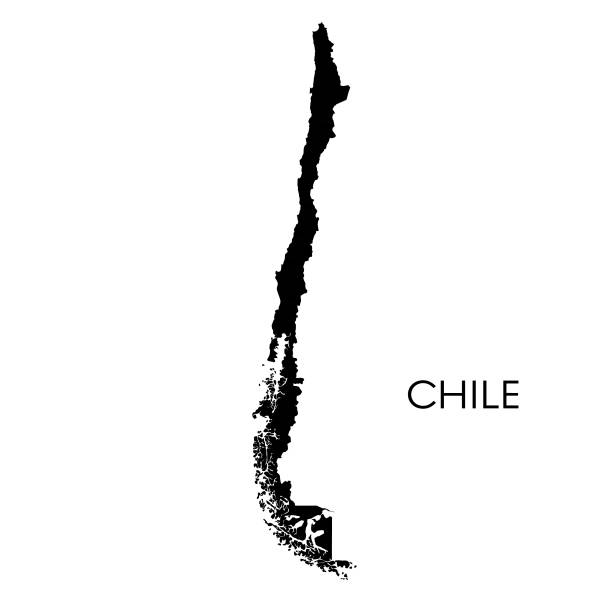
Recently, some family members picked up on the "New York Times" online puzzles that include Wordle and the deceptive Worldle. The Worldle puzzle tricks the puzzler into thinking they know more about world geography than they do.  Worldle shows the outline of a country like Italy or Chile and the puzzler is then asked to guess the country. 

Anyone knowing even the basics of geography easily recognizes Italy's boot shape.  But what about trying to guess the many small African countries, or Chile? 

Chile should be easy.  Long and slender, it runs north to south for nearly 4,300 miles along the western coast of South America.  The widest part of Chile is a mere 49 miles, between the snow capped Andes mountains in the east and the Pacific Ocean Pacific Ocean in the west. 

                                            Chile map Vector illustration of the map of Chile chile outline stock illustrations

That doesn't leave much room for wine growing. Yet, the Chileans have skillfully   found the best spots for vineyards, at high altitudes in the northern region of Salta, and the flatter southern expanses of Bio-Bio.   

Standing on the coast, facing east, the Andes seem to be hiding behind the near  horizon of a rising landscape. But the mountains are there forming a barrier, keeping phylloxera, an aphid that has destroyed many vineyards elsewhere and continues to be a problem, from entering Chile. On the plus side, the year round mountain snow fields in the Andes are a continuous source of runoff, supplying water to Chile's extensive system of irrigation canals. 

For years, Chilean grape growers used the ample Andes runoff to irrigate their vineyards. In the past, grapes were once sold on weight, so growers would flood their vineyards just before harvest, plumping the berries. Stories are told of the resistance from older growers to the introduction of drip irrigation and the efforts to control vineyard flooding.    

The Regions & Wines

Here's a breakout of Chile's top wine regions, north to south:

Aconcagua is the northernmost fine wine region, known mainly for red wines like Cabernet Sauvignon and Merlot.  Vina Errazuriz pioneered much of the grape growing in Panquehue and Manzanar sub regions.  Errazuriz's Don Maximiano Bordeaux-style blend is one of Chile's best-known red wines.  Chardonnay, Sauvignon Blanc and a little Pinoir Noir from the cooler coastal Manzanar are among Aconcagua's most successful wines. 

Close to the coast, south of the major port city of Valparaiso, the small region of Casablanca is noted for the bulk of Chile's cool-climate wines such as Chardonnay, Sauvignon Blanc and Pinot Noir.  South of Casablanca, the San Antonio valley is one of Chile's newest wine regions, with the same cool-climate varieties as Casablanca.  

An aside. Casablanca and San Antonio valleys are both coastal regions growing the same cool-climate grapes.  Where they differ is that the San Antonio valley runs north to south with all vineyards benefiting from the cool coastal breezes, while Casablanca runs east to west which means it is a transversal valley with warmer zones in the east and cooler zones in the west closer to the ocean.

Another anomaly for those of us living in the Northern Hemisphere is remembering that in the Southern Hemisphere, the further south you go, the cooler it becomes, while a warmer more tropical climate is in the north.  

Beyond the smaller northern zones, most of Chile's wine comes from the Central Valley, a huge area, including the capital city Santiago, stretching north to south from Maipo to the Southern region zones of Bil-Bio and Itata.

Directly east of San Antonio valley is Maipo, the most famous wine region in Chile. Maipo vineyards have a predominance of red varieties like Cabernet Sauvignon, Merlot and Carmenere.  Whites are Chardonnay and Sauvignon Blanc.  Top wineries: Concha y' Toro, Carmen, Santa Rita, Cousino Macul, Patrick Valette. 

Rapel is divided into two transversal valleys: Cachapoal and Colchagua, that run from the Pacific Ocean to the Andes. Cabernet Sauvignon, Merlot and Carmenere are the most planted varieties.  The potential of Rapel for great wine has attracted foreign investment: Los Vascos (Ch. Lafite-Rothschild)and Casa Lapostolle.  Other wineries: Vina Montes, Undurraga, Santa Emiliana.

Curico has two sub-regions of note: Lontue and Teno. Little was known of Curico outside Chile until 1979 and the arrival of Spanish vintner, Miguel Torres.  Except for Torres, the other Curico wineries of note are Valdivieso and San Pedro, although all the big wineries have extensive vineyards in Curico. 

Maule, one of Chile's cooler regions, has five sub-regions, with Talca and Linares the most important. Many of Maule's western vineyard areas are deficient in nutrients, especially nitrogen, but modern vineyard practices are helping to overcome these problems. Once an area for bulk wine, Maule now grows varieties like Cabernet Sauvignon and Carignan.

In the Southern region are two relatively new wine regions: Itata and Bio-Bio. Lacking the protection of the Andes, the southern regions experience higher rainfall and cooler temperatures.  Cinsault and Muscat of Alexandria are the most planted varieties by Concha y' To William Fevre.

Chenqueco Village and Ralco Lake, Alto Bío Bío
Alto Bio-Bio


Grapes & Vines

Until the 1990s, the most common grape variety in Chile was the Pais, but in a short time, Cabernet Sauvignon shot into first place as the most planted variety, followed by Sauvignon Blanc, Merlot, Chardonnay and Pinot Noir, the latter a slow performer in Chile. 

One interesting aspect of Chile's vineyard leap forward in the early 1990s was the discovery that much of what was thought as Sauvignon Blanc was, in fact, Sauvignon Vert and Sauvignon Gris.  And DNA vine identification also showed that a lot of Merlot was Carmenere.  

The bright side is that innovative Chilean marketers turned this confusion around, making Carmenere the Chilean signature wine, the way that Argentina captured Malbec.

Today, Chilean wines are among the world's finest, especially for high quality for the price.  


Next entry: France Series: Loire & Rhone

Contact me at boydvino707@gmail.com


Thursday, February 23, 2023

New Zealand's Other White Wines

The year was 1996 and the place was Seattle.  A quiet man stepped to the podium at the World Vinifera Conference and introduced the attendees to Cloudy Bay Marborough Sauvignon Blanc. 

Almost to a person, the reaction after the first taste was, "What in the hell is this wine?"  It didn't take long for this "new" Sauvignon Blanc to take the country by storm.

The inviting fresh tropical fruit salad flavors, leaning toward passion fruit, crisp acidity and a long clean finish; what was not to like.  It took only a minute for most of the attendees to realize that the pungent flavors of Kiwi Sauvignon Blanc were unlike any Sauvignon Blanc they have ever tasted. 

Cloudy Bay would be the first of a flood of New Zealand Sauvignons to captivate a receptive U. S. market.

The Other NZ Whites

More than 35 years later, Sauvignon Blanc is still the most planted variety in New Zealand.  Not far behind are Chardonnay, Pinot Gris and Riesling, with Gewurztraminer struggling to stay in the game. 

Sauvignon Blanc

But to get Chardonnay to stand out, winemakers had to start making the wine in the vineyard, then coax the flavors from the shy grape in the winery, often with the help of oak.  Aromatic whites like Pinot Gris and Riesling can be simple and fruity, lacking complexity.  And no matter what a winemaker did to Kiwi Gewurtz, the nagging reality was that the Alsatians had the formula for that variety down pat.

The concern was not to rely too heavily on Sauvignon Blanc, to the extent that New Zealand would become known as a one-white-wine producer. And then there was the growing international taste for Chardonnay, posing a marketing challenge.  So plantings of Chardonnay  increased, moving it into third place behind Pinot Noir.  

Chardonnay is the main white variety in Gisborne and nearby Hawke's Bay on the North Island.  Gisborne Chardonnay has attractive flavors of ripe peach and pineapple, while Hawke's Bay Chardonnay is more citrus and elegant.


Chardonnay

Perhaps NZ's best Chardonnay is Kumeu River Estate, from a smallish region outside Auckland.  Others of note: Te Mata (Hawke's Bay), Millton Estate (Gisborne) and Villa Maria.

In 2012, new and improved clones of Pinot Gris were approved for planting in New Zealand.  Also responsible for the revival of Pinot Gris was the growing interest in aromatic varieties, a sort of retro look at once popular aromatic white wines that all but vanished in the rush to plant more Sauvignon Blanc and Chardonnay. As a popular varietal, Pinot Gris emerged quickly in the early 2000s, rising to the fourth most planted wine grape.

Pinot Gris

New Zealand Pinot Gris more closely follows the fuller richer style of Alsace Pinot Gris, than the lighter northern Italian Pinot Grigio.  Pinot Gris is happy in cooler soils like those of Central Otago, Marlborough and Nelson, all on the South Island.  Look for Pinot Gris from Kumeu River, Seresin, Gibbston Valley, Dry River.

Riesling is the emblematic grape of Germany, although it is grown in nearly every wine region in the world, even those with marginal growing conditions for Riesling, like certain parts of California.

Cool growing conditions in New Zealand are ideal for growing Riesling.  The wines have a citrusy character that is balanced nicely with ample fruit. The whole package yields Rieslings that are light and delicate. 

Riesling

NZ Rieslings worth a search include Millton Estate, Felton Road (Central Otago), Giesen, Corbans, Neudorf, Villa Maria.

I have a friend who discovered New Zealand Sauvignon Blanc and for quite a while, it was his house white. He and his wife spend time in Paris and during one of those trips, they started drinking Sancerre and found a different expression of Sauvignon Blanc.

The beauty of Sauvignon Blanc is it's many different styles. To some degree, Sauvignon Blanc adapts to local terroir better than Chardonnay, Pinot Gris and Riesling.  Get a bottle of New Zealand Sauvignon Blanc, Pinot Gris, Chardonnay and Riesling, invite over a few friends for a comparative tasting and decide if your favorite is Sauvignon Blanc or one of New Zealand's other white wines.


Next blog: Wine from a Narrow Country

Write me at boydvino707@gmail.com 


Thursday, February 16, 2023

France Series: Burgundy and Beaujolais

Sometime in the late 14th century, the red variety with a long name, Gamay Noir a Jus Blanc, was introduced into the vineyards of Burgundy.  The move was  controversial, mainly for those that grew the noble Pinot Noir grape.

Ripe Pinot Noir

The official name is long to distinguish Gamay Noir from the red-flesh Gamay Teinturier, which in French literally means "dyer."  At one time, the juice from these teinturier grapes was used to help deepen the juice of weak colored grapes.

Today, Gamay Noir accounts for less than 10% of the plantings in Burgundy, but the variety is planted in 98% of Beaujolais vineyards.  Burgundy and Beaujolais  are among the few regions in France with just one or a few grapes. 

Ripe Gamay

And there are more differences. Most importantly, red and white Burgundy are among the most expensive wines in the world, with the most coveted ones priced at hundreds of dollars, while the most expensive Cru Beaujolais costs little more than a hundred dollars. Aging is also different.  A well cellared Burgundy will last a few decades while the best cru Beaujolais will likely top out before 10 years.

The wines from each region are, in their own right, unique. So let's take a closer look at the two regions.   

Burgundy 

Known as Bourgogne in French, Burgundy is a province in eastern France, best known for the Cote d'Or, a long pencil-thin region, famous for its white wines made from Chardonnay and reds from Pinot Noir. 

Administratively, Burgundy also includes Cote Chalonnaise, Maconnais, Auxerrois and Chablis. In terms of production, Maconnais is the largest, followed by the combined output of Chablis and Auxerrois, the latter a rather common wine used in blends more than as a varietal. 

An aside. Auxerrois is a prime example of the confusing nature of grape names being mixed up with wine names and place names.  To begin, Auxerre is a city in north east France.  Auxerrois is another name for Malbec in Cahors and Auxerrois Gris, is a synonym for Pinot Gris in Alsace.  Auxerrois is more popular than Pinot Blanc in Alsace, but is often not mentioned on a wine label, although can be labeled as Pinot Blanc.

The ancient history of Burgundy dates to circa 50 BC, when the Romans conquered Gaul, followed by the Celts, the Franks and the Vandals.  But by the 10th century, a major change occurred in Burgundy, from barbarian rule to Christianity.

Various monastic orders, notably the Benedictines, are credited with the origins and development of Burgundy vineyards and wine, starting in the 10th century.  By the 13th century, the Benedictines owned vast vineyard holdings, including what is known today as Domaine de la Romanee Conti: Romanee-Conti, La Tache, La Romanee, Richebourg, Romanee Conti and Romanee-St.-Vivant. 


Domaine de la Romanee Conti

Today, the Cote d' Or, (or "Golden Slope") is synonymous with Burgundy and, in fact, is the source of the region's most distinguished wines.  From the city of Beaune north, the Cote de Nuits is known mainly for red wines, from Pinot Noir, like Gevrey-Chambertin and Vosne-Romanee. 

South of Beaune, in the Cote de Beaune, white wines, from Chardonnay, are best known, such as Meursault and Puligny-Montrachet.  The famous growths of Pommard and Volnay, both red wines, plus Santenay and St. Aubin round out the wines of the Cote de Beaune.

Beaujolais

Due south of the Maconnais lies the regional city of Macon and on the city's southern edge is the beginning of the province of Beaujolais.  Administratively, Beaujolais is often thought of as part of Burgundy, but it is different, mainly in soils, location and grapes. 

Limestone and granite, two of the elements that help varieties like Pinot Noir and Gamay to ripen fully, are found throughout the rolling hills of the Cote d'Or and Beaujolais. However, it is the Gamay Noir a jus Blanc (or Gamay Noir) grape that determines the character of Beaujolais. 

Perhaps, a third element is even more important thing as it sets Beaujolais apart from other French wines:  carbonic maceration (C-M) , the wine making technique used to fashion the clear juice of the Gamay Noir grape into a fruity grapy red wine that delights wine drinkers everywhere.  

Most of the wine bottled simply as Beaujolais is made using carbonic maceration. The process is involved, but the simple explanation is whole clusters are loaded into a tank and about a third of the mass is crushed by the weight of the grapes above. The grape juice on the bottom of the tank ferments as usual, releasing carbon dioxide that causes an intracellular fermentation in the grapes at the top of the tank. 

The new wine rests for a few days and then is released as Beaujolais Nouveau. A small amount of C-M is sometimes used to brighten standard Beaujolais but C-M is not used in Cru Beaujolais.


Moulin-a-Vent

A step up from Beaujolais are the 10 Beaujolais Crus, so-rated for the vineyards around the named villages.  From north to south: St. Amour, Julienas, Chenas, Moulin-a-Vent, Fleurie, Chiroubles, Morgon, Regnie, Brouilly, Cote de Brouilly. The wines from these select villages are considered so good that they deserve a special designation.  Morgon and Moulin-a-Vent are considered the biggest most concentrated.  In blind tastings, aged Beaujolais Crus have been mistaken for Cote de Beaune red.

Collectors of French red wine say that Bordeaux, Burgundy and Rhone are most desirable...and then there is everything else.  Try a bottle of red Burgundy or Beaujolais and see for yourself. 

Note:  The next entry in the France Series: Rhone and Loire, will appear in this space on March 10, 2023. 


Next Blog: New Zealand's Other White Wine

Write me at boydvino707@gmail.com


Thursday, February 9, 2023

The King of Italian Wine

In 1980, Burton Anderson, an American journalist living in Italy, released "Vino," a personal account of the wines and winemakers of Italy, to great acclaim. Anderson's book introduced wine drinkers to Italian wine while persuading those who swore by French and California wine that Italy had something equally good to offer. 

Burton Anderson

Anderson praised Barolo, the famous red wine of Piedmont, as "extraordinary." And though American wine drinkers had made Chianti the most popular Italian red wine in the United States, Barolo maintained its reputation as Italy's finest. 

Although Burton Anderson reacquainted Americans to Barolo (and all Italian wine) in the 1980s, forty years earlier, fellow American, Harold Grossman, wrote sparingly but persuasively about Barolo.  Describing the village of Barolo and the surrounding Nebbiolo vineyards, spread over a hill of volcanic tufa, Grossman said:"On this hill the Nebbiolo grapes grow best, and they give the finest and most justy celebrated red wine Italy has.  In good years, Barolo can be classed as one of the kings of wine."

Barolo Basics

Among the top villages near the town of Alba noted by both authors for Barolo are Serralunga d'Alba, La Morra, Montforte d'Alba, Barolo and Castiglione Falletto.  The last two are thought by many Barolo aficionados as the site of "real" Barolo.

In recent years, Barolo producers have designated certain vineyards, or "Crus," for their high quality grapes.  A few of the better known Barolo Crus include Rocche, Bussia, Brunate and Ginestra.

Barolo owes its well-earned reputation to two things: the Nebbiolo grape and the volcanic tufa soil that makes up the hilly Piedmont countryside.  

Nebbiolo is a late ripening variety, maturing in October and November, when the hills of Piedmont are cloaked in heavy fog, or nebbia. Piedmont climate is continental, with hot summers and cold winters and lots of rain.  Nebbiolo does not like to get its feet wet and that presents a challenge for growers every year. 

In the winery, the use of traditional long macerations and fermentations is slowly giving way to shorter terms for both, using more French oak, resulting in Barolos  that are fruitier and less tannic and are drinkable earlier.

Traditionally, Barolo has been described as smelling like an unlikely combination of roses and tar.  As odd as it may sound, I picked up both in a well-aged Alda Conterno Barolo. Newer style Barolo has raspberry and dried herbs, with floral notes.  Barolo can be high in mouthwatering acidity and finishing with full tannins.

Nebbiolo on the vine

Nebbiolo d'Alba is a red wine made from the Nebbiolo grape in a zone surrounding the city of Alba.  Although lighter and softer than Barolo, Nebbiolo d'Alba is a less expensive alternative to Barolo and Barbaresco that is ready to drink earlier.

Although not apparent when buying a bottle of Barolo or Nebbiolo d'Alba, there is a clonal difference with the Nebbiolo grape, mainly Michet, Bolla and the most common Lampia clone. However, since Nebbiolo has a virus problem and Barolo producers don't want to gamble on the wrong clone, most of them use what is known as mass selection, a technique of field vine selection, the opposite of clonal selection.

Here is a short list of Barolo producers: Aldo Conterno, Giacomo Conterno, Michele Chiarlo, G.D. Vajra, Bartolo Mascarello, Ratti, Elvio Cogno.  Prices for Barolo range from $60 to hundreds of dollars.  A Giacomo Conterno Francia Barolo currently sells for $300. Nebbiolo d'Alba is priced around $25. 

Memories of Wineing in Italy

In the early years of my editorship of the "Wine Spectator," owner and publisher, Marvin Shanken, and I took a rare trip to Italy, to "show the flag," and increase the visibility of the Spectator.  Our first stop was Vinitaly, a major venue on the European wine calendar.

Upon arrival at Milan's Malpensa airport, we discovered that Lucio Caputo, then head of the Italian Trade Commission in New York, was on the same plane.  Caputo was driving to Verona and offered us a ride.  What we didn't know until later was that in an earlier life, he had been a race car driver. 

The memory of what car Caputo rented escapes me now...but it was fast!  He deftly maneuvered his way onto the Autostrada heading east, with me in the back seat and Marvin in the passenger seat, holding on for dear life. Noticing he had a white-knuckle passenger, Caputo smiled and pressed harder on the accelerator, as we sped our way toward Verona.

Later in the trip, Marvin and I were in the Piemontese town of Barbaresco to visit Angelo Gaja. He had extended an invitation when we met at Vinitaly to visit the winery and taste his Gaja wines.  

That evening, Gaja came to our hotel to get us in his Mercedes station wagon to take us to dinner at a nearby restaurant.  As I climbed into the back seat, I thought that a Mercedes was an unusual choice for an Italian winemaker, as they all seemed to drive a Lancia or big Fiat.

Marvin was in the passenger seat holding on tightly as Gaja zoomed along the narrow mountain roads in the dark.  It was another white-knuckle ride with another Italian winemaker who enjoyed his macchina as much as his vino.

And the trip promised to be great so long as we could stay out of fast Italian cars, driven by speed-loving Italian winemakers.


Next blog: France Series: Burgundy and Beaujolais

Write me at boydvino707@gmail.com