
Thursday, December 25, 2025

Make It a Sparkling New Year


New Years Eve is less than a week away, so it's time to start thinking now what bubbly you have on hand.  Champagne is nice, but there are a number of alternative sparkling wines to consider. 

California has acclaimed fizz.  Oregon and Washington state sparkling wine may not be as well known as their still wines, but they are good choices for holiday drinking.  And European bubbly from Italy and Spain often rivals French Champagne. 

What's the difference between Champagne and all the others?  Beside the obvious fact that Champagne is made only in a region northeast of Paris, there's individual local terroir, the cumulative growing conditions that vary wildly from region to region and country to country.

Terroir makes a difference.  Grow the same grapes as Champagne region - Chardonnay, Pinot Noir, Pinot Meunier -  under local terroir conditions anywhere else and you still don't have Champagne.

Then, there's the percentages of each grape that goes into the blend (cuvee) which in Champagne is traditionally 60% Pinot Noir, 40% Chardonnay (the amount of Pinot Noir varies when Pinot Meunier is added to the cuvee), but may vary in other places.  

At one time, Champagne was the only quality sparkling wine made, but today the worldwide market has many other choices.  So, let's have a look at some of the better known ones. 

Saumur sparkling wine (mousseux) is made from Chenin Blanc and a rosé version has Cabernet Franc as the base wine.  Additionally, blends may include a half dozen other grapes including Chardonnay.  Aged in caves dug from tuffeau rock, used in building construction, sparkling Saumur is a popular sparkler from the middle Loire.

 Crémant d'Alsace was first officially standardized in the 1970s.  Pinot Blanc is the most common variety used for the base wine, although other choices include Riesling and Pinot Gris.  Crémant d'Alsace Rosé is made only from Pinot Noir.

Cava, the traditional method sparkling wine from the Catalonia province of Spain, is made from Macabeo, Parellada and Xarello, in four grades: Cava, Cava Reserva, Cava Gran Reserva and Cava Paraje Calificado, akin to a single-vineyard wine that is aged for 36 months.  Chardonnay and Pinot Noir are also authorized.

Spumante (Italian for sparkling wine) is made in a wide variety of styles, ranging from the wildly popular Prosecco to Franciacorta, in Lombardy, a traditional method bubbly that stands on its prestigious name without the word spumante on the label. Oltrepò Pavese, made by metodo classico is the first class sparkling wine from Piemonte.

California sparkling wine is mainly made by the tank method where the second fermentation occurs in a closed tank, instead of a bottle. But in the early 1960s, Napa's Schramsberg Vineyards was producing sparkling wine by méthode champenoise, and it is today one of the Golden State's best sparkling wine.  Then, by the early 1970s, a handful of French Champagne houses came to California with Domaine Chandon, Mumm Napa and Domaine Carneros by Taittinger, and set up camp in Napa Valley. 

Sonoma County has a long history of making sparkling wine.  Korbel has been making bubbly, using the traditional method, since 1896.  By the mid-20th century, Iron Horse was making sparkling wine in Green Valley, Spain's Freixenet opened Gloria Ferrer and Judy Jordan of the Jordan wine family opted for sparkling wine with J Wine Company. 

Roederer Estate, the California sparkling wine of Champagne Louis Roederer, opened its door in the late 1980s in Mendocino's Anderson Valley, and quickly became a sparkling star.  Scharffenberger Cellars is the other major maker of Anderson Valley sparkling wine. 

Other wineries making American sparkling wine include: Gallo's Andre and Ballatore, and Wente Vineyards and Stony Ridge Winery; Domaine Ste. Michelle in Washington and Argyle from Oregon; Gruet in New Mexico, and a handful of bubbly brands in the New York Finger Lakes, to name a few.  

This New Year's eve, pop the cork on a bottle of American bubbly, serve the wine with lightly salted popcorn and welcome in 2026.  Cheers.


Next post: Original Zin

Leave a comment at boydvino707@gmail.com 


Thursday, December 18, 2025

Nightcaps

This is the time of year for the customary gathering of family and friends to celebrate the holidays. Meals are set out with plenty of special food and drink and maybe just one more wee dram of something to drink.

When everyone is sufficiently sated, there's often a need for a digestive to settle the stomach, or a nightcap to round out the evening. An ounce or two of a dessert wine or fortified wine is all that's needed for a nightcap. With all the good things to eat, it's easy to overdue it and reach for a digestif. 

DIGESTIFS               


Digestifs are alcoholic beverages formulated to aid in digestion, such as Campari. Aperitifs, on the other hand, are alcoholic beverages meant to stimulate appetite, such as a Fino Sherry. 

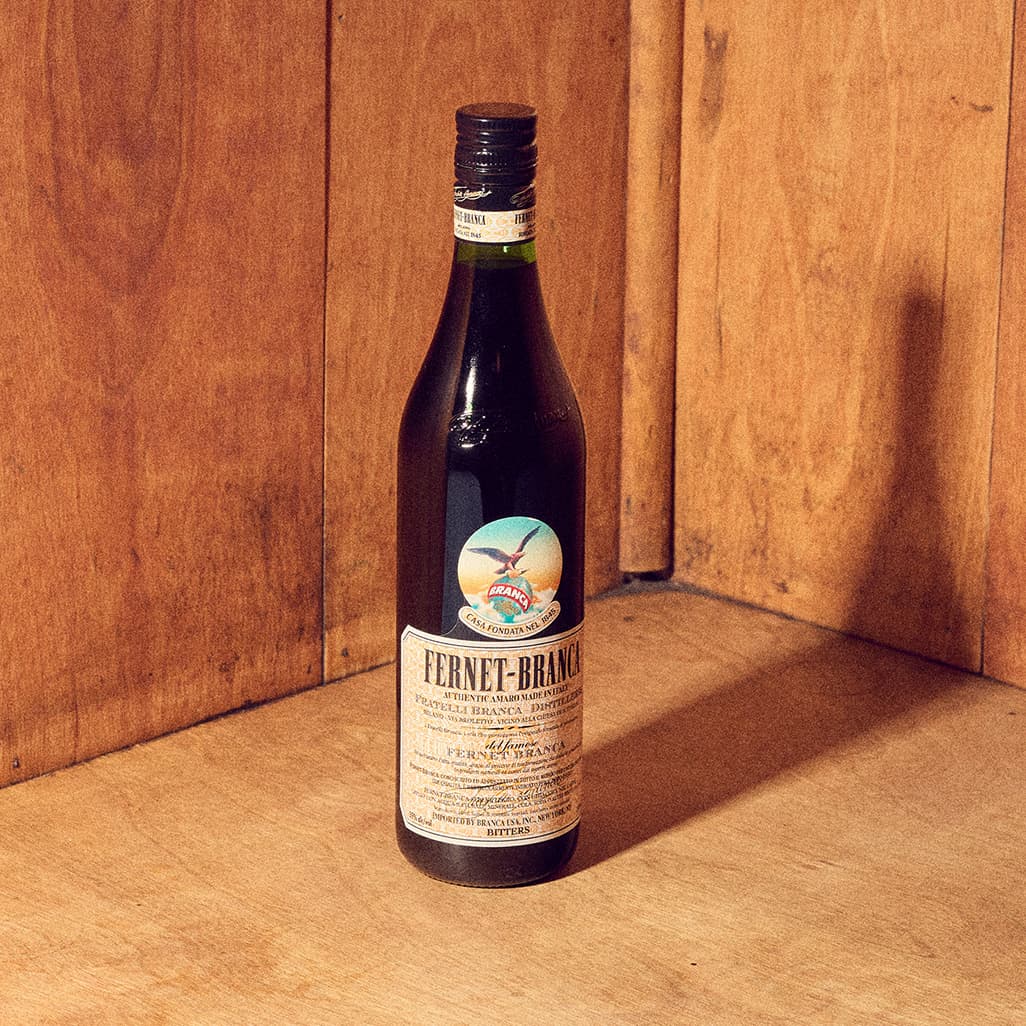
Popular digestifs include amaros, or herbal drinks with a slightly bitter taste. A common brand is Fernet-Branca, an Italian amaro (Italian for "bitter") that is popular with Italians, but not so much with Americans. Amaros are proprietary blends of botanicals such as herbs, roots, flowers and citrus peels.  

America doesn't have a tradition for digestifs, relying instead on France and Italy, where the history of these special beverages goes back hundreds of years. The list is extensive, but here are the best known.  

Top of the list is Campari, an Italian digestif, considered a bitters, but not an amaro by the Italians. Campari is flavored with chinotto, a cola-like Italian soft drink, made from a species of orange, and cascarilla, a flavoring agent made from the croton tropical evergreen plant.

Campari is an ingredient in the Negroni cocktail, made from gin, red Vermouth and Campari. Amaro Montenegro is an alternate choice in a Negroni.  Averna, a Sicilian amaro with a different formulation, is based on orange peel, with caramel, licorice and cola notes. 

Fernet-Branca an amaro with a bitter medicinal taste, derived from bitter aloe, quinine and other herbs and fruits. Fernet is higher in alcohol than most amari. 

In the either you like it or not category is Cynar, an Italian bitters taken as both an aperitif and a digestif. Based on artichoke, the recipe for Cynar also includes 13 other herbs, plants and spices.

From Germany, there's a pair of herbal digestifs: Jagermeister, a popular blend of 56 different roots, fruits and spices, is aged in oak for one year, then blended with sugar and caramel for a sweet and bitter digestif; Underberg is similar but sources the ingredients from 43 countries, adds sugar and caramel then matures the blended digestif in oak and puts it in small single-portion bottles.  

APERTIFS 

        Green Chartreuse vs. Yellow Chartreuse: What's the Difference?

Many of the beverages in the aperitif category are also considered digestifs, since the ingredients are similar and all of them are made from secret recipes that have remained in the same family or institution for generations. 

Aperol is an Italian aperitif served over ice or as an ingredient in a mixed drink, such as the Aperol Spritz Cocktail, a blend of Aperol, Prosecco and soda. The ingredients in Aperol include rhubarb, gentian, bitter orange and cinchona, a source of quinine from the bark of an evergreen tree.

A popular aperitif drink in New Orleans is the Sazerac Cocktail, a blend of rye whiskey and Peychaud's Bitters, a kind of amaro made in New Orleans. 

Among the best known aperitifs are the so-called monastery liqueurs. Chartreuse is the most complex and distinctive, and my favorite. Formulated since the 1700s by Carthusian monks in the mountains north of Grenoble, France, the secret recipe for Chartreuse is known by only two monks and includes cinnamon, mace, lemon, peppermint and thyme, among 130 botanicals. Green Chartreuse is known as the "elixir of long life," while the sweeter yellow Chartreuse has been compared to the Italian liqueur Galliano.   

Benedictine is the other noted French monastery liqueur, enjoyed both as an appetite stimulant and an aid to digestion. Originated in 1510, from a secret recipe by Benedictine monks, in a monastery in Normandy, the recipe was lost during the French revolution, then discovered again in 1863. The recipe for Benedictine differs from Chartreuse, with 27 herbs and spices, including honey, vanilla and cinchona.

This holiday, tune up your appetite with an aperitif, then end the meal with a relaxing digestif. I'll be back the day after Christmas with some sparkling suggestions, other than Champagne. Happy holidays. 


Next post: Make It a Sparkling New Year

Leave a comment at boydvino707@gmail.com 
Thursday, December 11, 2025

Oregon's Southern Reds

             Surprised Face Stock Illustrations – 44,642 Surprised Face ...


Pinot Noir is Oregon's most famous wine. That's not gob smacking news for people who closely follow the West Coast wine scene. But it may come as a surprise to hear that there are other red wines made in the Beaver State. 

International attention is mostly focused on the Willamette Valley, site of Oregon's top Pinot Noirs. South of the Willamette, close to the border with California, are the lesser known Rogue Valley AVA and Umpqua Valley AVA. 

The two appellations fall under the larger Southern Oregon AVA, established in 2005. The area is just over 2 million acres, in four sub appellations, that make up 40% of Oregon's wine: Applegate Valley AVA, Red Hill Douglas County AVA, Rogue Valley AVA and Umpgua Valley AVA. 

Climate and geography are the controlling factors for wine production along the U.S. west coast. Conditions are marginal for growing premium wine grapes in western Washington, where most of the vineyards are east of the Cascade Mountains. 

Mendocino County marks the northern most commercial vineyards in California. And, in terms of climate, southern Oregon, is closer to California than it is to the Willamette Valley.  

The most popular grapes in Oregon's south are the Bordeaux varieties: Cabernet Sauvignon Merlot, Cabernet Franc and Malbec. Petit Verdot is of lesser interest and is, in fact, of minimum interest now in Bordeaux. Other red varieties grown in Rogue River are Syrah and Tempranillo.  

What to look for: Southern Oregon Cabernet Sauvignon and Bordeaux blends are not as fruit forward as those from California. The wines have a subtle fruitiness with more subdued tannin. Syrah offers dark fruits, with mineral accents and Tempranillo is more red fruits. 

Rogue Valley AVA

The Rogue Valley, between Medford and Grants Pass, is bisected by the Rogue River. The appellation is the warmest in Oregon, ideally suited to growing Bordeaux and Rhone varieties. 

Bear Creek and the Applegate and Illinois rivers are tributaries of the Rogue River, flowing between the Cascade, Siskiyou and Coastal mountain ranges, moderating the climate. 

Currently, there are 20 wineries in the Rogue Valley appellation, compared to 300 in the Willamette Valley AVA. Vineyard acreage in the Rogue Valley is the most of the four southern appellations. 

And that number doesn't include the 15 wineries in the Applegate Valley AVA, a small east-west oriented appellation within the Rogue Valley. Granitic soils impart a minerality to the area's Syrah, Merlot and Cabernet Sauvignon. 

Umpqua Valley AVA

North of the Rogue Valley, roughly between Roseburg and the southern end of the Willamette Valley, the historic Umpqua Valley is the site of Oregon's first vineyard.  In 1961, Pinot Noir and Riesling were planted at Hillcrest Vineyard.

Today, the region has 15 wineries spread across the appellation. Diversity is the rule, with  vineyards in the western section benefiting from a cool marine influence.  More inland, growing conditions present ideal conditions for Cabernet Sauvignon and Merlot. 

Spanish varieties, such as Tempranillo, thrive in the volcanic soils at the southern end of the appellation, around the city of Roseburg. The choice of Tempranillo, by wineries like Abacela, point out the diversity of the region. 

In the past, Oregon wine was known as a one trick pony when it comes to red wine: only Pinot Noir. Southern Oregon offers the red wine alternative in Bordeaux and Spanish varieties.

Dreamstime image 


Next post: Nightcaps

Leave a comment at boydvino707@gmail.com   


Thursday, December 4, 2025

Napa's Other Wines

               Exploring the Iconic Napa Valley Signs: A Journey Through ...

It doesn't take a Master of Wine to see the connection between Cabernet Sauvignon and the Napa Valley. The two are as intimate as Romeo and Juliet.  And fans of Napa red wine need no convincing of the pairing. 

Knowledgeable lovers of everything Napa are aware that the famous California valley has other wines.  Fact is, Napa selections run the gamut from sparkling, dry white, other reds, to the odd sweet dessert wine. 

Here, then, is a run down of Napa wines that are not Cabernet Sauvignon, but are good choices when you're "caberneted" out.

Napa Sparkling Wine.  As far back as the 1950s Jack Davies of Schramsberg and Hanns Kornell of Kornell, were making sparkling wine in the Napa Valley.  

It would be more than 20 years before the next chapter of Napa bubbly introduced French Champagne techniques to the valley. Moet-Hennessy opened Domaine Chandon in 1977.  Then, in 1989, G.H. Mumm moved its sparkling wine facility, Domaine Mumm,  from a location adjoining Sterling Vineyards, farther down the valley to a new site on the Silverado Trail. 

The new producers were faithful to the French techniques and styles, using only Pinot Noir, Chardonnay and Pinot Meunier.  Further, the French didn't ever claim that the Napa wines attempted to duplicate Champagne. 

What to look for:  Napa Valley sparkling wines have their own signature flavors, although it may take an expert to tell the difference from Champagne.  Napa fizz is less expensive and perhaps leans more toward fruity with less of the yeasty character evident in Champagne.  Artfully blended base wines are key to a seamless flavor that is unique to the best sparkling wine. 

Dry Whites.  Chardonnay and Sauvignon Blanc are the super whites of the Napa Valley.  Cool climate Chardonnays come mainly from Carneros, in southern Napa Valley, with fewer in the warmer northern parts of the valley.  Same for Sauvignon Blanc, although there is plenty of it in mid-valley, near Rutherford.  Other whites include Riesling, mostly in higher vineyards like Spring Mountain, and a small set of other white wines like Chenin Blanc.

What to look for:  Napa Chardonnay has a fruity profile, often with mineral and citrus notes and a healthy dose of spicy new French oak.  Oaky styles of Napa Sauvignon Blanc, like those of the French Graves, are rare.  Instead, the Napa style is more mineral laced, with a trace of tropical fruit. Rieslings are fruit forward, giving the impression of sweetness and mostly with floral and stone fruit flavors.

Other Reds.  Zinfandel and Syrah are the most popular, non-Bordeaux reds.  Zin from Howell Mountain and Calistoga are the best known, while Syrah comes more from Carneros and Spring Mountain.

Wineries consider both of these varietals as secondary choices; not in quality, but as  backups to Cabernet Sauvignon or Pinot Noir.  Availability of these wines is usually controlled by market demand and personal likes of the winemaker and/or winery owner.  

Whatever the reason for Napa Zinfandel and Syrah being on a winery's list of red wines, they are good choices, especially if you like the winery's approach to making Cabernet Sauvignon or Pinot Noir. 

What to look for:  Zinfandel naturally has more ripe jammy fruit and higher alcohol than Cabernet, but many Napa winemakers today are making more contemporary Zins, minus the jam jar fruit and with a more balanced fruit/alcohol finish.  Napa Syrah is packed with dark cherry flavors, that strikes a balance between Pinot Noir and Cabernet Sauvignon. 

Sweet Desserts. Sweet wines are a tough sell, even though they are delicious on their own after a meal or at the close of the day.  When matching sweet wine with dessert, the key is getting the sweetness balance right, so one doesn't overwhelm the other.

Many of these "stickies" (as the Aussies call them) are low alcohol sipping wines, like late-harvest Riesling, that stand on their own, or blend nicely with a simple dessert like fresh fruit or a slice of pound cake:

Beringer Nightingale is a noteworthy Napa choice, made in the Sauternes style, from a blend of botrytised Sauvignon and Semillon.

Grgich Hills Violetta is an unusual late-harvest blend of Sauvignon Blanc and Riesling.

Far Niente Dolce, a late harvest Semillon.

Castello di Amorosa Moscato, 100% Muscat Canelli and Simpatica, a blend of Riesling and Muscat Canelli. 

Handwritten Wines 10-Year Tawny, a sweet fortified nightcap, is made in the style of a Portuguese Tawny Port. 

The Napa Valley is chock-a-block with wineries, many of them with a good selection of  sparkling, dry and sweet wines.


Next post: Rogue River Reds

Leave a comment at boydvino707@gmail.com