Thursday, November 27, 2025

Grouchy & Grumpy

   Angry old man isolated vector style illustration art. Black white illustration angry person vectors

Lately, developments on the wine scene have been making me grouchy and grumpy.

It's a personal state of mind that hopefully doesn't affect my dealings with people I know. Those people who know me, say grouchy and grumpy sounds about right. 

Anyway, here are four things that I think are disrupting the wine world and annoying me.  

The impact of AI on wine.  Followers of wine business news or feature items in the general press, have no doubt noticed an increased encroachment of artificial intelligence in every aspect of life. 

Although I've been accused of being a Luddite, my view is while AI is being used to better many aspects of our lives, including the wine business, there will be aspects that ultimately prove to be problematic.   

Because the impact of AI is increasing, even for writers and photographers who do not know if their work is being manipulated by AI, the satisfying act of creativity could be out of their control if not managed properly.  

So, what it comes down to is, with the flurry of AI activity, I worry about how AI will make wine writing less relevant.   

Expensive wine. Today, there is a level of shocking wine pricing that is beyond reason. You may not have noticed, but some high-end Burgundy, Bordeaux and California  Cabernet Sauvignon are priced in the thousands of dollars.  

Why?  

Because, believe it or not,  there are people willing to pay any price for a bottle of one of these coveted wines.  And, compounding this inflationary practice, only those people can say if a wine is worth the high price and why.

Unfortunately, hearing that wine prices are way outside their budget, a new beverage shopper,  trying to decide whether to buy wine, or beer, or some other beverage, will likely not opt for wine. 

 Of course, there is no way to know, for certain, if high prices are contributing to low wine sales. But, on some level, throwing up high prices is surely a barrier to sales. 

Best lists.  I read an item recently, addressed to winery owners, suggesting that if you want to sell more wine, then add the word "best" in your marketing pitch.

Right, as if we don't have enough "experts" advising us that this Chardonnay is the best from a given vintage, or region, or winery.  

The benefit of collecting and drinking wine is making a personal decision of what to buy.  Often, the "best list" is not based on solid knowledge of the wines, but on someone else's  likes and opinions. 

If you must, only use a "best list" as a guide, and make your own wine buying decisions. The best wine for you is the one that best suits your taste, not someone else's opinion of "best."  

Wine as an investment.  Some people reading this will, no doubt, think my concern is silly and misguided.  After all, they might say, wine is sold in commerce, at retail stores, restaurants and cafes.  So, why not make a buck from investing in wine?

Because wine should not be treated as a commodity, something that has lost its individual distinction in the marketplace and is being hawked for the lowest price.  

When wine becomes an item of investment, it is then not intended to be drunk and enjoyed, but passed along from one investor to the next, in search of a monetary profit.

Someone once said that wine is "a social lubricant."  The primary reason for wine is to provide a pleasurable accompaniment with food, in a social setting.  Thus, wine should be viewed as a personal investment in gustatory pleasure, not an impersonal way to make a profit.    

To wrap up this personal rant, here are some closing words: You probably have your own list of things that annoy you about how wine is marketed, promoted and sold.  And I understand if you think what I've written here is nonsense, but before you hit the delete button, read the four things again and see if there's something about the impact of AI that is troubling to you. 

Dreamstime image 


Next post: Napa's Other Wines

Leave a comment at boydvino707@gmail.com 


Friday, November 21, 2025

Great Barolo

a wooden pole with a street sign on it
This way to Barolo

Barolo is not just a good Italian red wine, it's a great one.  For years, it was fashionable, even necessary, for some marketers to call Barolo, "Italy's Cabernet Sauvignon."

But, Piemonte winemakers knew better.  Nebbiolo was their red grape, and in the Piemonte (Piedmont in English) region of northern Italy, Nebbiolo makes better red wine than Cabernet Sauvignon.  The name Piemonte means "at the foot of the mountains."

In fact, Nebbiolo is believed by many to be Italy's best red variety, better than the ubiquitous Sangiovese of Chianti and the lesser known Aglianico, the grape of Taurasi.

The classic description for Nebbiolo is tar and roses, plus dark cherries and herbs with a clear licorice note, supported by firm tannin and crisp acidity. 

That inviting combination of varietal characteristics is common in a small tier of vineyards in Italy's northern Langhe. Most of the south facing vineyards are scattered along the rolling hills, up to 1,000 feet, at the base of the Italian Alps. 

Although there is more Barbera planted in Piemonte, the wines of Barolo and Barbaresco are the stars of the region. Gattinara, made from Nebbiolo, is a major wine outside of the Langhe, but plantings of Nebbiolo are small in Gattinara, by comparison to Barolo.

Modern Barolo is fermented on the skins and seeds, following a maceration of up to three weeks, with a minimum alcohol of 13%. Traditional aging is in large oak casks, with modern maturation in French oak cellar barriques. 

Required aging of Barolo is a minimum of 38 months, at least 18 months in barrel.  Riserva wines are aged for a minimum of 62 months, 18 months in barrel. 

Barolo is at its best from vineyards in these five leading townships: Barolo, Castiglione Faletto, La Morra, Montforte d'Alba and Serralunga d'Alba.  Soils in these areas are composed of clay marl, containing some limestone.

Among the best Barolo producers are: Bruno Giacosa, Elio Grasso, Giacomo Conterno, Vietti, Franco Fiorina, Mascarello, Paulo Scavino, Oddero, Azelia, Ceretto, Barale Fratelli.

Barolo vintages available today include the highly rated 2020, and also 2021, 2016, 2010 and 2009.  Wines from all of these vintages are expected to mature 20+ years or longer.  The 2025 harvest is expected to be special.

Wine prices, like everything else, have been going up. Barolo has always been expensive, especially from elite producers like Ceretto, Giacosa and Vietti.  At the low end, Barolo prices hover around $50.  Mid range  prices are $80 to $100.  From there, prices soar to as much as $700 for Riservas from recent highly rated vintages. 

Well aged Barolo is best with beef.  Lighter styles are good with salami and seasoned sausages.  Well-aged Barolo pairs nicely with bollito misto, a blend of meats in a garlic sauce.  A favorite dish in Piemonte is brasato al Barolo, a piece of beef marinated and cooked in Barolo.   

Buy Online Castalmagno mountain cheese DOP.
Castelmagno cheese

When the last piece of brasato is gone, finish off the remaining Barolo with a piece of Piemontese cheese like Castelmagno, or Testun al Barolo, made with Barolo.  Also good with Barolo is aged hard Parmigiano-Reggiano and semi-soft Fontina, a good match with younger Barolo.    


Next post: Grouchy & Grumpy

Leave a comment at boydvino707@gmail.com 


Thursday, November 13, 2025

It's Time for Beaujolais

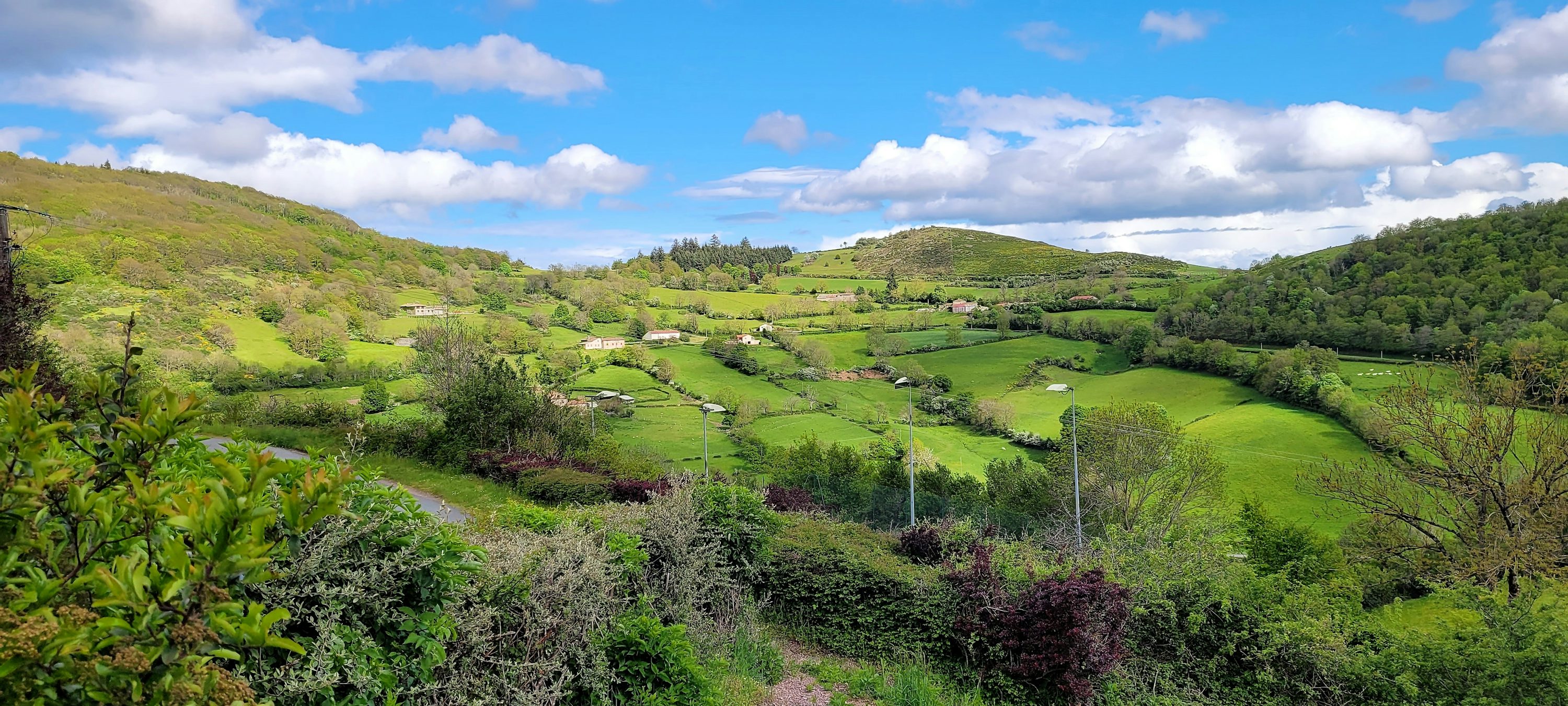
green grass field under blue sky during daytime
                                                                                                                                               Unsplash photo

David Morrison has something to say about the popularity of Beaujolais, in his blog, "The Wine Gourd."  

Morrison, owner of one of the more interesting blog names, is a scientist trained in plant biology who somehow got sidetracked to wine economics.  And if that's not unusual enough, Morrison is an Australian living in Sweden, writing about wine.  

Morrison's essay on Beaujolais export markets suggests there is more than one way to look at the popularity of Beaujolais.  Viewed by market size, the United States is at the top of Beaujolais export markets, followed by the United Kingdom, Canada, Japan and Belgium.  The tiny Grand Duchy of Luxembourg came 23rd out of 25 export markets listed. 

Look at the data by the amount of Beaujolais consumed, though, and Luxembourg shoots up to first, followed by Belgium, Ireland, Canada and the United Kingdom. And, the United States has now dropped to 11th place, behind the Netherlands.

Clearly, the data suggests that Americans love Beaujolais, something that's good to know as the holidays approach and you begin planning the Thanksgiving menu, perhaps to include a bottle or two of fresh and fruity Beaujolais Nouveau, basic Beaujolais, Beaujolais Villages, or one of the ten Beaujolais Cru.

Beaujolais Nouveau.  There was an LP (remember those?) released years ago titled, "Opera for People Who Don't Like Opera," that I think of when Nouveau time rolls around.  The "new" French wine is rich, tasty and uncomplicated, just the right choice for people who think they want wine with the multi-course holiday meal, but are not sure which wine to serve.

A bottle or two of Beaujolais Nouveau is the easy and uncomplicated answer.  Or, if you prefer Italian wine, try Lambrusco, the lightly sweet and fizzy red wine from Emilia-Romagna. 

Nouveau Beaujolais is all about  carbonic maceration (CM), a technique whereby whole clusters of Gamay Noir à Jus Blanc ("Black Gamay with White Juice") grapes are loaded into stainless steel fermenters and the bottom clusters are crushed by the weight above.  

Maceration and normal fermentation begin, carbon dioxide gas bathes the grapes, causing each whole grape to become an individual fermenter. The anerobic CM process results in a fresh fruity red wine of modest alcohol that is intended to be consumed before the next year's harvest.

A bit of wine grape trivia: Gamay Noir is not related to the Gamay grape that has red flesh.

Beaujolais is the basic appellation, amounting to about one half of all Beaujolais produced, and is a step up from Nouveau. Beaujolais undergoes a standard red wine fermentation in stainless steel and includes some CM for freshness, through a process called "semi-maceration."  The aim is to make a structured red wine for near term drinking, or aging for one or two years in bottle. 

Beaujolais-Villages, the intermediate grade of Beaujolais from a series of villages in the foothills that must comply to strict vineyard practices and yields.  Village wines are permitted an extra degree of alcohol, and in general, will benefit from a little aging.

The division between simple Beaujolais and Beaujolais-Villages is an important one.  Basic Beaujolais is the starting point, for quality and price.  Beaujolais-Villages are more concentrated and show more character, and the difference in price is minimal.  The next step up is the small group of village wines known as Beaujolais Crus.

Beaujolais Cru.  Wines from the ten cru appellations are the most complex and capable of long-term aging. Thus, Beaujolais cru are also the most expensive. 

South of the Maconnais border, the Beaujolais Crus are in a line, from light to heavy : Brouilly, Cote de Brouilly, Chiroubes, Régnié, Morgon, Fleurie, Juliénas, Saint-Amour, Chénas and Moulin-à-Vent.  

Expect to pay under $15 for basic Beaujolais, less than that for Nouveau.   Beaujolais-Villages price range is approximately $15 to $30 and Beaujolais Crus are $25 to $75, with a few Moulin-à-Vent closer to $100. 

A misleading claim that has dogged Beaujolais Cru for years suggests that a few of them, such as Moulin-à-Vent, are as complex as Burgundy.  With a couple of years of bottle aging, the two wines may seem similar, but Gamay Noir and Pinot Noir make different wines.

There is no shortage of wine professionals who dismiss Beaujolais as the country hick at a black tie meal.  Far too many restaurant wine lists omit Beaujolais and Nouveau Beaujolais from the wine list because they are not money makers.   

But recent surveys show that wines like Beaujolais are what people want with their meal, so let's take a closer look at the easy pairing of Beaujolais with food. 

Beaujolais with Food 

Since Thanksgiving will be here in less than two weeks, here are a few tips on pairing Beaujolais with holiday food. Foremost is, drink the wine or wines you like best. 

Still, some advisors think, since the Thanksgiving feast is special, you should uncork your best Cabernet Sauvignon and Chardonnay.  

I say, save those wines for another meal, and here's why:

Thanksgiving turkey and the variety of side dishes is a mashup of flavors, seasonings and textures.  A big red with ample tannin, like Cabernet Sauvignon, Bordeaux, Italian Barolo and Spanish Ribera del Douro, to name a few, will over power delicate turkey white meat, clash with sweet cranberry sauce and get lost with the heavily seasoned dressing (stuffing?) you serve with the bird.  

Chardonnay will pair better than a big red with a wider variety of Thanksgiving dishes, though Chardonnay is better with fish, roast chicken and vegetarian dishes.  A lightly oaked Chardonnay compliments turkey white meat, but an all-purpose white wine, like off-dry Riesling, Viognier, Spanish Albarino, or Italian Orvieto, is the way to go. 

Finally, there are two important things to know about Beaujolais: It is not Burgundy and never will be; and Beaujolais, no matter its pedigree, should be drunk young, within a year, two at the most for Beaujolais Crus.  


Next post: Great Barolo

Leave a comment about this blog at boydvino707@gmail.com 


Friday, November 7, 2025

AI and the future of Wine Writing

MacBook Pro near white open book
                                                                                                                                         Nick Morrison photo

Lately, there has been an uptick in interest about the controversial possibility of  unstoppable artificial intelligence making inroads into all manner of things, from developing autonomous vineyard tractors to "creating" a fake actor.

Indeed, AI seems to be on everyone's radar.  Just since I began writing this post, separate groups of scientists, writers, politicians and fellow techies have written  letters of concern to Big Tech, demanding that AI be reined in. 

But the concern is not new.  Over the last few years, Big Tech has been busy evangelizing about AI and how it will revolutionize the world. 

One of the leaders of the Big Tech cohort is double talk expert, Mark Zukerberg, CEO of Meta and a member of the techie nouveau riche.  Zuckerberg is not alone in the effort to convince American tech consumers of the promise that AI holds for the future. 

I have to be honest; the impact of AI on the future of wine writing is what worries me, especially when the insidious nature of the controversial technological innovation can be used by unscrupulous people to persuade consumers, by bot-created words to buy wine. 

Wine writing is a creative exercise that requires discipline, knowledge and patience.  Although AI is capable of forming sentences into a whole article, in record time, it cannot create the subtleties and nuances that make writing flow.  Nor can AI match the human emotions and impressions needed when describing the taste of a wine.

Another emotion, within the purview of humans, is cynicism.  It is not an admirable personal trait, though I readily admit to nodding yes when people ask if my middle name is Cynic.  It's not, but I'm concerned that the world has become cynical, and I find it too easy to imagine the possibility, powered by the rise of AI, for the wine world to accept AI generated wine writers, or AI wine "influencers."

The very idea of influencers is bad enough, but a fake one could mean real trouble for wine collectors and drinkers.  This fringe element of wine marketing seems to be more interested in self promotion, while ignoring that AI has great potential to do real harm.  

The ability of wine writing to inform and educate consumers about the pleasures of wine as a natural partner with food has always been a strong force.  Where it lacked strength was in persuading people to buy wine. 

Promoters of AI claim that the technology will take the guess work out of the personally satisfying task of deciding on and then buying a bottle of wine.  Even in our complex world, where an increasing number of things have become automated, it is still satisfying to use one's memory and ability to freely make a decision, without artificial assistance. 

I take comfort in believing that AI will never accurately describe how a wine tastes. And to know that the sensory ability to separate various components in a wine, then put those  impressions into meaningful words, belongs to humans, not machines or bots.  

So, I hope that this short essay focuses some light on the possible encroachment of artificial intelligence on our present and future ability to enjoy the simple pleasures of wine, unaided by AI, or whatever artificial "advancement" may be in our future.   


Next post: It's Time for Beaujolais

Leave a comment about this blog at boydvino707@gmail.com